Sagadahoc County Courthouse in Bath showcases 19th-century architecture
On Bath’s hilltop, the Sagadahoc County Courthouse still frames downtown with a 19th-century civic face, linking county government to the Kennebec waterfront.
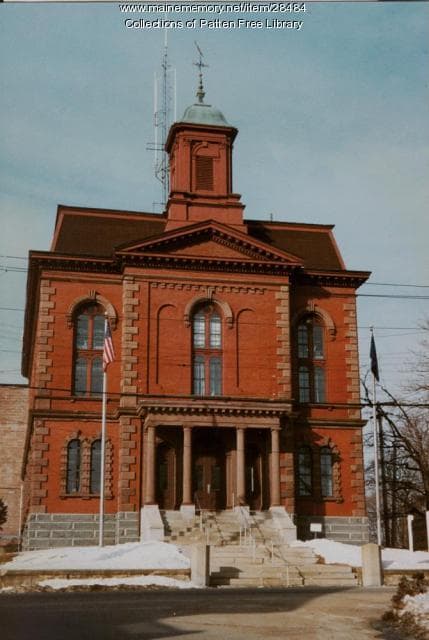
The Sagadahoc County Courthouse rises above Bath as more than a government building. Built in 1868-69 and still centered in the city’s civic life, it shows how a small Maine county used architecture to project permanence, order, and local pride. From the downtown streets below, the courthouse remains part of the view that ties Bath’s working waterfront to its seat of county government.
A hilltop landmark at the center of county life
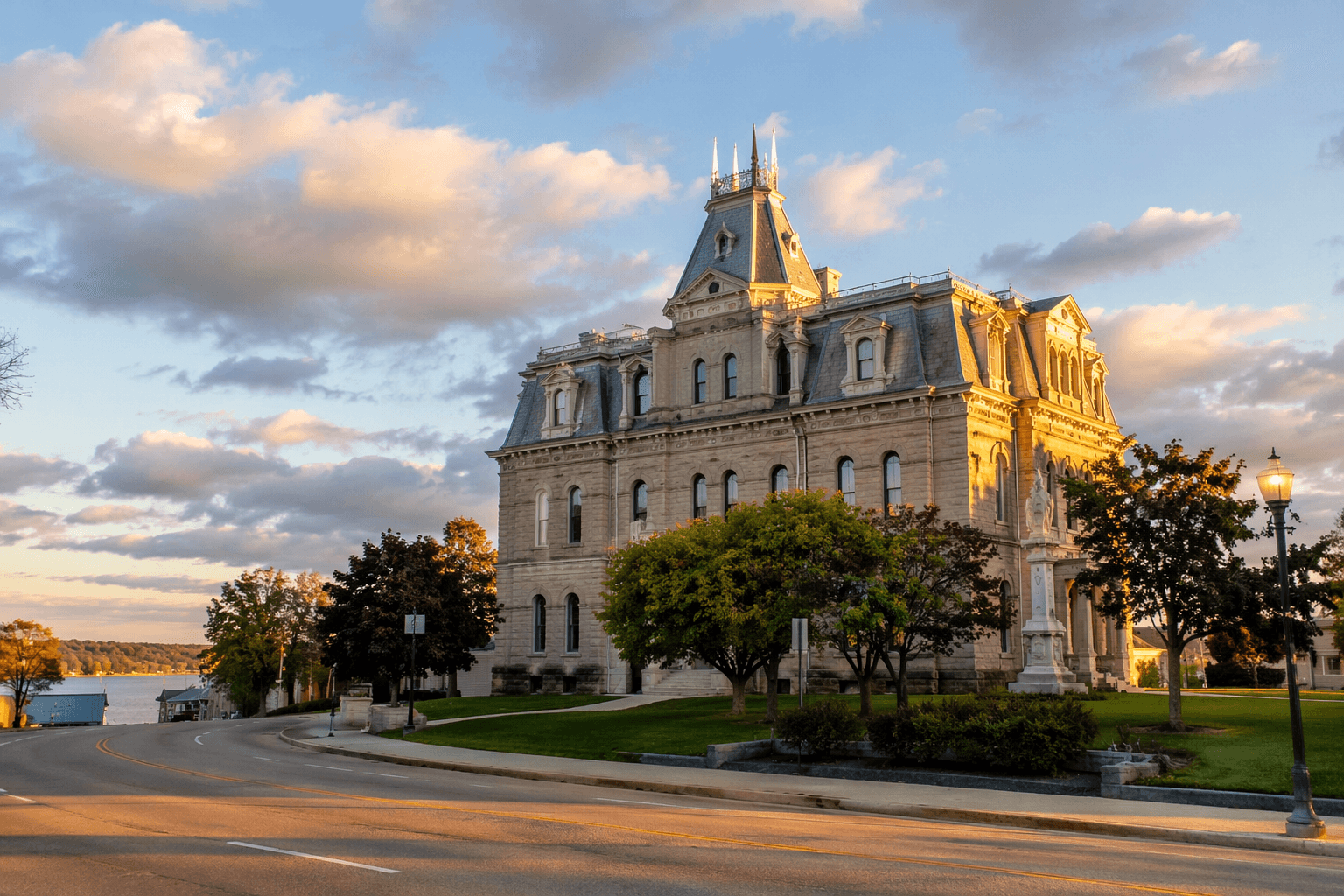
Bath is the county seat of Sagadahoc County, and the courthouse sits on a hill overlooking the city’s central business district and the Kennebec River. That placement matters: the building is not tucked away as a museum piece, but positioned where county business and downtown life have long intersected. Sagadahoc County itself was formed in 1854 from a portion of Lincoln County, so the courthouse belongs to a county that was still relatively new when the building went up.
The site also reflects Bath’s compact geography and civic scale. Sagadahoc is Maine’s smallest county by physical size, which makes the courthouse especially visible in how the county presents itself. In a place where the city center, riverfront, and public offices sit closely linked, the building helps explain how local government has been anchored here for more than 150 years.
Designed by a Bath native with a regional footprint
The courthouse was designed by Bath native Francis H. Fassett, a notable 19th-century Maine architect who is also identified in one source as Francis Henry Fassett of Portland. That local connection gives the building extra weight in Bath: it is not only a county landmark, but also a work by a designer shaped by the city that it serves. The courthouse was built in 1868-69, with one historical description placing its erection in 1869-70.
Its design combines Greek Revival, Second Empire, and Italianate elements, which is part of why the building stands out even among Bath’s older civic structures. Another historical caption calls it a “temple-like” courthouse, a phrase that fits the building’s formal front and its deliberate sense of public dignity. Reed & Nichols handled the masonry work, while C.H. Hartwell & Company did the joiner work, details that underline how many hands went into creating the courthouse’s enduring presence.
What to notice when you see it
- The hilltop siting makes the courthouse visible from downtown and links it to the Kennebec River corridor.
- The front face still reads as an 1860s civic building, even after later changes.
- The blend of Greek Revival, Second Empire, and Italianate features gives it a layered architectural profile rather than a single-style look.
- A ca. 1905 image preserved by Maine Memory Network shows that the building had already become a recognizable Bath landmark well over a century ago.
How the building has changed without losing its identity
One of the courthouse’s most useful lessons for Bath is that preservation does not have to mean freezing a building in time. The courthouse retained its historic front face even after a 1986 addition, allowing it to keep serving modern needs without erasing the original civic image that defines the building from the street. That balance between utility and preservation is what keeps the courthouse relevant in daily downtown life.
A Knowles Industrial restoration page adds another useful detail: the courthouse was built on its current hilltop location in 1869, about 15 years after Sagadahoc County was formed, and the original structure was about 10,000 square feet. Those figures help explain why the building still reads as a substantial public anchor rather than a minor remnant. It was built to be seen, used, and remembered.
Why it still matters in Bath’s downtown story
Bath’s identity has always been tied to the river and to shipbuilding. The city is an old seafaring town on the Kennebec River, and Bath Iron Works was founded in 1884, years after the courthouse was already in place. That chronology matters: the courthouse predates the industrial era that later made Bath famous, which means it preserves an earlier civic layer of the city’s story.
The building also appears in Bath’s Historic Downtown materials, reinforcing that it is part of the lived downtown landscape rather than a detached relic. When residents and visitors pass it, they are seeing a structure that still helps define the city center, shapes the skyline from the Kennebec side, and keeps the county’s public identity visible in brick and stone. In a place where memory is easy to lose to development, the courthouse remains a durable marker of how Bath chose to present itself in the 19th century, and how that choice still reads in the downtown today.
This article was produced by Prism’s automated news system from verified source data, official records, and press releases, then run through automated quality and moderation checks before publishing. The system is built and supervised by the people who set the standards it runs under. Read our full AI policy.
Did this article answer your question?