Topsham woman bakes family recipes to reconnect with her father
Jane Manchester’s baking has turned old recipe cards into a caregiving ritual, helping her widowed father in Machias relive family stories.
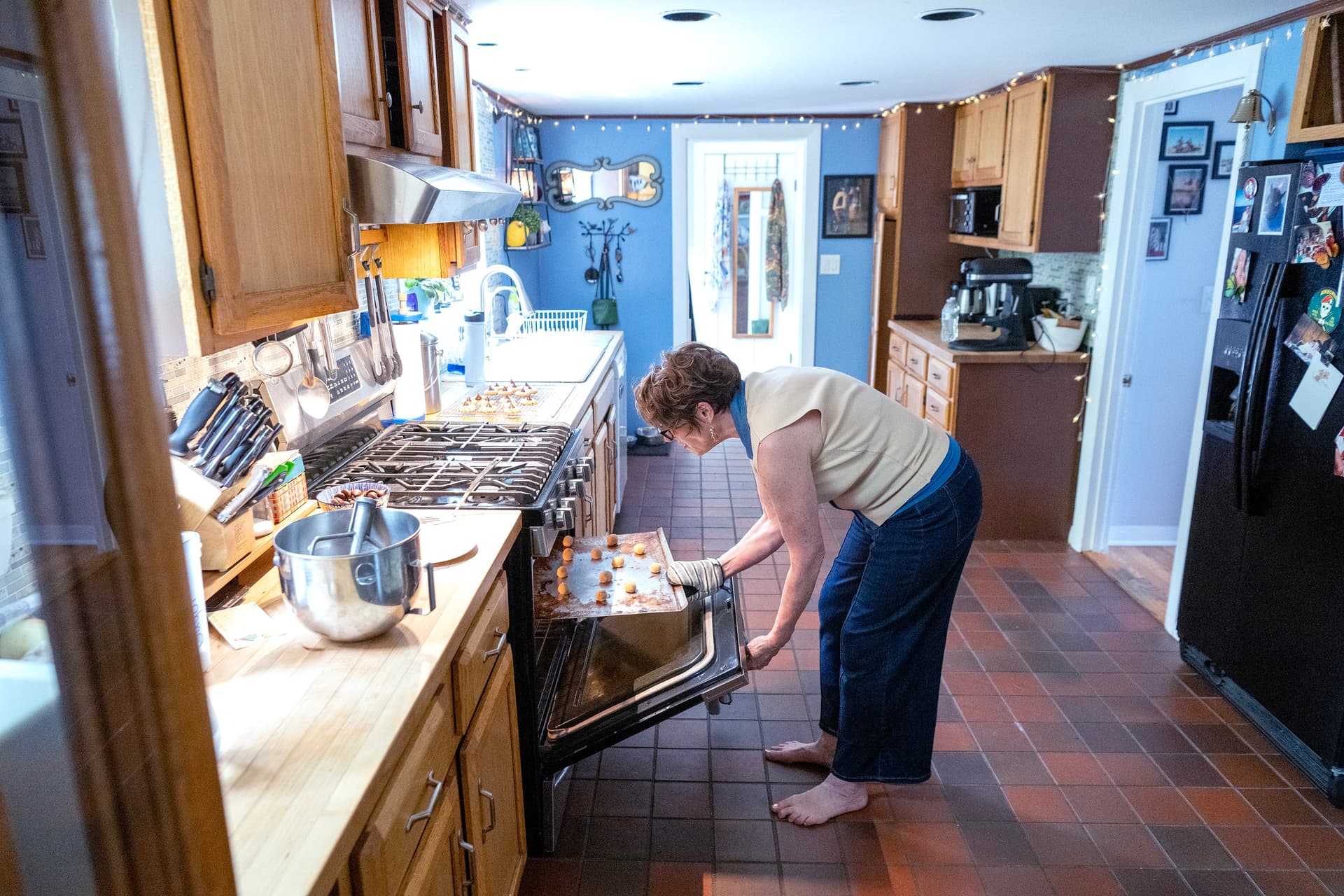
Jane Manchester’s trips from Topsham to Machias are built around more than dessert. She packs peanut butter blossoms, whoopie pies and a casserole tied to her sister Rachel, then uses the family recipe box to open conversations with her 87-year-old father, Norris Manchester, who lives alone on land near Roque Bluffs State Park.
A recipe box as a practical bridge
The power of this story is not nostalgia alone. For Jane Manchester, the handwritten cards her late mother left behind have become a working tool for reconnecting with a father she spent decades apart from after leaving for California as a teenager. When she brings the recipes north, she is not just delivering food; she is giving her father something specific to remember, name and discuss.
That matters because the two have not always found long stretches of conversation easy. The cards change the shape of the visit. Instead of silence, there is a task: identify the dish, recall who made it, and sort through the people and places attached to it. In that way, the recipe box functions like a family archive that can still be used at the kitchen table.
What the drive from Topsham to Machias really carries
The route itself is part of the story. Jane makes a three-hour drive from Topsham to Machias with the baked goods packed in a cooler, turning a private family ritual into a repeated act of care. The distance underscores how far apart the generations have lived, and how much effort it takes to keep a relationship active when family members are spread across Maine.
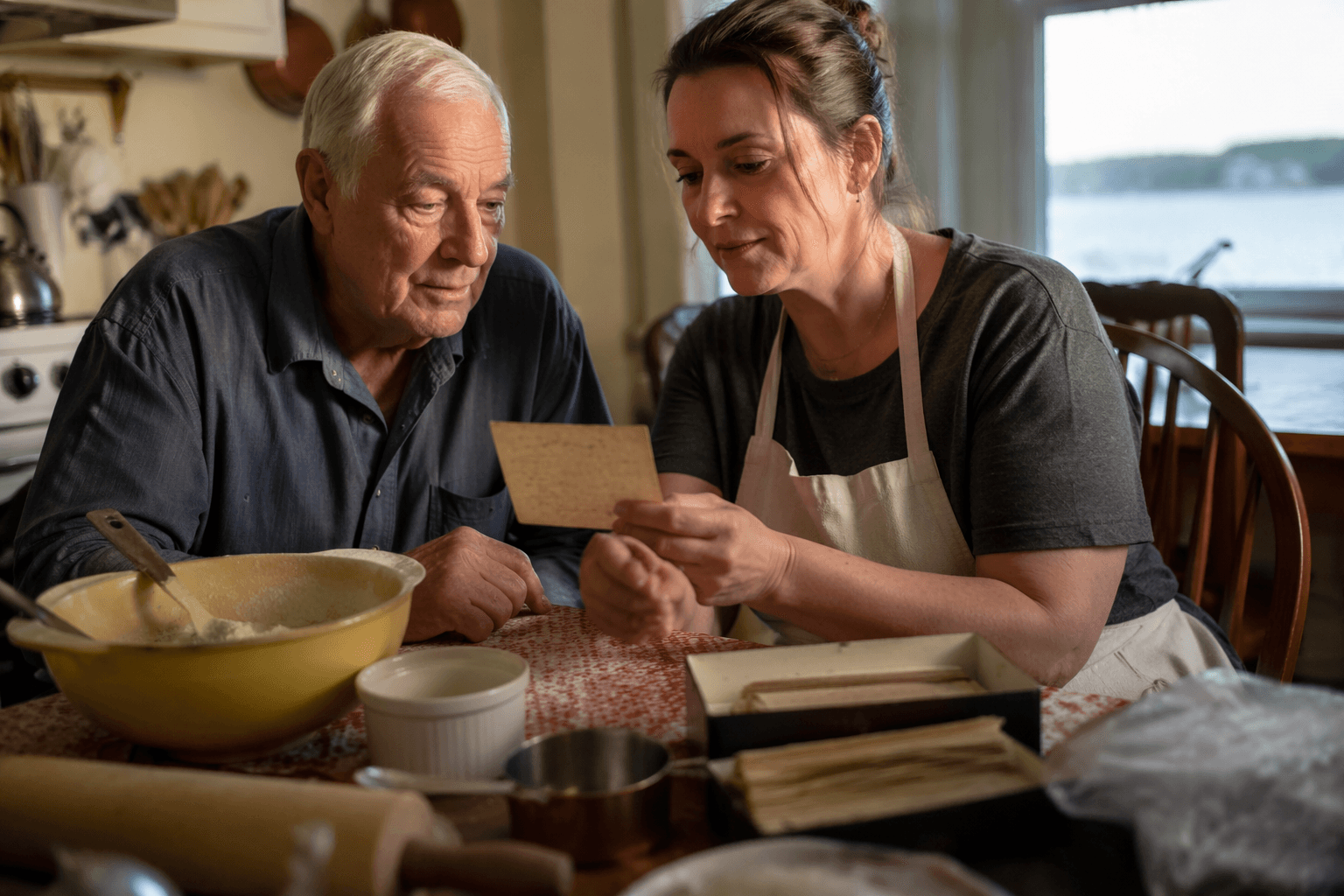
Her father’s circumstances give the visits urgency. Norris Manchester, a retired farmer, is still rooted on family land near Roque Bluffs, but age has slowed him down. After the death of his wife, Norma, in 2023, he has been dealing with loneliness and memory problems, and the rhythm of daily life is not what it once was when he kept cows, pigs, chickens and a large garden.
Why Roque Bluffs frames the family story
Norris Manchester’s home base places the family in one of coastal Downeast Maine’s most distinctive settings. Roque Bluffs State Park is a 274-acre park on Schoppee Point south of Machias that overlooks Englishman Bay and includes Simpson Pond, a 60-acre freshwater pond, along with a trail network. The park also has an oceanfront beach identified as one of five state park beaches in the 32-unit Maine Coastal Barrier System.
That geography helps explain the emotional terrain of the piece. This is a family connected to land, water and long memory, but also to the realities of rural aging. Jane is coming from the Midcoast to Washington County for a daylong caregiving trip, and her father remains in the place he has known all his life. The visit becomes a way to meet that distance with something tangible and repeatable: familiar food.
The Maine meaning of whoopie pies and old cards
The baked goods themselves carry Maine history. Whoopie pies were designated the official state treat in 2011, and state sources say they have been baked in Maine since about 1925. In Jane Manchester’s kitchen, that history is not abstract. It shows up as a tray of sweets packed for a father who can taste one chapter of family life while talking through another.
Peanut butter blossoms and the casserole named after Rachel Manchester extend that idea. Each recipe is less about a finished dish than about the story attached to it. The cards are living records of how a family ate, gathered and remembered, and Jane’s use of them gives her father an immediate role in keeping those records alive.
Why the story reaches beyond one family
The larger context is rural Maine, where distance and aging often make support harder to maintain. Washington County had a 2020 Census population of 31,096, and the Downeast Public Health District, which covers Hancock and Washington counties, had a combined population of 86,574. Those numbers point to a region where neighbors may be far apart and family caregiving often means driving long distances.
That is what gives this story its practical value for Sagadahoc County readers. It is not a pitch for a business or a pop-up, and it does not hinge on a public event. It is a model of how family recipes can serve as a low-cost, low-ceremony way to stay connected when memory fades and visits are difficult to sustain. A recipe box, in this case, is not a relic. It is a tool that makes repeated contact possible.
What this looks like on the ground
For families facing similar stretches of distance or dementia-related memory loss, the example is straightforward enough to replicate:
- choose recipes that already carry family meaning
- bring the original cards or copies to the person you are visiting
- use each dish as a prompt for names, places and shared events
- repeat the routine often enough that the memory work becomes familiar
Jane Manchester’s baking is still personal, but the practice has a wider civic edge. In a state where long drives and aging parents are common facts of life, the simplest traditions can become dependable forms of care. Here, the kitchen is doing what institutions often cannot: preserving continuity one visit at a time.
This article was produced by Prism’s automated news system from verified source data, official records, and press releases, then run through automated quality and moderation checks before publishing. The system is built and supervised by the people who set the standards it runs under. Read our full AI policy.
Did this article answer your question?