Biologist documents rare Golden Gate leech in Golden Gate Park
A Berkeley biologist lifted wood near Mallard Lake and found two tiny leeches hiding underneath. His iNaturalist post became the first-ever public record of the Golden Gate leech.
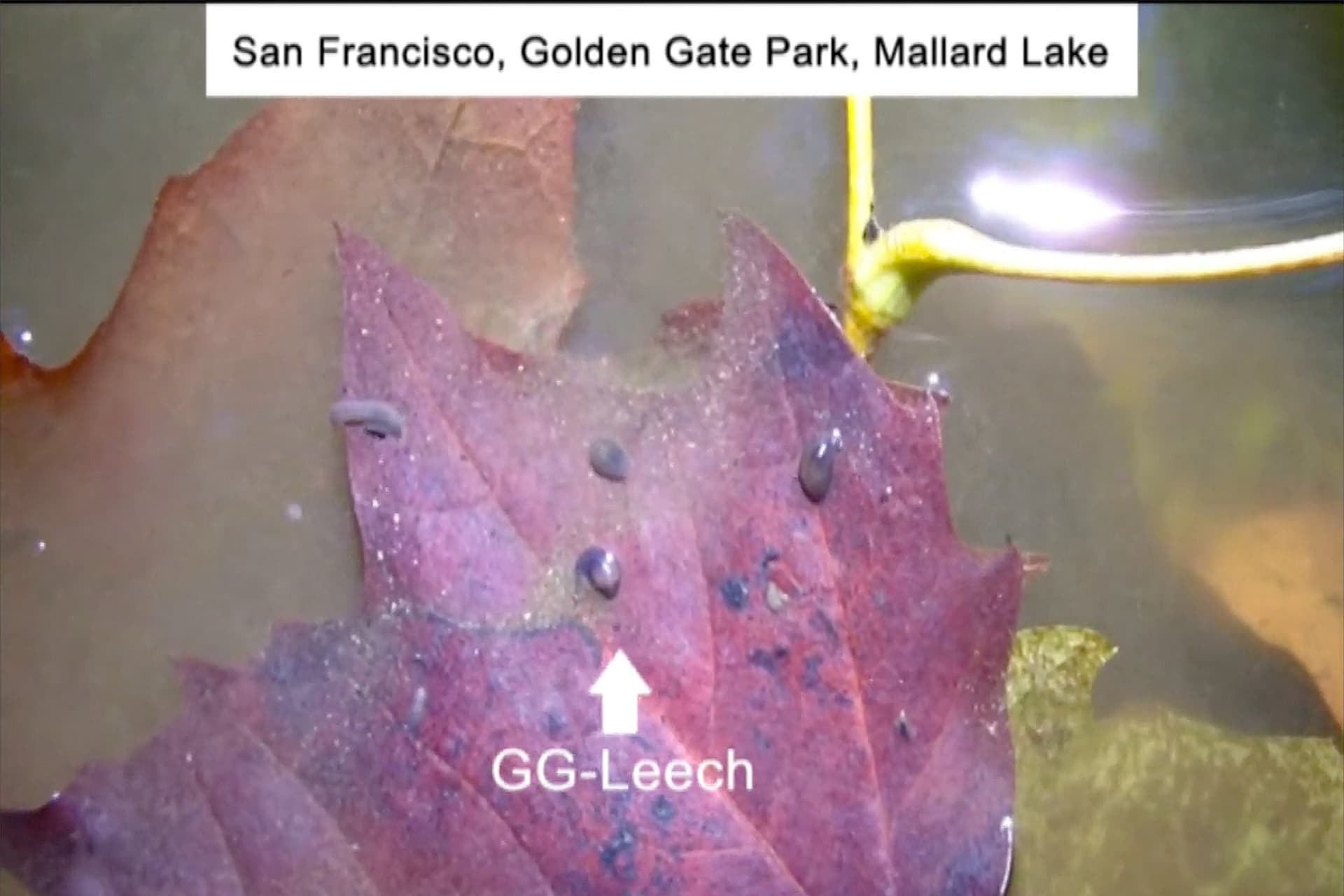
Near Mallard Lake in Golden Gate Park, a biologist lifted a piece of wood and found two tiny leeches hiding underneath, turning an ordinary park search into the first-ever iNaturalist record of the Golden Gate leech. The find matters because Helobdella californica is a predatory species tied to San Francisco’s freshwater habitat, and it shows how much of the park’s biological life still sits just below the surface.
Richard Hasegawa, a Berkeley resident who works for the environmental consulting firm WRA, photographed the leeches on April 26, 2026 with an Olympus Tough TG-6 camera during the 2026 City Nature Challenge. He said it took only about five minutes of searching through twigs and leaves near the water’s edge before he found what he was looking for. The observation was entered on iNaturalist as a Golden Gate leech from Golden Gate Park in San Francisco, and a project note said it was one of more than 70 species documented on the platform for the first time during the event.
The City Nature Challenge began in 2016 as a competition between Los Angeles and San Francisco, and by 2026 it had become a global bioblitz that recorded more than 3 million wildlife observations from over 106,000 participants. Against that scale, the Golden Gate leech stands out not because it was flashy, but because it was overlooked for so long in one of the city’s most visited parks. Golden Gate Park is known for museums, concerts and recreation, yet this discovery pointed to a quieter identity: a place where resident species can still surprise trained observers.

That surprise also fits the species’ scientific history. A 2011 paper said Helobdella californica had only been found in Golden Gate Park’s freshwater ecosystems over the previous 25 years. Another paper described specimens from Stow Lake and said the original Stow Lake population was not found in 2007, possibly because of eutrophication in the duck pond. A 2023 paper said the leech had been collected in the Botanical Garden creeks as early as 1986 and noted that the San Francisco Bay area leech had been misclassified for years.
Some accounts suggest the species may have reached the Bay Area in the 1850s, likely hitching a ride on plants or other debris from South America. If so, the leech has persisted through generations in San Francisco’s isolated freshwater pockets, making this small discovery a reminder that the city’s familiar parks still hold scientific surprises.
This article was produced by Prism’s automated news system from verified source data, official records, and press releases, then run through automated quality and moderation checks before publishing. The system is built and supervised by the people who set the standards it runs under. Read our full AI policy.
Did this article answer your question?