Dead gray whale near Pier 80 died from vessel strike, scientists say
A gray whale found dead near Pier 80 was killed by a vessel strike, adding to 12 Bay Area gray whale deaths this year and renewing pressure on shipping rules.
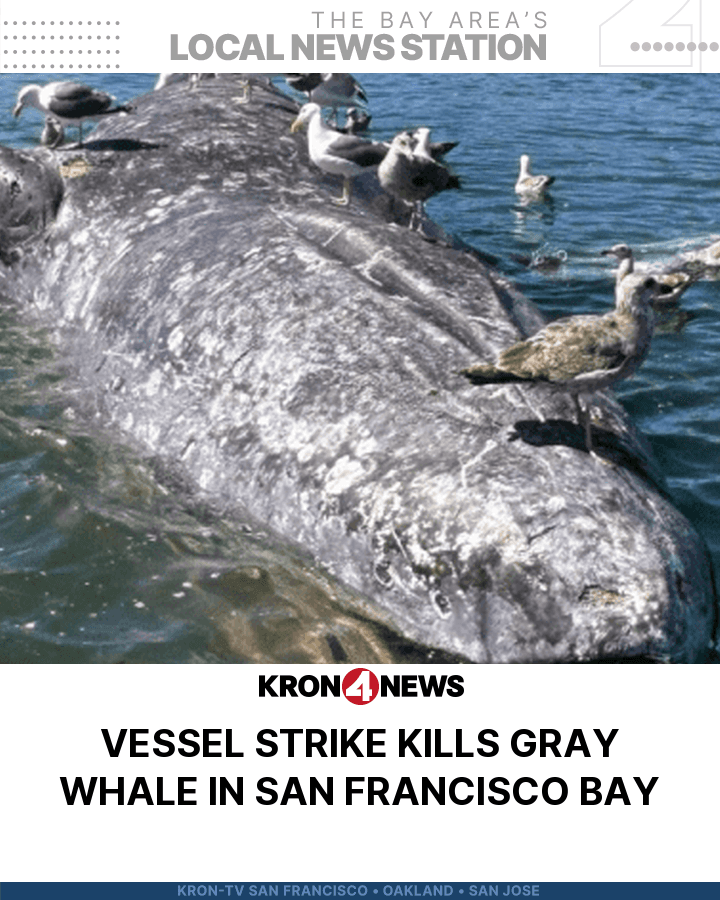
The gray whale found dead near Pier 80 added another grim marker to San Francisco Bay’s growing tally of whale deaths. Scientists confirmed the animal died from a vessel strike, making it the 12th dead gray whale discovered in the Bay Area this year and intensifying questions about what San Francisco is doing to keep ships from hitting whales in one of the nation’s busiest waterways.
The Marine Mammal Center said its scientists worked with the California Academy of Sciences under federal authorization from the National Marine Fisheries Service to examine the animal and determine the cause of death. The finding is especially troubling because gray whales entering the bay are already showing unusually high mortality. A 2026 study in Frontiers found that nearly 20% of the gray whales documented entering San Francisco Bay from 2018 to 2025 died there, with vessel strikes responsible for many of those deaths.

Researchers and advocates say the risk is baked into the geography and the traffic. Gray whales ride low in the water, making them harder for ship operators to spot, and San Francisco Bay sits in a dense shipping corridor on the West Coast. The problem has been known for years. In 2013, shipping lanes near San Francisco were extended farther offshore to reduce whale and ship interactions, but recent strandings show the danger has not disappeared.

The latest death comes as the broader eastern north Pacific gray whale population remains under strain. National Oceanic and Atmospheric Administration estimates put the population at about 13,000 animals in 2025, the lowest since the 1970s. That decline has sharpened the stakes for every collision in the bay, where scientists say repeated strandings reflect both shifting whale behavior and the pressure of vessel traffic through San Francisco waters.

The question now is whether the agencies and port operators that manage that traffic will move beyond warnings and testing. Recent Bay Area reporting has pointed to new whale-detection and alert systems now being tried to help ships and ferries avoid collisions, but the continued deaths near Pier 80 suggest enforcement, speed limits, and additional rerouting options are all back on the table. For San Francisco, the issue is no longer just marine science. It is an accountability test for the people controlling the lanes where cargo, ferries and whales keep crossing paths.
This article was produced by Prism’s automated news system from verified source data, official records, and press releases, then run through automated quality and moderation checks before publishing. The system is built and supervised by the people who set the standards it runs under. Read our full AI policy.
Did this article answer your question?