Dozens of shopping carts found stuck in South San Francisco marsh
Dozens of shopping carts are lodged in Colma Creek marsh, hidden at high tide and alarming Bay Trail walkers who called the scene “crazy” and “gross.”
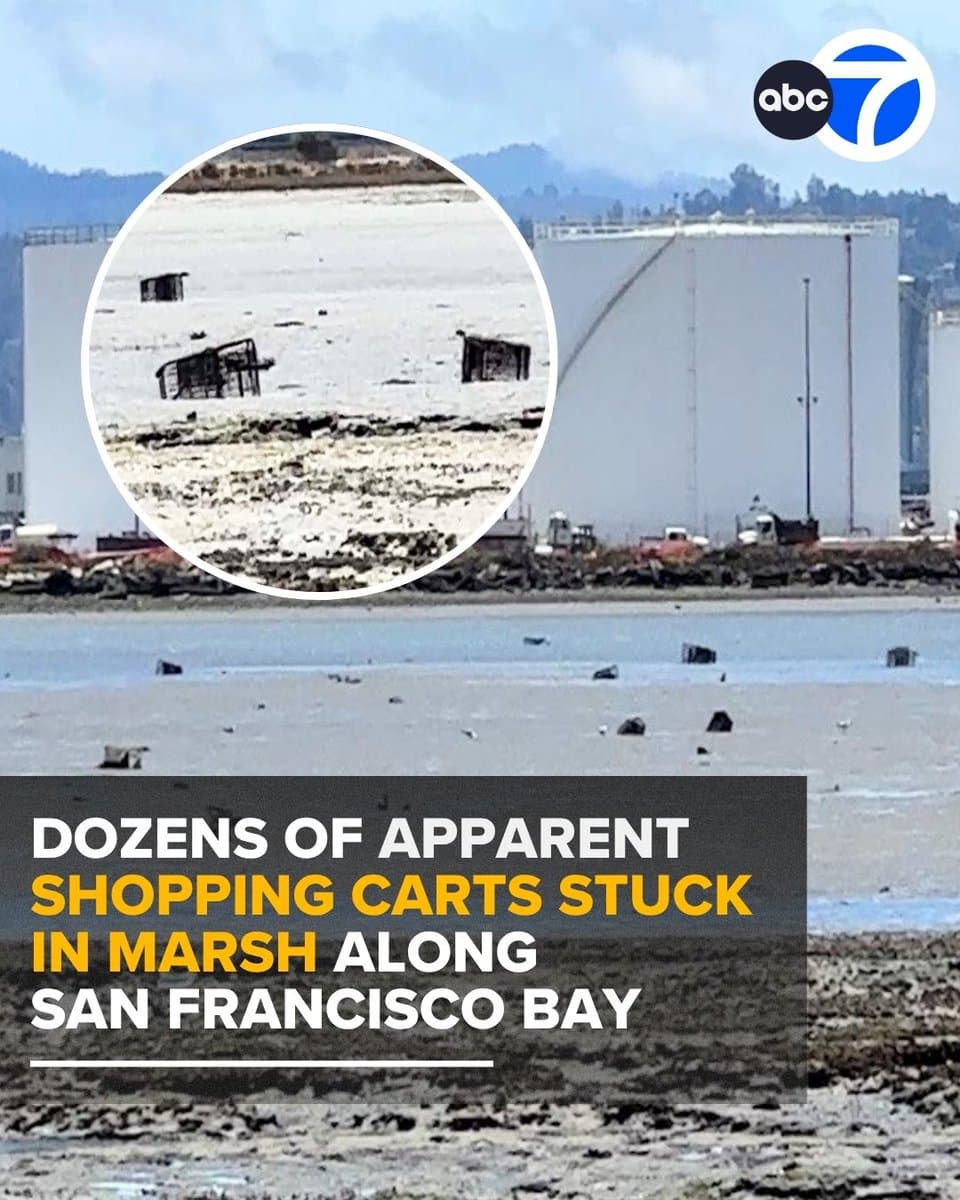
Dozens of shopping carts have been stranded in the Colma Creek marsh beside the San Francisco Bay Trail in South San Francisco, turning an everyday walk past the bay into a small environmental mystery. At low tide, the carts are exposed in plain view; when the water rises, they blend into the marsh and become much harder to spot.
The sight has unsettled people using the trail, who told ABC7 the scene looked “crazy” and “gross.” Some walkers and runners have been stopping to stare at the debris field as they pass the stretch of shoreline near San Francisco Bay, where the carts sit scattered across marsh habitat instead of in a store lot or a cart corral.

The scale is what has drawn the most attention. This is not one or two abandoned carts but what appears to be dozens spanning the Colma Creek marsh, and Save the Bay says it has not seen a concentration like this before. Josh Quigley, Save the Bay’s senior policy manager, said it was the greatest concentration he has ever seen and argued that the bay is being treated like a dumping ground rather than the “jewel and resource” it should be.
The question now is not just how the carts got there, but what their presence means for a shoreline that San Francisco Bay communities have spent decades trying to protect. Save the Bay, founded in 1961 to stop excessive filling of San Francisco Bay, has long framed the shoreline as fragile public trust land, where trash and discarded objects can foul wetlands and undermine habitat.

Residents interviewed along the trail floated possible explanations ranging from prank behavior to general trash buildup, but the reporting did not resolve who dumped the carts or who is responsible for pulling them out. For South San Francisco, the image is a reminder that the bay’s edge is still vulnerable to neglect, and that a strange pile of metal in the marsh can signal a larger problem along the shoreline.
This article was produced by Prism’s automated news system from verified source data, official records, and press releases, then run through automated quality and moderation checks before publishing. The system is built and supervised by the people who set the standards it runs under. Read our full AI policy.
Did this article answer your question?