Fillmore Juneteenth marks Black San Francisco’s survival amid displacement
In the Fillmore, Juneteenth is a survival claim as much as a celebration. The neighborhood’s history shows how Black San Francisco built a home, then fought to keep it.
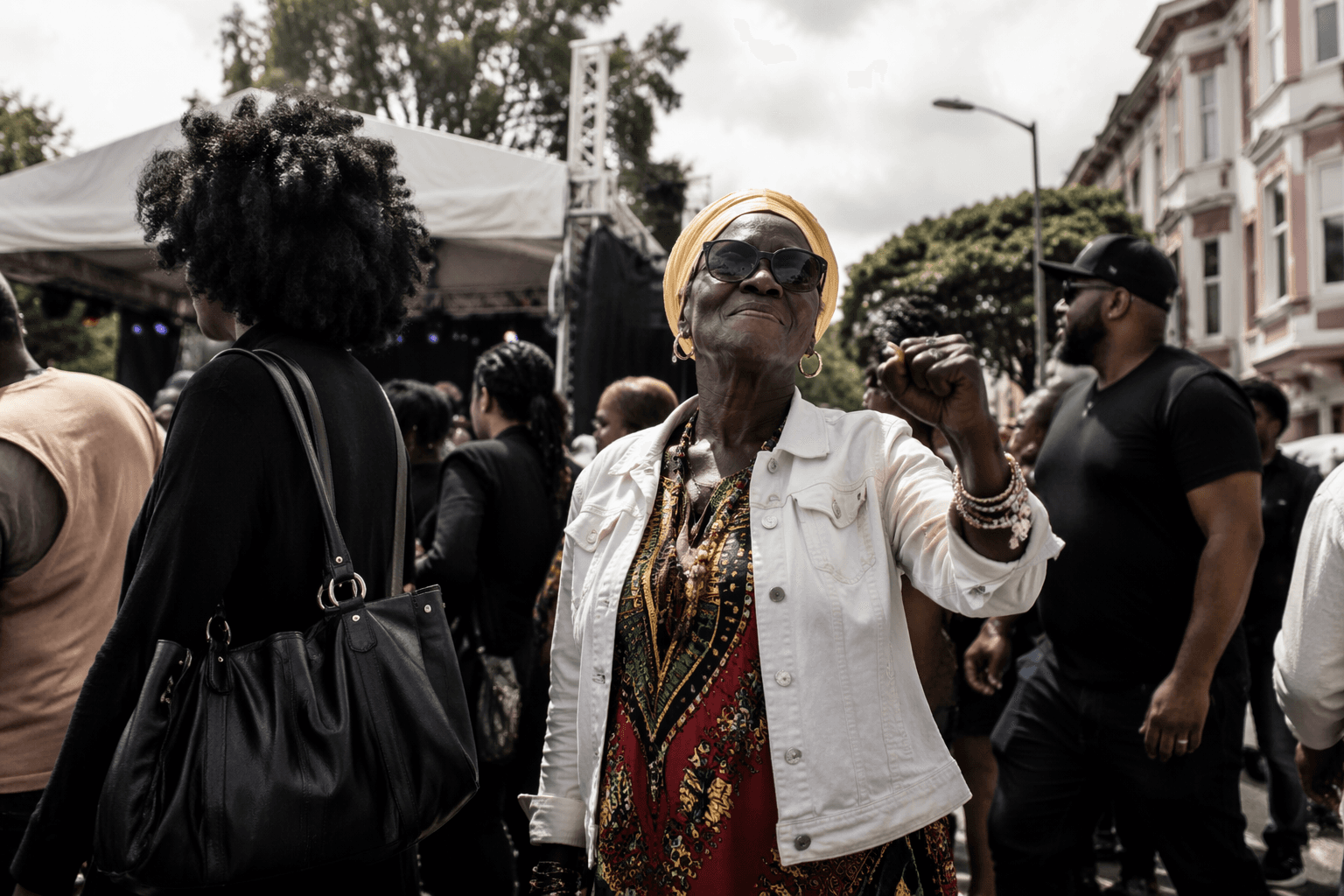
In the Fillmore, Juneteenth is more than a holiday on the calendar. It is a public claim that Black San Francisco still belongs in a neighborhood where wartime migration, urban renewal, and decades of displacement reshaped who could live, gather, and build institutions. The celebration’s local roots reach back to 1945, when Wesley Johnson rode down Fillmore Street announcing Juneteenth and inviting the city to join.
A holiday born on Fillmore Street
Wesley Johnson, who was born in 1908 in Galveston, Texas, later came to San Francisco with his family after World War I. In 1945, he created what San Francisco State says became the longest continuously running Juneteenth celebration in America, giving the holiday an unmistakably local starting point in the Fillmore District. Nineteen years later, he established the Juneteenth parade in San Francisco, turning a neighborhood observance into a civic tradition with staying power.
That history matters because the Fillmore was not just any setting. For decades, it was known as the Harlem of the West, a place where Black life was visible in public, supported by dozens of jazz clubs and about 200 churches. Juneteenth in the Fillmore still carries that legacy: it is both a celebration and an insistence that Black culture is not an afterthought in San Francisco.
How war remade the neighborhood
World War II changed the Fillmore’s social map with unusual speed. In 1942, the forced removal of Japanese Americans left many houses vacant, and Black newcomers arrived to take war-industry jobs. PBS and KQED describe the change as a tenfold increase in San Francisco’s Black population within five years, a surge that concentrated people, energy, and institutions in the Fillmore and nearby parts of the Western Addition.
By 1950, the Fillmore’s 26 blocks were reportedly housing upwards of 200 people per acre, according to a University of San Francisco Fillmore Activist Project account. That density later became part of the justification for urban renewal, showing how a neighborhood built by migration and necessity could be recast as a problem to be managed. The result was not just a change in housing stock, but a direct hit to the cultural infrastructure that had made the Fillmore the center of Black San Francisco.
Displacement changed the meaning of Juneteenth
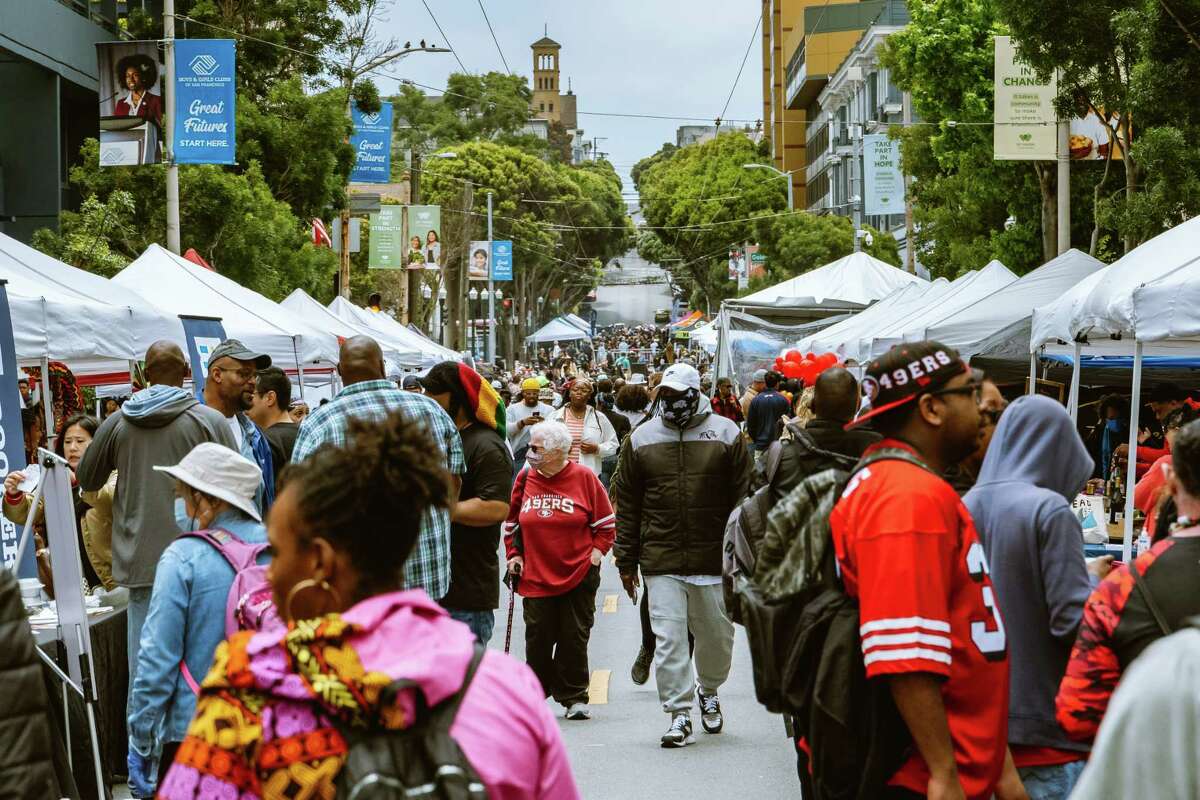
Over time, urban renewal and displacement dramatically reduced the Fillmore’s Black population and weakened the institutions that anchored daily life there. KQED’s notes say the neighborhood’s Black population fell from 57% in 1970 to 16% in 2020, while a San Francisco Chronicle analysis found Black residents citywide declined from 13.4% in 1970 to 5.4% in 2020. Those numbers matter because they show that Juneteenth in San Francisco is not just about memory, but about scale, access, and the right to remain visible in the city.
That is why the celebration lands as a civic statement. The Fillmore’s Juneteenth gathering asks a hard question that echoes far beyond one street corner: who still gets to live here, who gets to gather here, and who gets to build institutions that last? In a city that has repeatedly pushed Black residents to the margins, the holiday becomes a reminder that survival is not passive. It has to be organized, repeated, and defended.
What city-backed Juneteenth looks like now
San Francisco’s broader Juneteenth observances now come with visible city support. The city’s 2024 Juneteenth Parade and Festival, presented by the Dream Keeper Initiative and the City and County of San Francisco, began at Market and Spear streets, ended at United Nations Plaza, and included a festival at Fulton Plaza. Mayor London Breed has said Juneteenth in San Francisco is a time for unity, joy, and reflection on what Black people have endured, framing the day as both celebration and reckoning.
That citywide scale matters, but it also highlights the difference between pageantry and permanence. A parade route down Market Street can create visibility for a day; the harder task is keeping a neighborhood’s Black institutions alive the rest of the year. That is where the Fillmore’s present-day cultural work becomes central, not symbolic.
The Fillmore Heritage Center is the next test
In 2026, the city announced Fillmore Heritage Center activations and Fillmore After Dark as part of a plan to support the corridor’s cultural anchors and small businesses. Officials called the Fillmore Heritage Center reactivation a first step in reversing a long history of disinvestment on Fillmore Street. That language is important because it ties Juneteenth to economics in the most local sense possible: storefronts, stages, gathering places, and the businesses that let people stay in the neighborhood.
The story also centers local voices such as Ericka Scott, founder and CEO of Honey Art Studio, underscoring how Black cultural work now depends on spaces that can still operate in place. Juneteenth in the Fillmore is not only about remembering what was lost. It is about whether artists, merchants, churches, and families can still make a future in the same corridor where Black San Francisco once flourished.
The Fillmore’s Juneteenth celebration makes one thing plain: history here is not locked in archives or official proclamations. It lives on the street, in the institutions that remain, and in the struggle to keep Black presence rooted in a city that has spent generations trying to move it elsewhere.
This article was produced by Prism’s automated news system from verified source data, official records, and press releases, then run through automated quality and moderation checks before publishing. The system is built and supervised by the people who set the standards it runs under. Read our full AI policy.
Did this article answer your question?