Golden Gate Park’s vast scale makes it central to San Francisco life
Golden Gate Park is San Francisco’s shared backyard, but its scale is exactly what makes it both indispensable and contested. The same acres that welcome runners, festivals, and gardens also strain access, crowding, and transit.
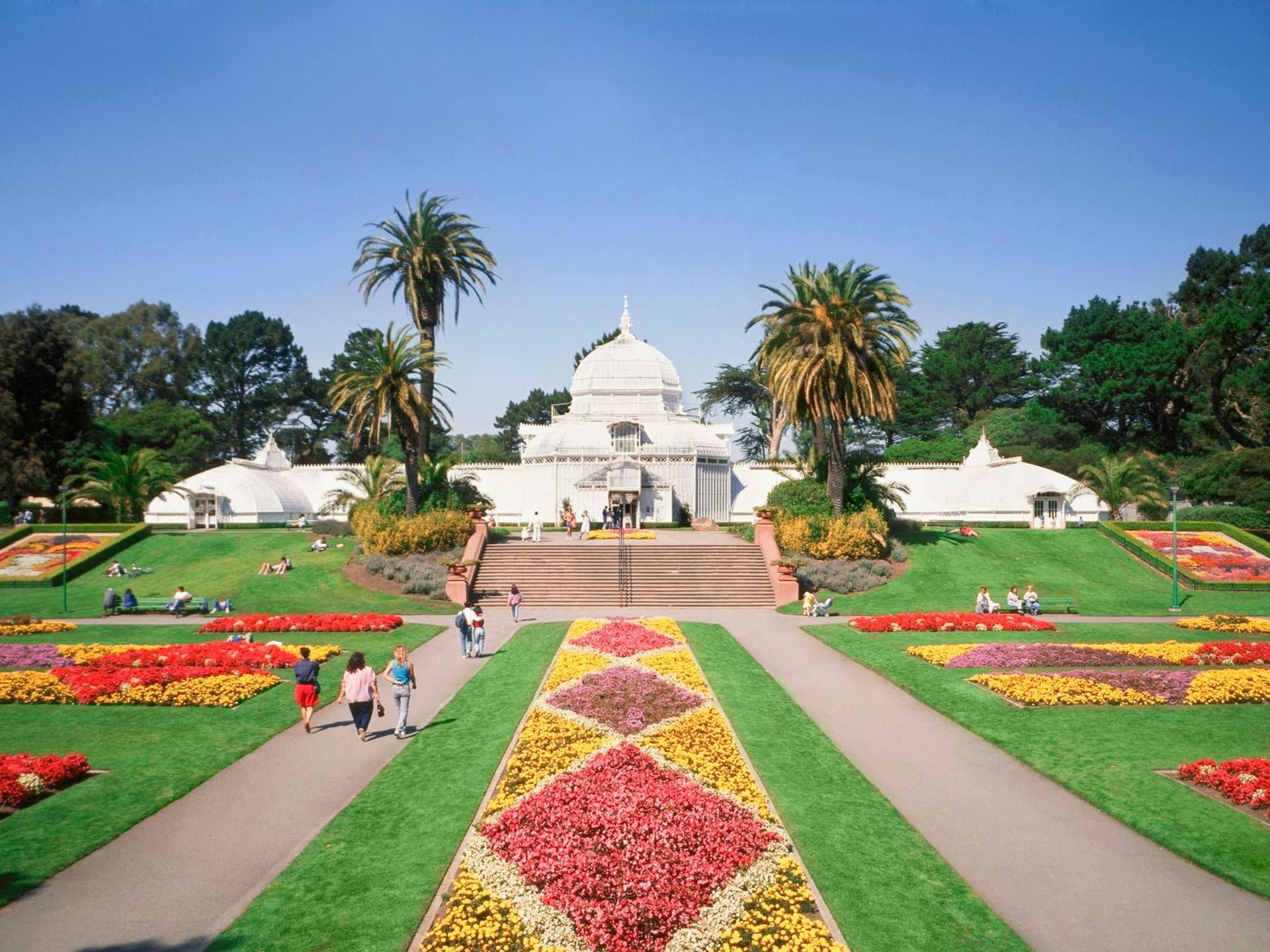
Golden Gate Park as San Francisco’s release valve
Golden Gate Park is where San Francisco goes to make room for itself. At 1,017 acres and roughly three miles long from Haight-Ashbury to Ocean Beach, it is big enough to absorb the city’s competing needs without becoming any one thing alone. That is its strength, and also the source of its friction: one landscape is expected to serve kids, runners, dog owners, cyclists, museum visitors, garden lovers, musicians, and event crowds at the same time.
The park’s size is not a side note. It is the reason it remains one of the city’s most important public assets, because a dense city with scarce private space needs a place that can handle many uses at once. Golden Gate Park does not work like a single-purpose facility. It works because it is flexible enough to host organized sports, casual walks, school outings, concerts, gardens, picnics, and quiet time in the same broad frame.
A park built from sand dunes
Golden Gate Park’s scale still carries the mark of its origin. San Francisco Recreation and Parks says it began in 1870 on 1,013 acres of windswept sand dunes in the Outside Lands, under surveyor, designer, and first superintendent William Hammond Hall. The California Office of Historic Preservation describes it as the first major park created on reclaimed land, a transformation it calls unprecedented in the region’s recreation and social history.
That history matters because it explains why the park feels so unusual in San Francisco. It was not simply preserved open space; it was made into open space. Golden Gate Park was later listed on the National Register of Historic Places in 2004, which reflects how deeply its landscape is tied to the city’s identity, not just its leisure habits.
Why the park can hold so many San Franciscos at once
Golden Gate Park’s most striking feature is that it does not force one version of public life to crowd out the others. A runner can move through the same acreage that holds a family picnic, a group bike ride, a visitor stopping for plants, or a local musician setting up in an open area. The park’s wide lawns, paths, gardens, and institutions allow those activities to coexist, even when they do not fully overlap in pace or purpose.
That flexibility is what makes the park feel like civic infrastructure rather than just a destination. San Francisco Travel says millions of visitors come each year, and the park contains 7,000 kinds of plants. Those numbers capture both sides of its role: it is a major tourist draw and a daily refuge for residents who need open air, exercise, or a free place to spend time. In a city where space is expensive, the park offers something increasingly rare: room.
Where the park’s flexibility starts to strain
The same qualities that make Golden Gate Park essential also make it contested. When a place serves millions of visitors, hosts cultural institutions, supports recreation, and remains open to everyday use, it naturally becomes a site of pressure. Access is one of the first pressure points. Crowds can build quickly during warm weather and major events, and the park’s draw from across the city means that streets, bike routes, and nearby transit corridors all have to absorb the spillover.
Noise and crowding are part of the tradeoff as well. A park that can hold festivals and large gatherings is also a park where quieter uses can be interrupted, especially when a single area is asked to host both celebration and solitude. The result is a familiar urban tension: the more useful the park becomes to more people, the harder it is to preserve any one ideal experience of it.
Transportation conflicts are part of that same equation. Golden Gate Park’s three-mile span from Haight-Ashbury to Ocean Beach means people arrive from many directions, by foot, bike, transit, and car. That reach is a civic advantage, but it also means the park is constantly negotiating movement at its edges and through its interior. In a city shaped by narrow streets and intense demand, a park this large becomes not just open space but a traffic and access system of its own.
The Gardens of Golden Gate Park as a cultural anchor
Inside that larger landscape, the Gardens of Golden Gate Park add another layer of purpose. Their institutions are organized around connecting people to plants, the planet, and each other, which fits the park’s broader civic role. They are not just scenic additions; they help define the park as a place where education, ecology, and public life meet.
Their 2023 to 2028 strategic plan shows that the park is still being actively managed as a living civic resource, not frozen as a monument. That planning matters in a park of this scale because the challenge is not simply preserving acreage. It is deciding how the space should function for a city that keeps changing around it.
Why Golden Gate Park still defines San Francisco
Golden Gate Park remains central because it gives San Francisco something rare: a shared backyard large enough to hold contradiction. It can be peaceful and crowded, local and tourist-heavy, athletic and contemplative, cultural and natural. That mix is exactly why it stays at the center of debates about public spending, maintenance, recreation, and city life.
Its 1,017 acres are not just a measure of land. They are a measure of how much urban life San Francisco asks one place to carry. The park’s continued importance lies in that burden and in its ability to absorb it, year after year, as a historic landscape, a recreational engine, and one of the city’s few places where the public still gets to feel spacious.
This article was produced by Prism’s automated news system from verified source data, official records, and press releases, then run through automated quality and moderation checks before publishing. The system is built and supervised by the people who set the standards it runs under. Read our full AI policy.
Did this article answer your question?