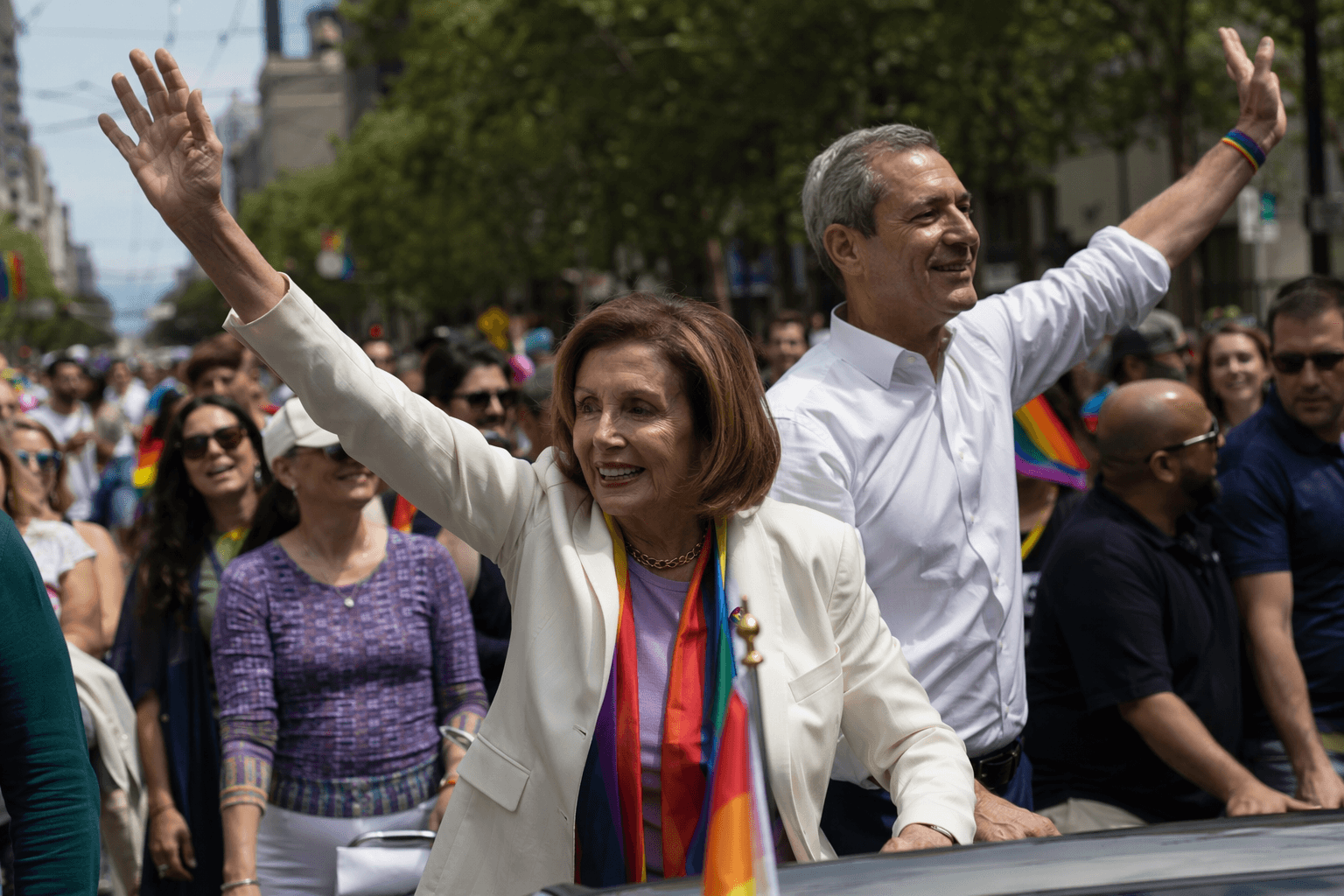
Nancy Pelosi, Mayor Lurie lead San Francisco Pride parade
Pelosi and Lurie marched Market Street as Pride’s “Resistance in Action” theme met chants, police presence and competing turnout estimates.

Nancy Pelosi and Mayor Daniel Lurie walked the 56th annual San Francisco Pride Parade on Sunday as it moved down Market Street from the Embarcadero to Civic Center Plaza. Organizers described the 1.6-mile route as a march of resistance and joy, with a special Resistance Contingent, hundreds of contingents overall and a focus on uplifting TGNCI+ community members.
The parade started at 10:30 a.m. and anchored a weekend Pride celebration at Civic Center Plaza on June 27 and 28 that capped a month of events across San Francisco. Organizers expected the broader celebration to draw more than 1 million people over the weekend, while the parade itself drew sharply different attendance estimates: ABC7 put participation at about 56,000, and NBC Bay Area put it at about 25,000 people on the route.
The theme, “Resistance in Action,” came as organizers and speakers tied Pride to a tense national backdrop for LGBTQ+ rights, especially transgender rights, under President Donald Trump. On the route, Bob Davis said people could not simply stay home in the face of threat and erasure, while Rev. Megan Rohrer said that when people are angry in the news or in legislation, joy becomes even more important.
Pelosi linked the day to decades of organizing, saying speaking out had made a difference from the fight against AIDS to the present moment. Lurie told marchers San Francisco was showing the world “how you do Pride.” State Sen. Alex Padilla said San Francisco was a place prepared to resist as long as there is a threat to anyone. Sen. Scott Wiener was chased away from the Trans March the previous Friday amid harassment tied to his views on Israel and Gaza.
Protest chants about LGBTQ+ rights echoed along parts of the route, and San Francisco Police Chief Derrick Lew said the parade required substantial police resources. Pride organizers also set aside ADA-accessible viewing platforms, ASL interpreters and parade support.
San Francisco Pride traces its roots to June 27, 1970, when about 30 LGBTQ people marched down Polk Street to mark the first anniversary of Stonewall, then gathered for a gay-in at Speedway Meadows in Golden Gate Park the next day. The rainbow flag later flew at the 1978 San Francisco Gay Freedom Day parade.
This article was produced by Prism’s automated news system from verified source data, official records, and press releases, then run through automated quality and moderation checks before publishing. The system is built and supervised by the people who set the standards it runs under. Read our full AI policy.
Did this article answer your question?