Outer Sunset Kitchen Fire Contained Quickly, No Injuries Reported
A kitchen fire in the Outer Sunset was quickly contained Monday with no injuries, but in a neighborhood of 1930s wood-frame homes, a grease flash can reach an exit route in seconds.
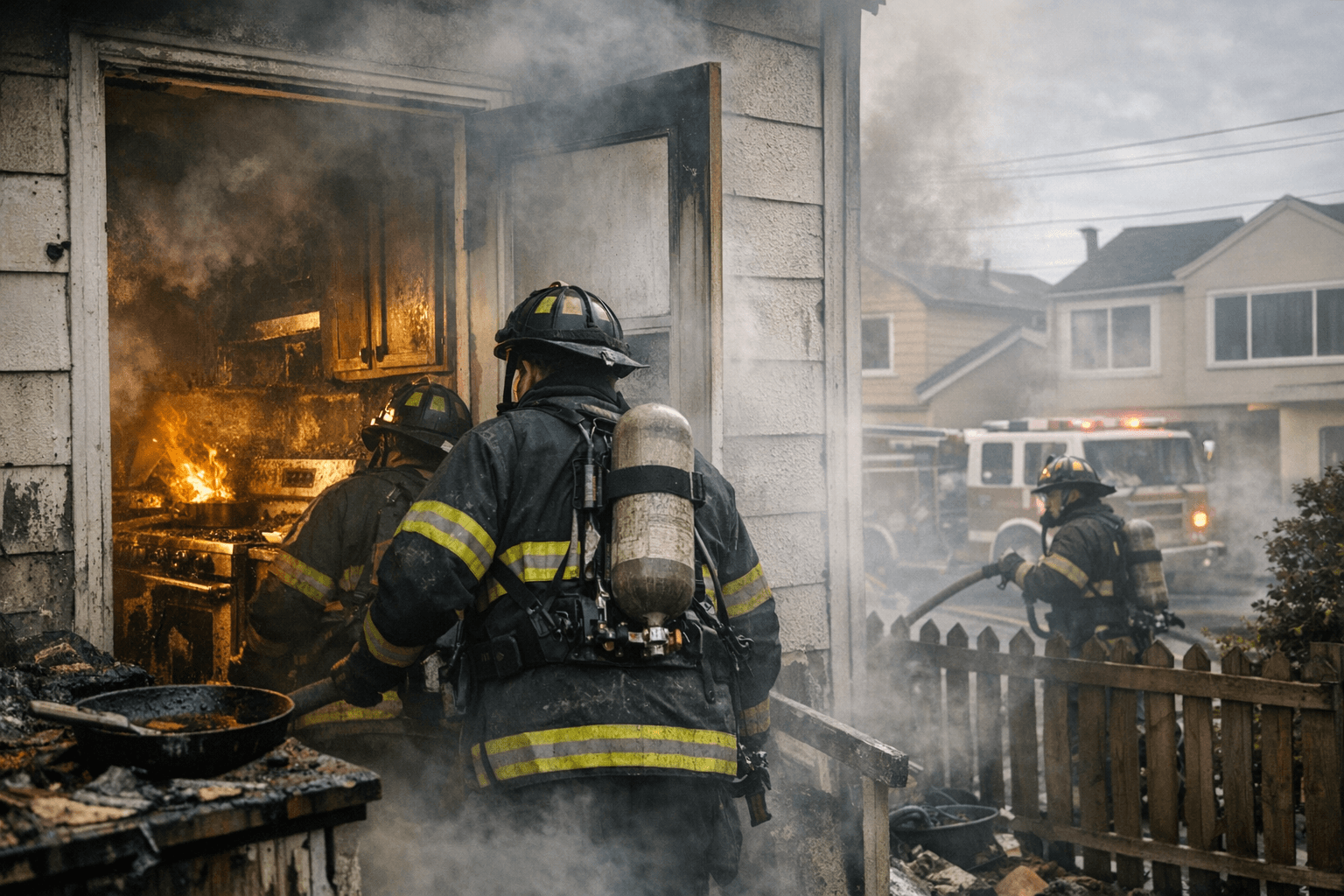
Past 35th Avenue, where Henry Doelger's compact two-story homes press shoulder to shoulder against the incoming marine layer, a San Francisco Fire Department crew was already pulling hose before most of the block had stirred Monday morning.
A kitchen fire broke out at a home in San Francisco's Outer Sunset neighborhood early Monday, with SFFD units responding and containing the blaze quickly. No injuries were reported.
The department did not release a specific address or confirm how the fire started, but kitchen fires in residential homes follow a predictable ignition pattern. Cooking oil, fat, or grease is the initial fuel source in 51 percent of kitchen fires, and cooking-related fires are the number one cause of home fires and home fire injuries, with 47 percent of them starting as the result of cooking equipment left unattended, according to the National Fire Protection Association. A toaster oven running unattended with crumbs in the tray, a pan of oil left on a back burner while someone steps away for a moment: either scenario can turn a Monday morning routine into an emergency call within two minutes.
In the Outer Sunset, those odds carry compounded consequences. The neighborhood is known for its early-to-mid-20th-century wood-frame homes, most of them built in the 1930s and 1940s by developer Henry Doelger. The typical Doelger layout features a garage and storage on the first floor, followed by living space above, with kitchens that often share a wall with the building's only interior stairwell. In a grease fire scenario, smoke and heat can funnel directly into that escape route within seconds. The neighborhood's persistent coastal fog keeps windows closed for much of the year, limiting natural ventilation and allowing cooking smoke to concentrate before a detector triggers.
For renters in these homes, a 60-second audit of the kitchen today is worth doing. Start with the smoke detector. To prevent the smoke alarm from triggering every time you cook, install smoke detectors at least 20 feet away from the stovetop. If that's not possible, use the hush feature if the detector is installed 10 to 20 feet from the stove. If the only detector in the unit is directly above the range, or absent altogether, that is a landlord conversation that cannot wait. Under California law, landlords are required to install functioning smoke alarms in rental units before a new tenancy begins and to repair them promptly once notified of a defect.
Next, check for an extinguisher. A standard ABC dry-chemical unit handles most kitchen fires, though a Class K extinguisher offers more precise suppression for oil-intensive cooking. If neither is present, a lid that fits the skillet is the fastest first response to a grease flash, as it cuts off oxygen to the flame. Baking soda kept within reach provides a backup for small stovetop fires. Never use water on a grease fire.
Finally, walk the exit. In a Doelger two-story, the front door is often the only practical egress if a kitchen fire blocks the rear stair. Confirm the path is unobstructed and the deadbolt opens quickly in low light.
Monday's fire ended without injury, a testament to the SFFD's rapid response. In a neighborhood of wood-frame homes that predate modern fire codes by eight decades, that outcome is never a given.
This article was produced by Prism’s automated news system from verified source data, official records, and press releases, then run through automated quality and moderation checks before publishing. The system is built and supervised by the people who set the standards it runs under. Read our full AI policy.
Did this article answer your question?