Presidio reveals San Francisco’s layered history, from Ohlone land to park
At the Presidio, San Francisco’s past stacks up on one walkable landscape, from Yelamu villages and Spanish fort lines to wartime command posts and a 14-acre new park.

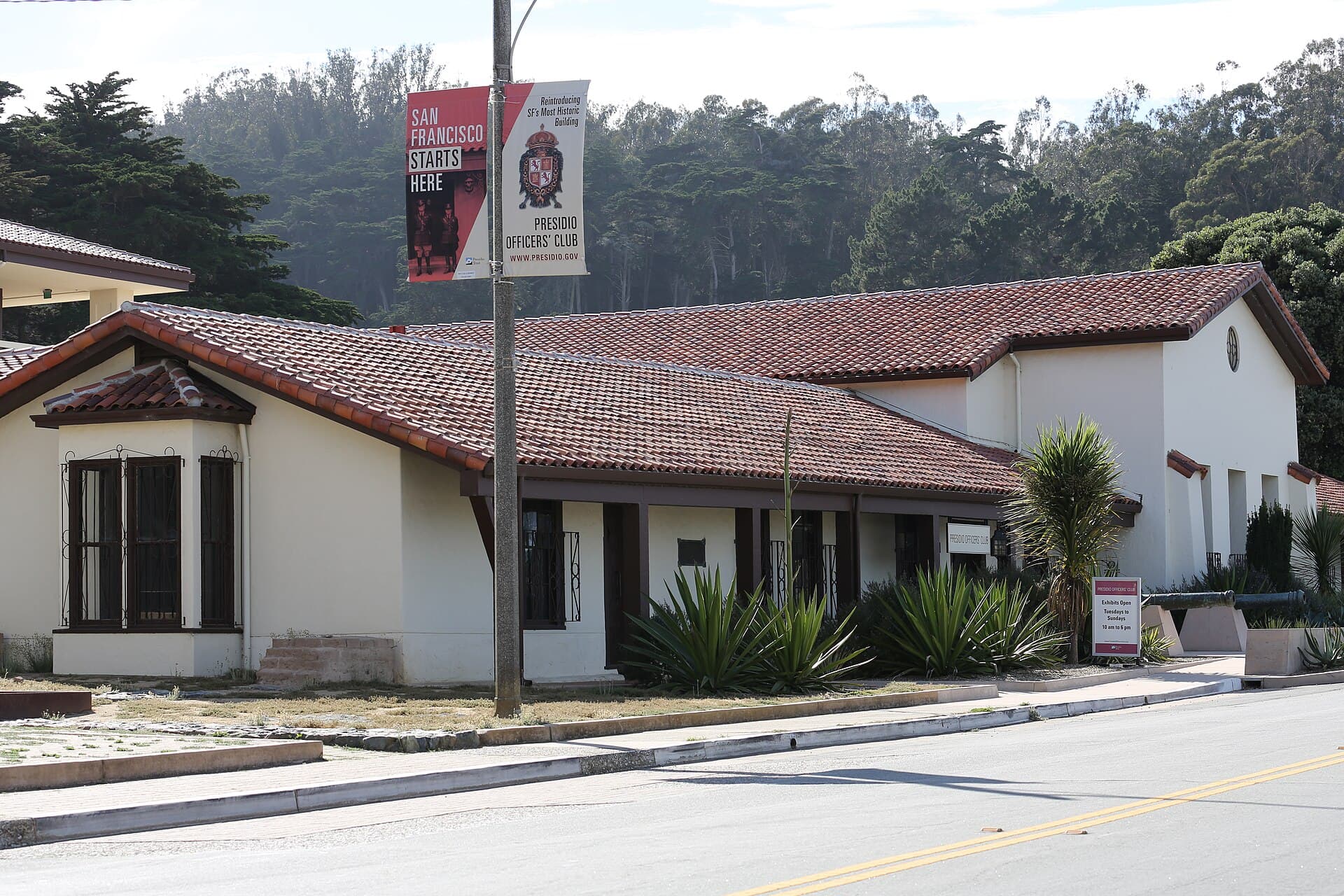
The Presidio is one of the few places in San Francisco where the city’s biggest power shifts are still visible on foot. Start at the Main Post, where the oldest standing buildings sit on ground first shaped by Yelamu people, then by a Spanish garrison founded in 1776, then by Mexico, the U.S. Army, and finally the National Park Service. The Presidio Officers’ Club, the park’s oldest and most historic building, sits at the center of that story, and the Presidio itself describes the Main Post as the historic heart of the park.
The landscape matters because this is not a single monument or museum complex. The National Park Service says the Presidio covers 1,491 acres and contains 768 historic buildings and structures, while other Presidio materials describe about 1,500 acres and different structure counts depending on how they are tallied. That scale makes room for architecture, ecology, military history, shoreline views, and public recreation to overlap instead of compete.
Before the walls, the land belonged to the Yelamu
Long before Spanish soldiers built a post at the Golden Gate, the land belonged to the Yelamu, a local tribe of the Ramaytush Ohlone peoples of the San Francisco Peninsula. Ohlone people have lived in the Bay Area for several thousand years, and the Presidio was part of a seasonal world that included villages such as Tubsinte, Sitlintac, Petlenuc, Chutchui, and Amuctac.
That history is not sealed off behind a display case. The National Park Service says the Presidio still works with Ohlone and Costanoan groups to preserve and interpret ancestral sites, and the park’s archaeological record includes more than 30 designated areas under Presidio Trust management. In a city where development usually erases earlier layers, the Presidio keeps the original landscape embedded in the present one.
Spanish, Mexican, and U.S. military rule reshaped the same ground
Spain established the Presidio in 1776, and Mexican rule lasted from 1822 to 1846. When the U.S. Army took control in 1846, the site became one of the most important military posts on the West Coast, later earning designation as a National Historic Landmark District in 1962. One National Park Service source sets the district’s period of significance from 1776 to 1945, a span that captures the move from colonial outpost to modern military installation.
The historic frame is still visible in the built environment. The district includes hundreds of structures, from barracks and officers’ quarters to parade-ground buildings, and the Presidio’s preservation work has turned those military remnants into the core of the park experience. If you want to read the city’s history as a sequence of occupations and institutions, the Main Post is the clearest place to begin.
World War II left the darkest mark on the Presidio
The park’s beauty can make its wartime role easy to miss, but the Presidio was headquarters for the Western Defense Command during World War II. That command carried out the forced removal of 120,000 Japanese Americans and people of Japanese descent from the West Coast, and Lt. Gen. John L. DeWitt signed civilian exclusion orders at the Presidio on April 7, 1942. By the fall of 1942, all Japanese Americans had been evicted from California and confined in camps.
The same military post also housed the Military Intelligence Service Language School, a top-secret program that trained Japanese American linguists. The school opened in November 1941 with 60 students, 58 of them Japanese American, taught by four Nisei instructors, and its first graduating class had 45 students in May 1942. Between 1941 and 1946, the program produced 6,000 graduates. At the Presidio, the machinery of exclusion and the machinery of wartime intelligence occupied the same grounds, which is why the park’s history carries both national importance and local weight.
Walk the park from the Main Post to the shoreline
The most useful way to experience the Presidio is as a route, not a checklist. The park has more than 24 miles of hiking trails, eight scenic overlooks, and 14 miles of paved roads, and its routes connect to Crissy Field, the Bay shoreline, the Bay Area Ridge Trail, the Bay Trail, and the Juan Bautista de Anza National Historic Trail. Presidio FAQs also list 11 miles of hiking trails and 14 miles of biking routes, reflecting the different ways the park counts its paths and connections.

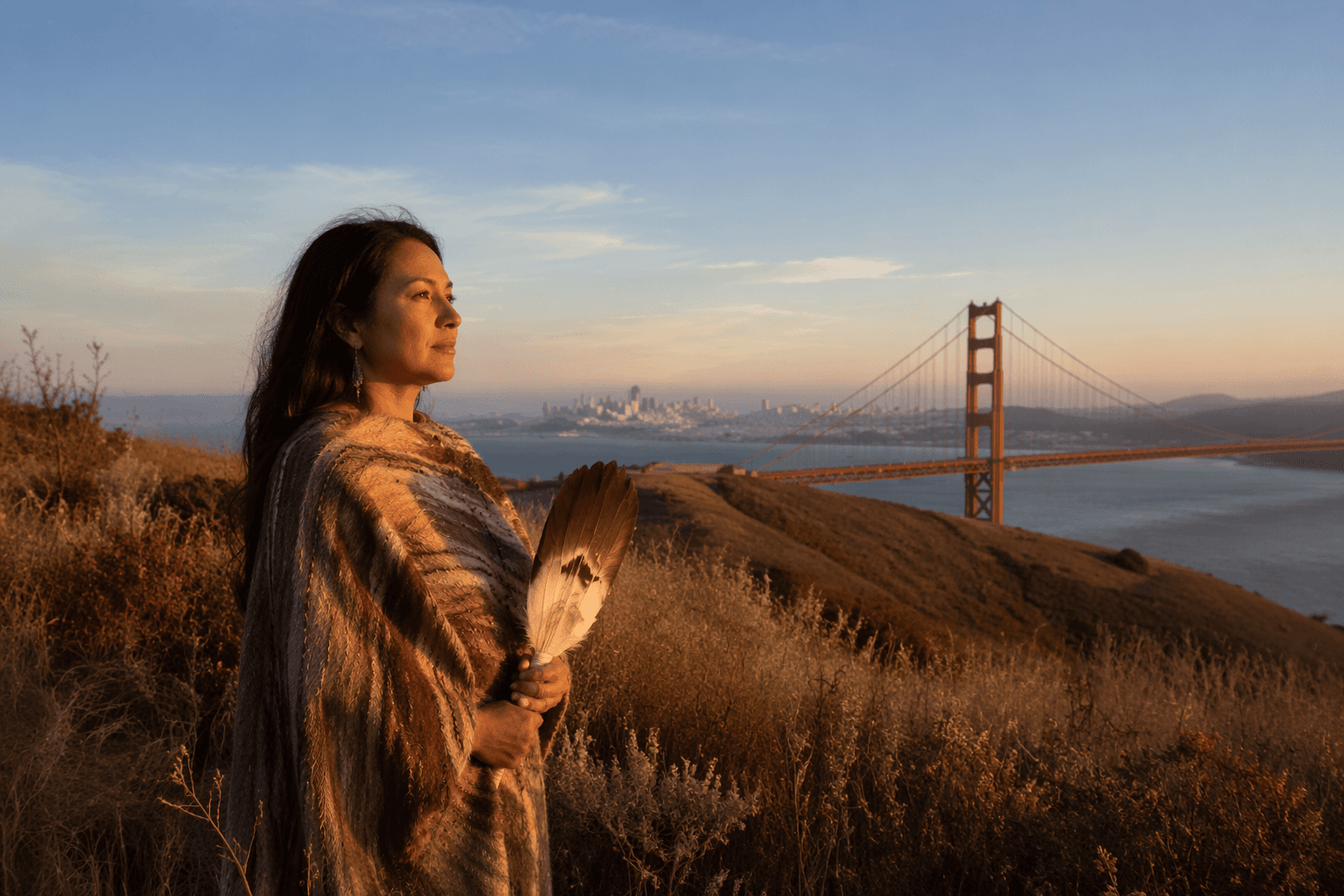
That flexibility makes the Presidio easy to read at street level. You can begin at the Main Post, move past the Presidio Officers’ Club, continue toward Crissy Field, and end with the Golden Gate Bridge and San Francisco Bay in view. The walk reveals how military planning once controlled this terrain and how public access now frames it.
What to notice as you move through the park
- The oldest building clusters around the Main Post, where the Spanish garrison first took hold.
- Crissy Field opens the city to the Bay and shows how military land became public shoreline.
- The trail network ties the Presidio to regional routes, not just a single neighborhood park.
- The views toward the Marin Headlands, Angel Island, and Alcatraz Island show how strategically the site was placed.
The Presidio is also a living ecological refuge
The Presidio’s history is not only about people and institutions. The park includes more than 800 acres of open space and 145 acres of native plant communities, and the National Park Service says it holds an unusually high density of rare and endangered plants plus more than 200 bird species. The park’s official materials list 14 threatened, endangered, or candidate plant species, including the endangered Presidio clarkia.
That ecological record helps explain why the Presidio feels unlike other urban parks in San Francisco. It is not just preserved land; it is managed habitat inside a city that continues to build around it. The result is a rare place where a history lesson, a birding stop, and a shoreline walk can happen in the same hour.
Tunnel Tops shows how the park keeps changing
Presidio Tunnel Tops is the newest expression of that long transition. The 14-acre destination opened in July 2022 after years of work by the National Park Service, the Presidio Trust, and the Golden Gate National Parks Conservancy, and the campaign to build it raised more than $98 million. The opening drew community leaders and House Speaker Nancy Pelosi, underscoring how central the Presidio remains to the city’s civic identity.
Tunnel Tops adds scenic overlooks, gardens, a community plaza, picnic areas, and an interactive playscape. It also connects the old and new parts of the park in a way that fits the Presidio’s larger history: a military landscape reworked into a public one without losing the physical evidence of what came before.
The modern Presidio is a preservation deal as much as a park
Congress decided in 1989 to close the Presidio as a military post, and the land transferred to the National Park Service on October 1, 1994. Congress created the Presidio Trust in 1996 to manage the site in partnership with the National Park Service, and in 1998 management of non-coastal areas transferred to the trust. The Presidio Trust says the site became financially self-sustaining in 2013, a key milestone for a place that had to reinvent itself after more than a century as an Army post.
That partnership is part of what makes the Presidio unusual in San Francisco. It is a national park, a historic district, a habitat preserve, and a piece of the city’s daily walking map all at once. Few places in the Bay Area compress so much power, memory, and landscape into a single stretch of ground.
This article was produced by Prism’s automated news system from verified source data, official records, and press releases, then run through automated quality and moderation checks before publishing. The system is built and supervised by the people who set the standards it runs under. Read our full AI policy.
Did this article answer your question?