San Francisco seniors face eviction amid co-op bookkeeping errors
A retired Muni driver got a $93,000 eviction notice, then a lower bill, and now at least 10 seniors at 1680 Eddy St. fear losing the homes they built over decades.
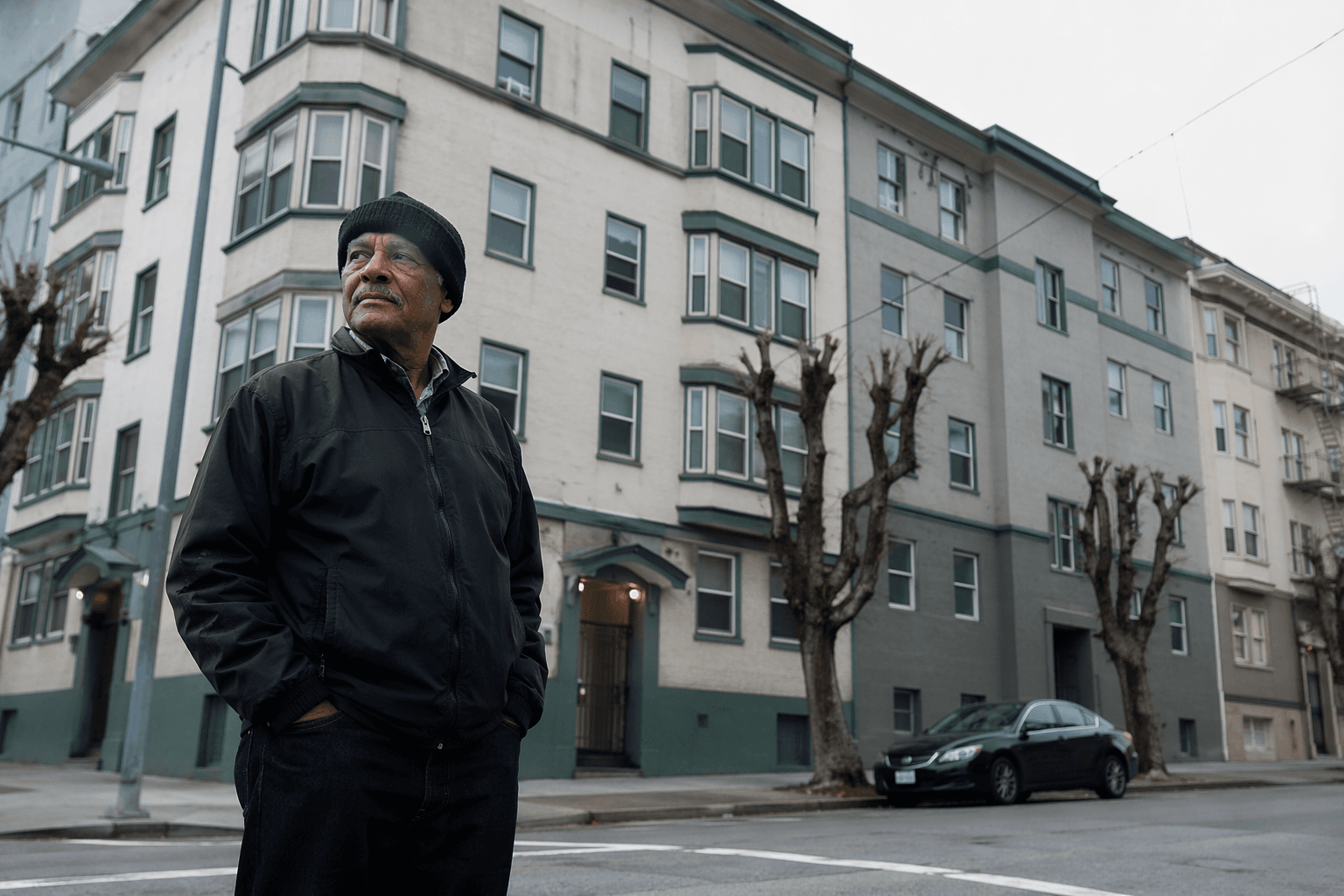
Alveries Harper spent about 50 years at the Martin Luther King-Marcus Garvey Square Cooperative Apartments, a resident-owned, Section 8 complex in the Western Addition. Then an April notice landed in her hands claiming she owed $93,000. A second letter later cut that figure sharply, but the damage was done: Harper and at least 10 other seniors now face eviction notices that residents say trace to bookkeeping and recertification failures, not to any real debt on their part.
The co-op at 1680 Eddy St. holds 208 units and, through the San Francisco Housing Portal, still shows 14 available units and 500 open waitlist slots. That matters because the property is not ordinary market-rate housing. It is income-qualified subsidized housing, where residents are supposed to pay 30% of adjusted income and remain in a system designed to keep longtime tenants stable. Instead, older residents, many in their 80s and 90s, say they are being pushed into uncertainty by notices they cannot make sense of.
Residents blame Domus Management for poor communication and bad bookkeeping. Housing attorney Tom Lavander said the problem may stem from certification and recertification failures, management turnover, and a breakdown in communication over documents and rent amounts owed. Open Door Legal is collecting evidence as the notices pile up. For residents who have spent decades in a cooperative that once promised security and a path to ownership, the dispute is no longer a private accounting problem. It is a test of whether San Francisco can stop administrative errors from becoming displacement.
That fear is especially sharp in a building tied to the city’s Black history. San Francisco Planning says African American neighborhoods and institutions grew in the Western Addition after the 1906 earthquake and fire, and the Fillmore became a major center of Black community life before urban renewal displacement hollowed out much of it. The co-op’s own history also shows a long struggle to stay afloat: it was founded in 1978 and renovated in 2011, and earlier reporting described federal threats in 2002 to foreclose unless the resident-run complex cleaned up its act, followed by a 2007 warning that Section 8 subsidies could stop because of atrocious living conditions.

That history is why residents and advocates see the current notices as more than a paperwork dispute. If the city allows bookkeeping errors to sweep longtime Black seniors out of one of the few remaining cooperative housing models in San Francisco, the loss will reach beyond 1680 Eddy St. and deepen the city’s housing crisis for people least able to recover from it.
This article was produced by Prism’s automated news system from verified source data, official records, and press releases, then run through automated quality and moderation checks before publishing. The system is built and supervised by the people who set the standards it runs under. Read our full AI policy.
Did this article answer your question?