San Francisco sets new summer sea level high, dangerous surf persists
San Francisco’s tide gauge hit 1.97 feet above dry ground, breaking the city’s summer record as dangerous surf and sneaker waves kept hitting the coast.
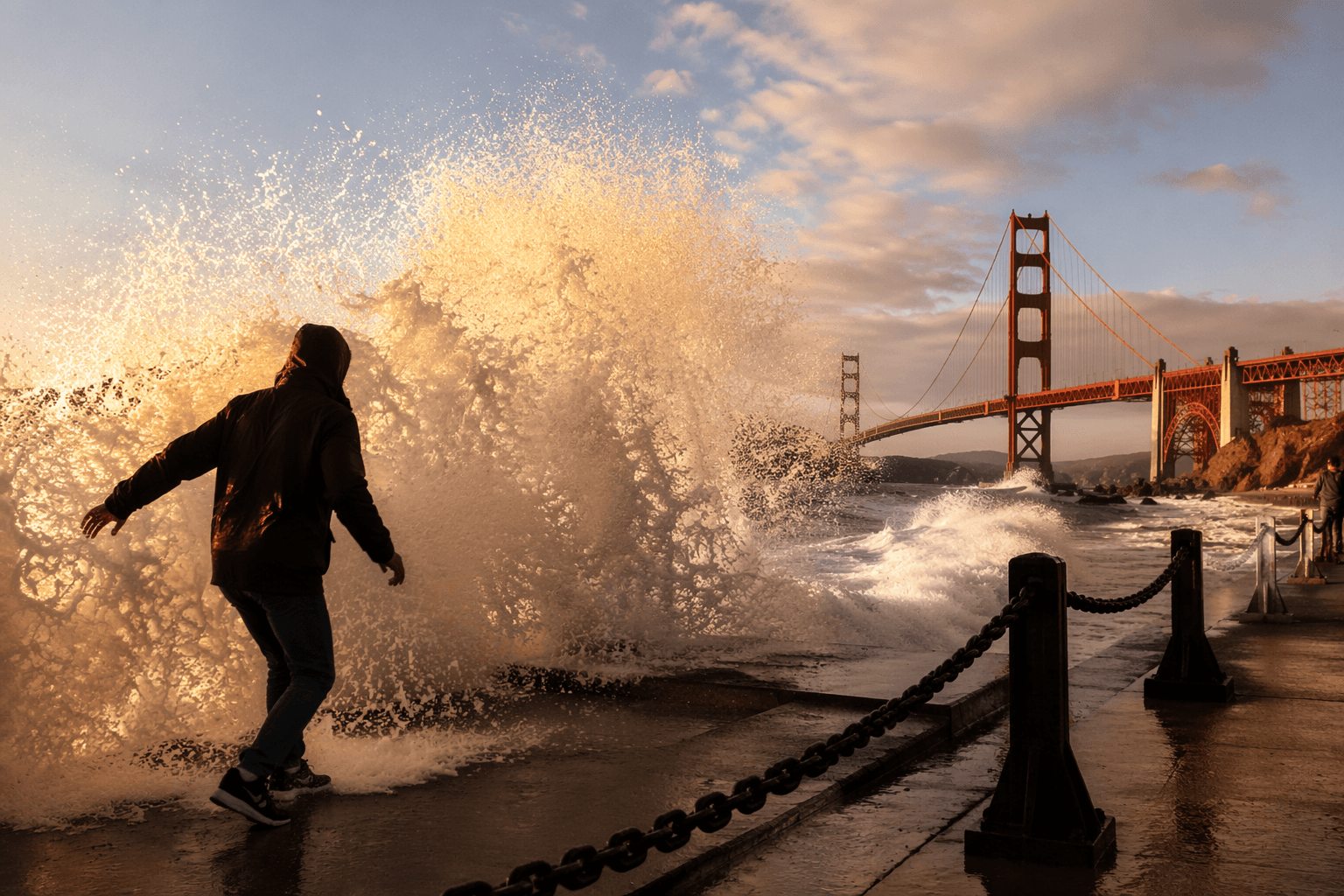
A late-night tide at San Francisco’s gauge climbed to 1.97 feet above normally dry ground, or 7.81 feet MLLW, and set a new summer high for the city outside the winter-storm season. The National Weather Service in the San Francisco Bay Area said the reading, logged at 11:18 p.m. Sunday, came with dangerous surf that was still affecting the coast into midweek.
The warning was not just about a number on a gauge. The agency kept a Coastal Flood Advisory in effect for the San Francisco Bay through Thursday morning and extended a Beach Hazards Statement through late Wednesday night for Pacific Coast beaches. Long-period south-southwest swell was driving sneaker waves and strong rip currents, a combination that can turn ordinary shoreline access into a hazard for people walking beaches, fishing from rocks, or standing close to the waterline.

Low-lying shoreline areas around San Francisco Bay faced the most immediate risk during the highest tides, with the weather service warning that some spots could see up to 1.9 feet of inundation at high tide. Around the city’s tide gauge, high tide was expected to reach 1.8 feet above normal at 12:02 a.m. Tuesday and 1.7 feet above normal at 12:56 a.m. Wednesday, with high tide varying by as much as 90 minutes earlier or later depending on location. That timing mattered for waterfront stretches, where even a modest surge can push water farther inland and leave slick, fast-moving conditions in places people may not expect.

The weekend reading broke the previous summer-season record of 1.7 feet from July 2022, according to the weather service. Officials said the tide spike came from high astronomical tides layered with wind, swell and thermal expansion, the same ingredients that can make a routine high tide behave more like a nuisance flood.
The event still fell short of the worst flooding of the year. In January, tidal flooding peaked at 2.6 feet, a higher mark than the one reached this weekend. Even so, the new record showed how warmer-than-average ocean conditions and a long-period swell were already showing up in daily life along San Francisco’s edge, from the bay shoreline to Pacific Coast beaches, where the water remained active, unstable and dangerous.
This article was produced by Prism’s automated news system from verified source data, official records, and press releases, then run through automated quality and moderation checks before publishing. The system is built and supervised by the people who set the standards it runs under. Read our full AI policy.
Did this article answer your question?