San Francisco transfer tax fight pits Lurie, progressives, tax critics
San Francisco’s transfer tax battle has become a fight over who should carry the cost of downtown recovery, with Lurie, progressives and tax critics all chasing different futures.

The fight over San Francisco’s real estate transfer tax has turned into a much larger argument over who pays for the city’s future. At City Hall, Mayor Daniel Lurie and Supervisor Bilal Mahmood have pushed to lower rates for housing projects and downtown transactions, while progressives and tax critics are using the same tax to press their own competing visions for development, revenue and neighborhood change.
The tax is triggered when a deed is recorded or when legal entities change control, and the rate rises with the price or fair market value of the property. That technical structure has made it one of the few local levers San Francisco can still pull directly, especially as the city weighs housing production, downtown recovery and a budget that remains under strain.
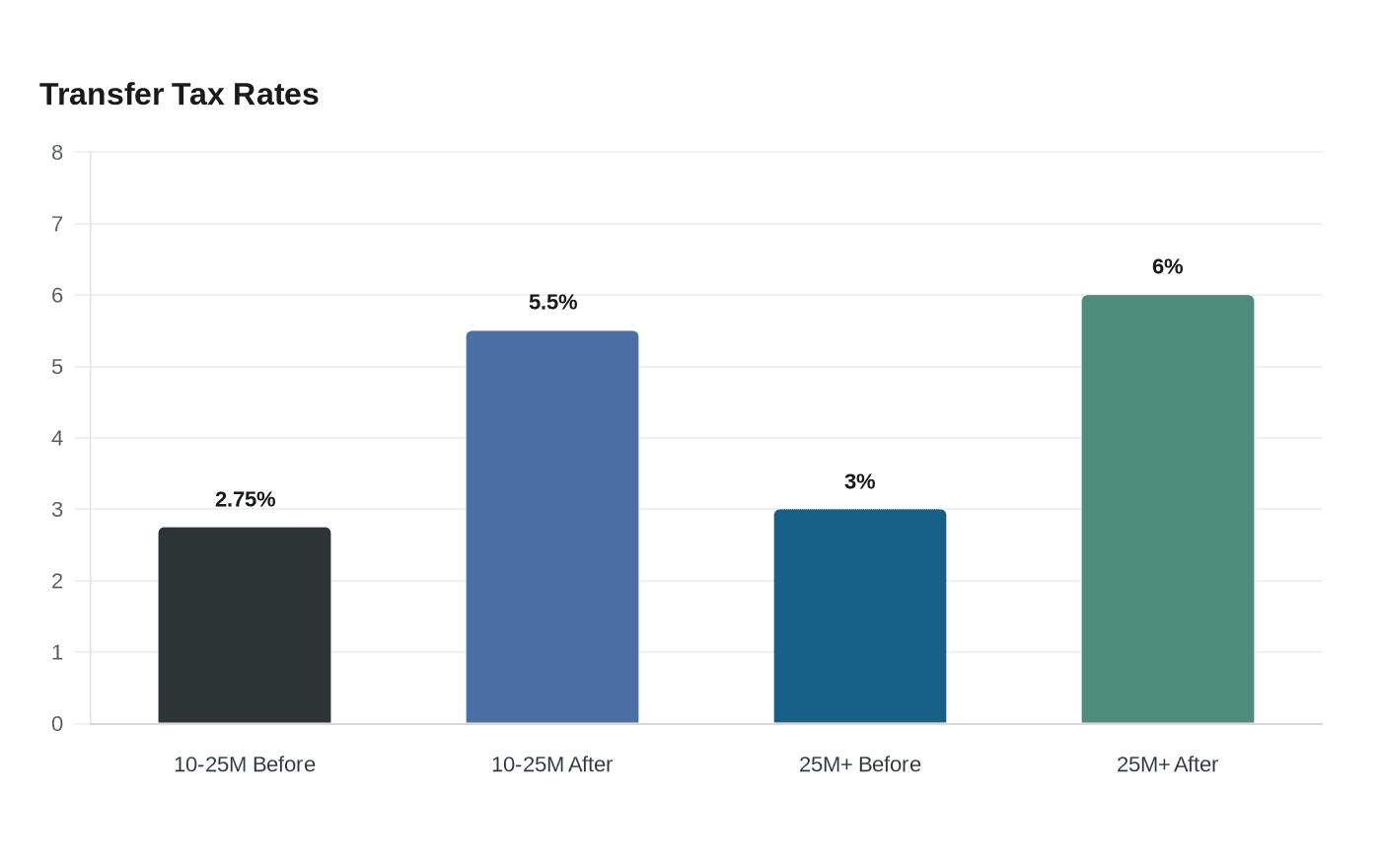
San Francisco voters already rewrote the tax in November 2020, when Proposition I doubled the rate on properties sold for $10 million to under $25 million, from 2.75% to 5.5%, and on properties sold for $25 million or more, from 3% to 6%. Because Proposition I was a general tax, the money goes straight into the city’s General Fund, making the levy part of the broader fight over how to keep core services afloat.
The city later used the tax as a policy tool again. In March 2024, voters approved Proposition C, which waived the transfer tax for the first 5 million square feet of nonresidential space converted to residential use, a move aimed at making office-to-housing conversions pencil out in a city still dealing with high vacancy downtown. The city controller estimated that the measure could cut transfer-tax revenue by $34 million to $150 million, depending on how much space is converted.
Another targeted cut followed in 2024, when San Francisco reduced transfer-tax rates for qualifying rental housing projects built with union labor and financed by union pension funds if the property was valued at $10 million or more. That lower rate took effect on October 21, 2024, and runs through December 31, 2033.
Lurie and Mahmood’s newest proposal would go further, lowering transfer-tax rates on housing development projects and downtown transactions while taxing certain foreclosing parties instead. City materials cast the plan as a way to bring San Francisco closer to the tax structure of other cities and encourage more real estate transfers. But the plan quickly collided with the city’s deficit, and local coverage in June 2026 said the mayor and Mahmood had paused it.
The clash has also drawn in outside forces. The Howard Jarvis Taxpayers Association says its statewide initiative to cap local transfer taxes at 0.11% qualified for the November 2026 ballot. On the opposite side, the San Francisco Democratic Socialists of America chapter has opposed slashing transfer taxes, arguing that giving tax breaks to speculators and billionaires does not create more housing.
That leaves the transfer tax as more than a fee on property sales. It has become a proxy battle over whether San Francisco should use its tax code to steer development, protect the General Fund and accelerate downtown recovery, or whether any such tool simply makes it harder to move, build and sell in a city already under pressure.
This article was produced by Prism’s automated news system from verified source data, official records, and press releases, then run through automated quality and moderation checks before publishing. The system is built and supervised by the people who set the standards it runs under. Read our full AI policy.
Know something we missed? Have a correction or additional information?
Submit a Tip