SFPD Graduation Rate Soars to 75%, Up From 29% Last Year
Three out of four SFPD recruits now graduate from the academy, a dramatic reversal from 2024's dismal 29% rate that city leaders say proves the hiring pipeline was always the problem.
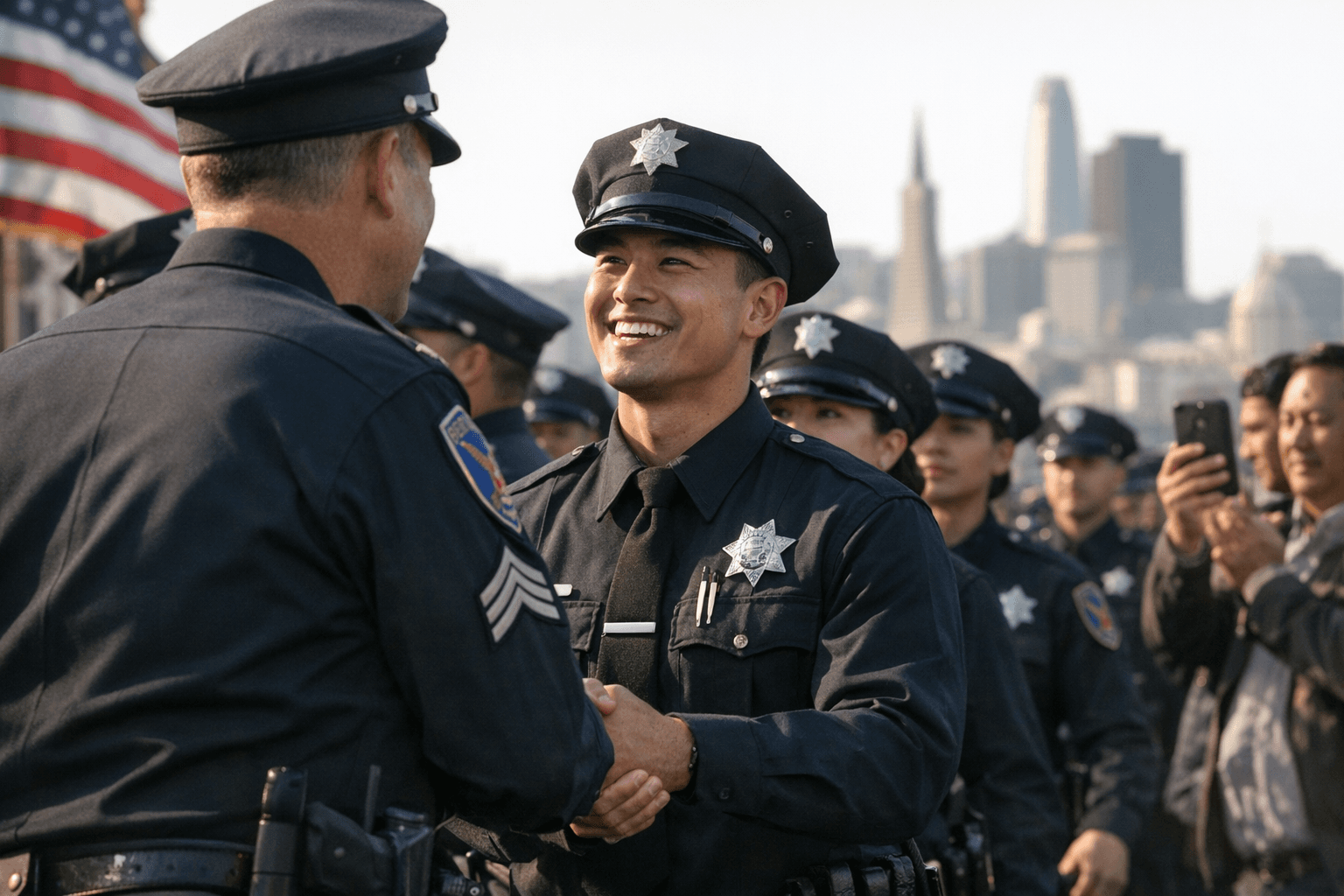
Three out of every four recruits in San Francisco's latest police academy class earned their badges, city officials announced this week, marking one of the department's sharpest single-year turnarounds in recent memory. The 75% graduation rate compares to a low of roughly 29% recorded in 2024, a gap that Mayor Daniel Lurie and SFPD leadership have seized on as proof that the department's staffing crisis stemmed less from a shortage of people willing to become cops than from a broken recruitment and testing process.
The 284th recruit class crossed a threshold that had eluded the department for years: more than 30 graduates in a single cohort, the first time that mark had been cleared since 2019.
City Hall credited the gains to a package of reforms bundled under the "Rebuilding the Ranks" initiative. The changes included one-stop testing days that compressed a previously drawn-out multi-step process, a "green light" fast-track designed to accelerate high-potential candidates through the pipeline, and a Special Events Officer program that brings recently retired, POST-certified officers back into service for large-scale deployments. Together, officials argued, those adjustments removed the bureaucratic friction that had been washing out candidates before they ever set foot in an academy classroom.
The application numbers support the argument. From January through June 2025, SFPD received 2,155 applications, a 64% increase over the same six-month window in 2024. That surge predates the graduation improvement and suggests the recruitment overhaul generated momentum across multiple stages of the hiring funnel, not just at the academy's exit.
SFPD staffing has been a persistent fault line in San Francisco's public safety debates, shaping response times, patrol coverage in neighborhoods that have seen crime spikes, and the city's capacity to staff major events at venues like Chase Center and Oracle Park. A sustained improvement in academy throughput could, over time, ease some of those pressures and recalibrate political arguments about public safety spending and union contract negotiations.
The caveats are real, however. Graduation rates measure only one chokepoint in a longer pipeline. How many officers remain on the job after their first year, how quickly they move through field certification and into independent patrol assignments, and whether the department can absorb larger cohorts without diluting training quality will ultimately determine whether the throughput gains translate into more officers on the street. City officials acknowledged that sustaining progress will require continued process improvements and that closing the department's longstanding staffing gaps remains a multi-year task.
This article was produced by Prism’s automated news system from verified source data, official records, and press releases, then run through automated quality and moderation checks before publishing. The system is built and supervised by the people who set the standards it runs under. Read our full AI policy.
Did this article answer your question?