South San Francisco sign turns red, white and blue for America 250
South San Francisco’s hillside letters went red, white and blue on June 2, splitting residents over who gets to recast the city’s most visible landmark.
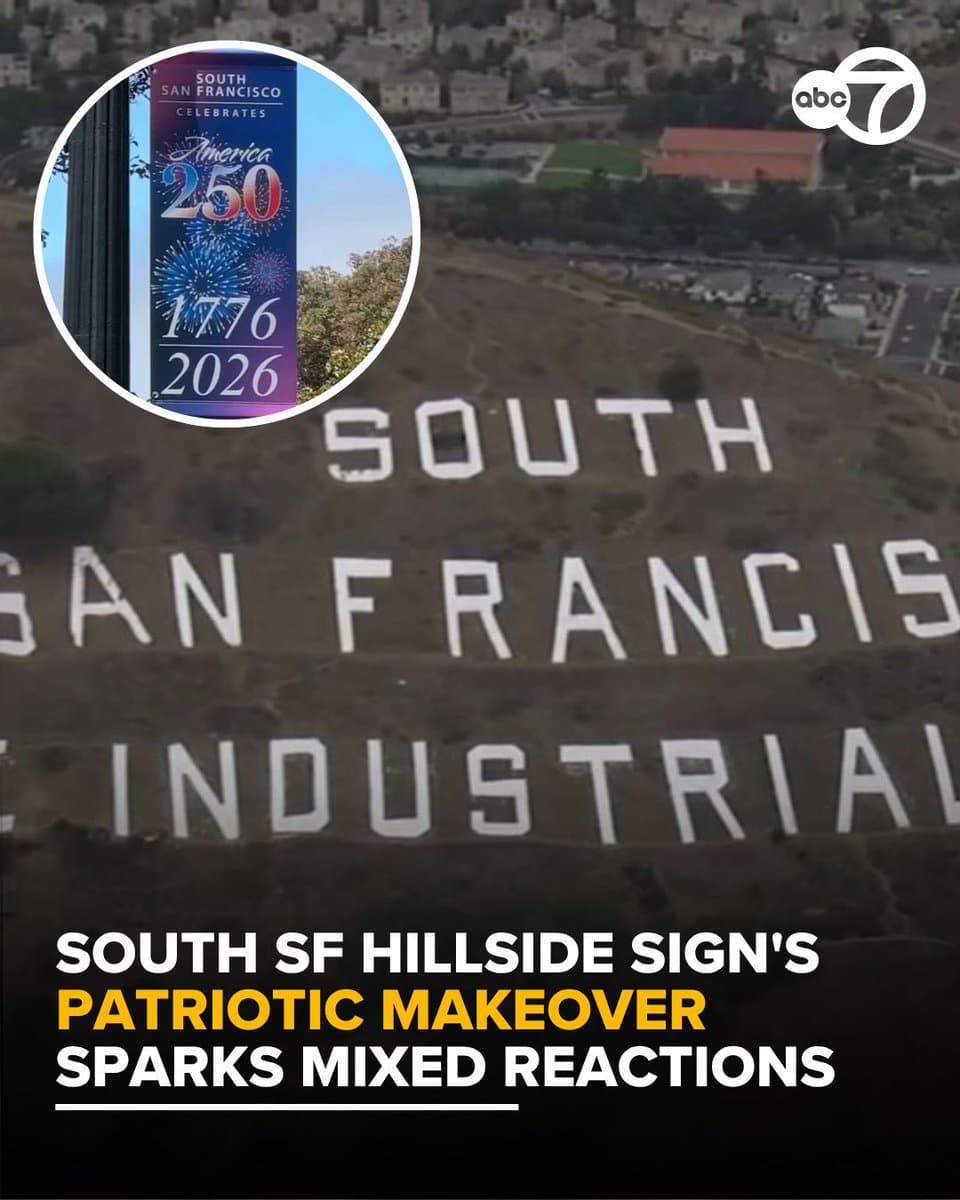
The South San Francisco hillside sign now wears a red, white and blue coat for America 250, and the patriotic makeover has divided residents over how far the city should go in reimagining its most visible landmark. The 1920s sign, visible from northbound U.S. 101 and flights into San Francisco International Airport, is scheduled to return to its traditional all-white look in October.
City officials say the repainting is a one-time commemorative installation tied to the nation’s semiquincentennial and Genentech’s 50th anniversary, a pairing that connects the city’s civic celebration with the biotech company’s long history in South San Francisco, the self-described Birthplace of Biotechnology. The company supplied 75 volunteers and donated $14,000 in materials to help complete the temporary project, which began June 2.
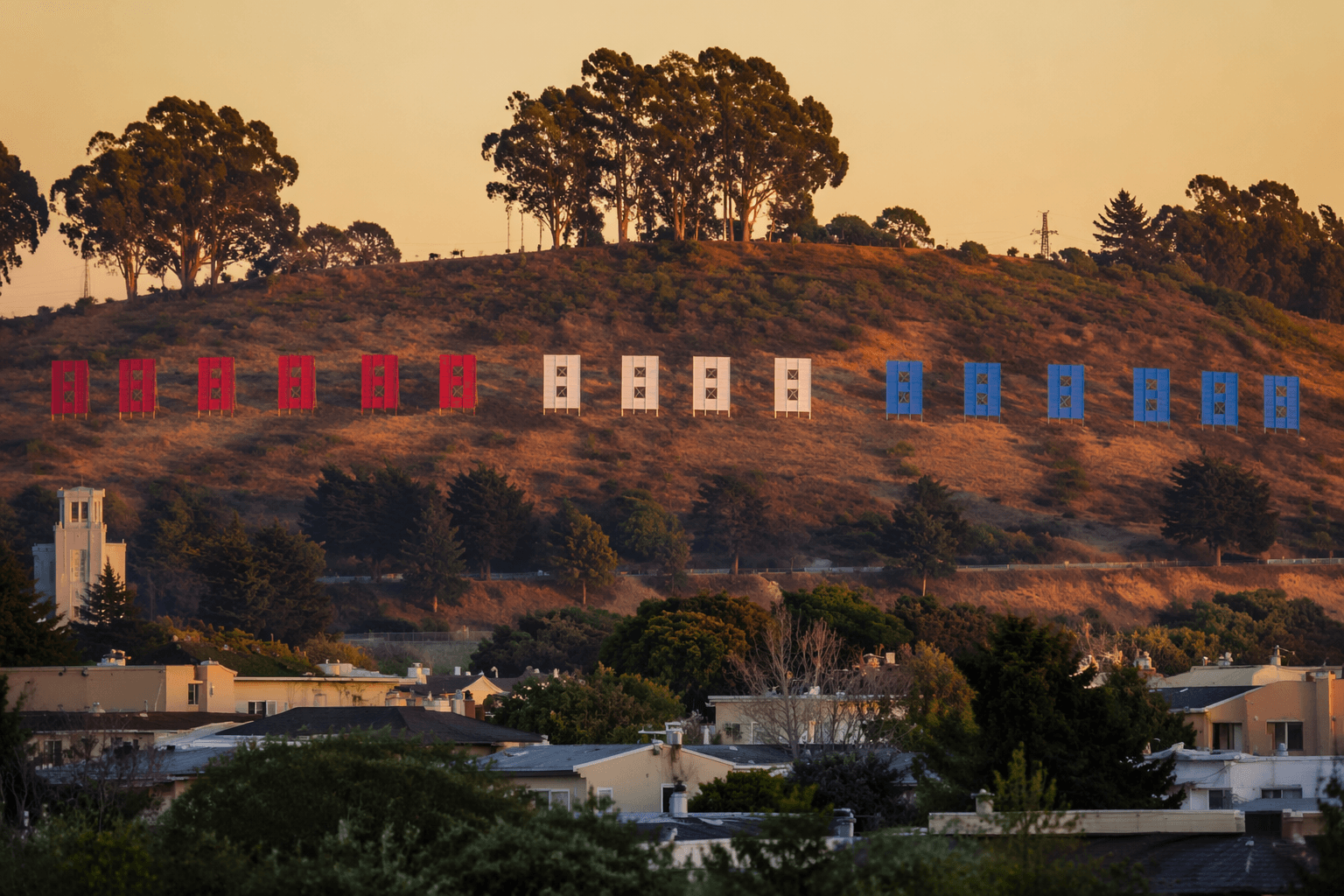
The South San Francisco Planning Commission approved the reversible work on May 21 after finding it would not materially impair the historic resource and would be exempt from further review under the California Environmental Quality Act. The hillside letters, listed on the National Register of Historic Places, were also cleared through a Certificate of Alteration because the sign is a protected landmark. City officials said the colors were chosen to closely match Old Glory Red and Old Glory Blue, and that the order of the lettering was adjusted to avoid confusion with San Francisco while keeping The Industrial City in white.
That careful balancing act has not quieted the debate. Some residents have said the darker blue and red make the sign harder to read from a distance, especially against the hill and sky. Others have welcomed the patriotic display, saying the city’s best-known landmark should reflect the occasion and the people who live around it. In a city where the sign is part roadside emblem and part daily backdrop, the argument has become less about paint than about ownership of place.
The broader America 250 program is extending well beyond Sign Hill. South San Francisco’s plans include banners, downtown events, a community parade near City Hall, a picnic on Grand Avenue and other Fourth of July programming, turning the anniversary into a citywide marker of identity. For now, the hillside sign is carrying the weight of that celebration, and of the disagreement that came with it.
This article was produced by Prism’s automated news system from verified source data, official records, and press releases, then run through automated quality and moderation checks before publishing. The system is built and supervised by the people who set the standards it runs under. Read our full AI policy.
Did this article answer your question?