UCSF launches West Coast's first young-onset colorectal cancer program
UCSF opened the West Coast’s first young-onset colorectal cancer program as cases rise in adults under 50 who are juggling treatment with work, childcare and fertility questions.

At UCSF’s Mission Bay cancer center, the colorectal patients now driving a new care model are often far younger than the old stereotype of colon cancer. UCSF Health says its Young-Onset Colorectal Cancer Program is the first on the West Coast dedicated to adults under 50, and it is being launched by GI oncologists Chloe Atreya and Katherine Van Loon to address the distinct medical and life-stage needs that come with diagnosis in the middle of work, parenting and family planning. UCSF says colorectal care already spans Mission Bay, Mount Zion and Parnassus, with affiliate Bay Area sites, giving the new program a built-in network across San Francisco and beyond.
Atreya has framed the timing as urgent because colorectal cancer is rising in adults under 50. In UCSF’s own Q&A, she said the trend is reshaping how doctors think about screening, stigma and care, and she noted that younger patients can face later diagnoses and more advanced disease. The supportive-care burden is different too: fertility and sexual health questions, financial strain, and the impact on young children, partners and parents all land at once when treatment starts.
The concern is not just anecdotal. A 2023 review in Nature Reviews Disease Primers said incidence in people under 50 has increased in recent decades and projected young-onset colorectal cancer could account for 11% of colon cancers and 23% of rectal cancers by 2030. The American Cancer Society says colorectal cancer is the third most commonly diagnosed cancer in the United States and the leading cause of cancer death in men younger than 50. In California, a California Cancer Registry study found incidence rising among adults ages 20 to 39, while UCSF’s Greater Bay Area Cancer Registry tracks cancers in San Francisco and eight other counties and the state registry became fully active in 1988.

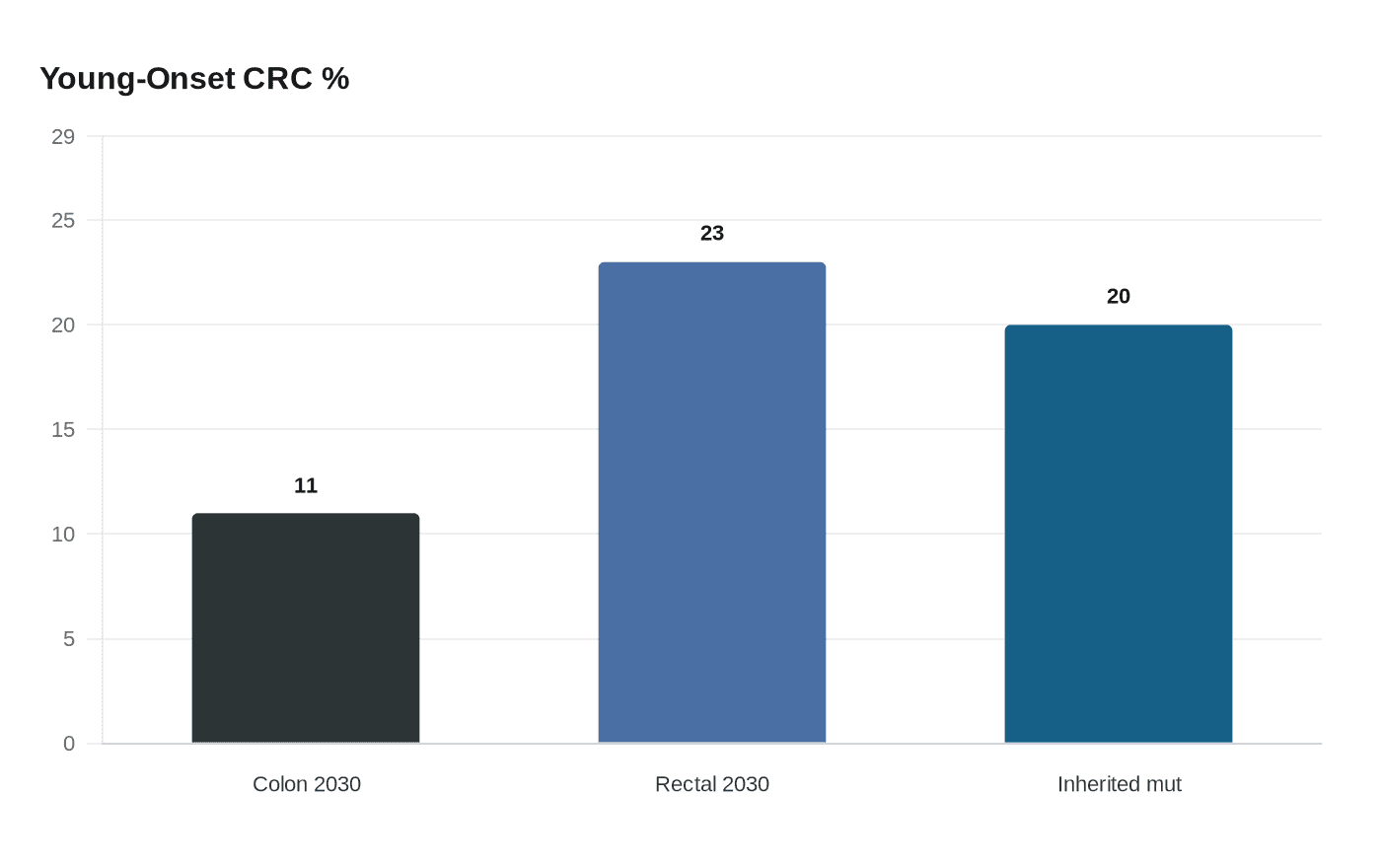
For patients, the practical takeaway is straightforward: do not brush off blood in the stool, rectal bleeding, a change in bowel habits, abdominal pain, fatigue or unintended weight loss. For people at average risk, screening starts at age 45, but anyone with a family history or a known inherited mutation should ask about earlier colonoscopy and genetic counseling. MD Anderson says about 20% of colorectal cancer patients under 50 have an inherited genetic mutation linked to their cancer, which is one reason UCSF’s new program is tying personalized treatment to tumor genetics and navigation support.
This article was produced by Prism’s automated news system from verified source data, official records, and press releases, then run through automated quality and moderation checks before publishing. The system is built and supervised by the people who set the standards it runs under. Read our full AI policy.
Did this article answer your question?