Aztec manufacturer Jack’s Plastic Welding builds boats, gear and prototypes
From Main Street in Aztec, Jack’s Plastic Welding builds rescue rafts, dry bags and NASA recovery gear for missions where failure is not an option.

On Main Street in Aztec, Jack’s Plastic Welding turns a small downtown footprint into gear for high-risk work. The same shop that builds whitewater boats and dry bags has also supplied equipment for NASA recovery operations, medical uses and prototype projects, giving San Juan County a manufacturer with reach far beyond the Four Corners.
From a chicken coop to two Main Street buildings
Jack’s says the business began as a sole proprietorship in 1982, when it was still operating out of a remodeled chicken coop behind Jack’s house. The company later incorporated in Colorado in 1988 and moved from Bondad, Colorado, to Aztec in 1990, where it first set up production in a 5,000-square-foot building on Main Street.
That move did not stay small for long. A second 5,000-square-foot building went up next door in 2006, bringing the company’s Main Street footprint to about 10,000 square feet. The Aztec operation now runs with roughly 8 to 12 workers, a size that keeps the business visibly local even as its products travel into national and specialized markets.
That scale matters in a town like Aztec because the company is not hidden in an industrial park on the edge of town. It sits in the center of the community, part of the downtown fabric, with a workload that ranges from everyday outdoor gear to custom-built industrial equipment.
What Jack’s actually makes
The company’s standard line includes inflatable boats, dry bags and waterproof self-inflating mattresses. Those products connect directly to the whitewater world that has long defined much of the business, but Jack’s work does not stop there. Its industrial side reaches into oil and gas, medical gear, lift bags, water line inspections, prototype development and components for other products.
That range helps explain why the company has stayed relevant for decades. A New Mexico Magazine profile described co-founder Errol Baade’s work as spanning river rafts and dry bags, coral-reef science gear and inflatable inserts for astronauts’ boots, a mix that captures how the shop moves from outdoor recreation into technical, mission-specific fabrication. Jack’s has also built catarafts for science projects and developed a portable hyperbaric chamber called the Gamov bag.
The product list also includes a claim that sets the shop apart even among specialty makers: Jack’s says it produced the only all-welded inflatable stand-up paddle board. That kind of one-off work is where small-batch manufacturing can matter most. When a design needs to be tested, adjusted or built for a narrow use case, the company’s experience in welding and inflatable construction becomes part of the product itself.
How river gear became recovery gear for NASA
Whitewater remains the company’s core business. Paddling Life has said whitewater gear is still about half the business in a good year, which helps explain why the company’s river roots continue to anchor its economics even as it takes on broader work. New Mexico Tourism & Travel describes Jack’s as a manufacturer of whitewater gear for 36 years and says it started with dry bags and Paco Pads before moving into catarafts.
That background matters because the same fabrication skills that make durable river gear also translate to recovery systems and flotation equipment. Jack’s says it has taken part in NASA commercial crew recovery systems, and recent coverage says NASA used handmade Jack’s rafts in the Artemis II splashdown recovery process off San Diego on April 10, 2026. In that operation, the rafts were nicknamed “the front porch,” a label that underscores how visibly the equipment fit into a major space mission.
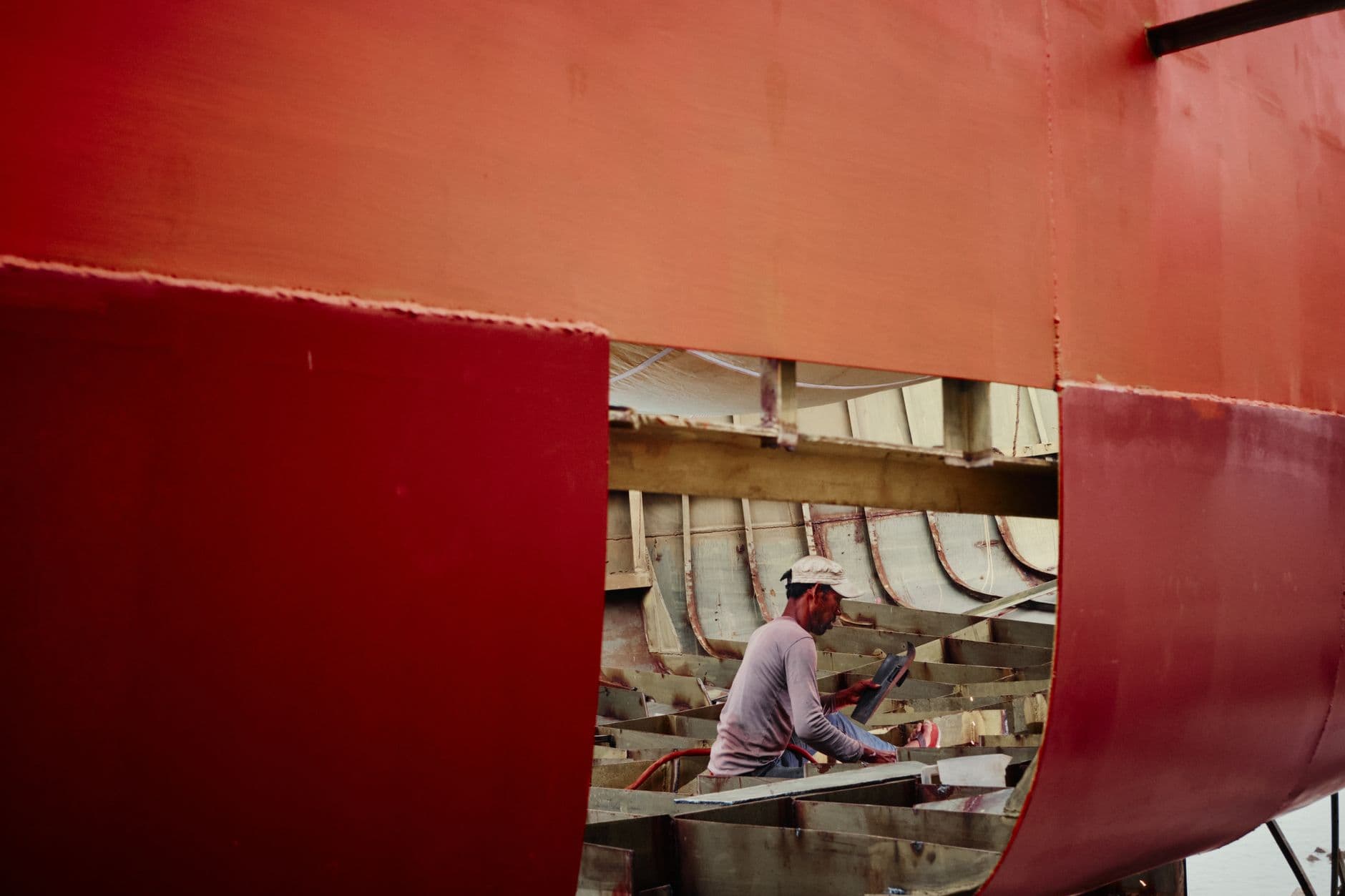
The contrast is striking: a quiet shop in Aztec building gear that ends up in the recovery chain for spacecraft. For San Juan County, the importance is not just that a local company won a high-profile contract. It is that the same skills used by rafters, scientists and rescue crews are also trusted in situations where a spacecraft lands in the ocean and every piece of equipment has a job to do immediately.
Why the Four Corners location fits the business
New Mexico Tourism & Travel’s partner spotlight frames Jack’s as part of a regional way of life that fits the Four Corners. The description points to a place where people work with their hands during the week and chase water on weekends, which is exactly the kind of environment that can sustain a company making both river gear and technical inflatables.
That local identity shows up in the company’s longevity as much as in its product line. Jack’s has stayed in Aztec since 1990, expanded on Main Street rather than relocating away from town, and kept a workforce small enough to remain recognizable while still serving customers far beyond San Juan County. It is a useful reminder that the local economy here is not limited to retail, government and extraction. Some of its most distinctive work comes from a shop that builds gear for rapids, science projects, rescue operations and spacecraft recovery all at once.
In Aztec, that makes Jack’s Plastic Welding more than a business story. It is a rare example of a small-town manufacturer whose output can touch a river trip, a medical application and a NASA mission without ever leaving Main Street.
This article was produced by Prism’s automated news system from verified source data, official records, and press releases, then run through automated quality and moderation checks before publishing. The system is built and supervised by the people who set the standards it runs under. Read our full AI policy.
Did this article answer your question?