How the Farmington Branch helped San Juan County grow
The Farmington Branch did more than move freight. It split San Juan County into winners and losers by linking orchards, ranches and towns to outside markets.
The Farmington Branch was the infrastructure choice that helped turn San Juan County from a wagon-haul frontier into a connected market region. Built in 1905, the 47.1-mile line from Carbon Junction, Colorado, to Farmington tied orchards, ranches and later oilfield traffic to the rest of the Southwest, and it helped decide which towns gained power and which ones lost it.
The rail line that redrew the county
The Denver & Rio Grande built the branch to standard gauge first, a strategic move meant to discourage competing railroads from pushing into the mining and ranching region. In 1923, it was converted back to narrow gauge. The line generally followed the Animas River, which mattered because the valley itself shaped where farms, stations and towns could grow.
Its stations map the corridor clearly: Carbon Junction, Posta, Bondad, Cedar Hill, Inca, Aztec, Flora Vista and Farmington. That sequence is more than a rail list. It shows how the branch stitched together the places that became the county’s commercial spine and gave the valley a transportation route that matched the land rather than fighting it.
What life looked like before the trains
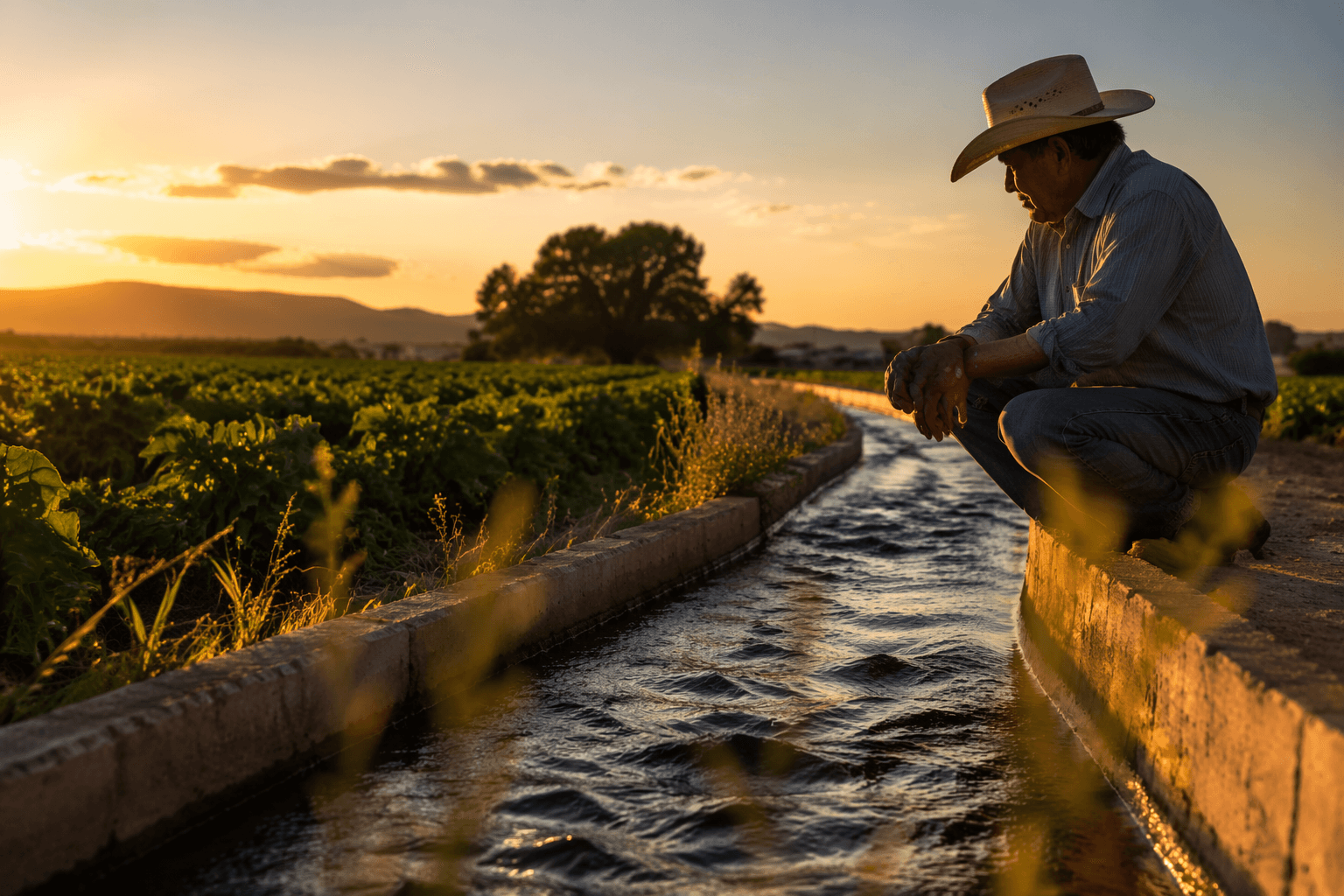
San Juan County opened to settlement in 1876 without railroad service, even though residents were already moving cattle, horses, sheep and fruit to distant markets. The area between the San Juan and Animas rivers had already developed irrigated farming before the railroad arrived, so the county was producing, but it was producing at the edge of the market.
By the early 1890s, orchards and ranches had created a real transportation problem. Growers and stockmen were still hauling goods by wagon to places like Durango, Gallup and Albuquerque, which meant slow trips and limited reach. The railroad changed the geography of business by cutting the time and cost of getting crops and livestock out of the valley and into larger trade networks.
When the railroad reached the San Juan Valley in 1905, farmers gained access to markets in Colorado, Chicago and points farther east. That shift mattered because it moved San Juan County from local subsistence and regional hauling into a wider economy where volume, timing and shipping costs could determine whether a harvest paid or failed.
Fruit, freight and the county’s changing economy
The Farmington Branch did not serve just one industry. The railroad originally carried people and freight, including large quantities of fruit grown in San Juan County. For 63 years, from 1905 to 1968, it connected Farmington and Aztec to points north and east.
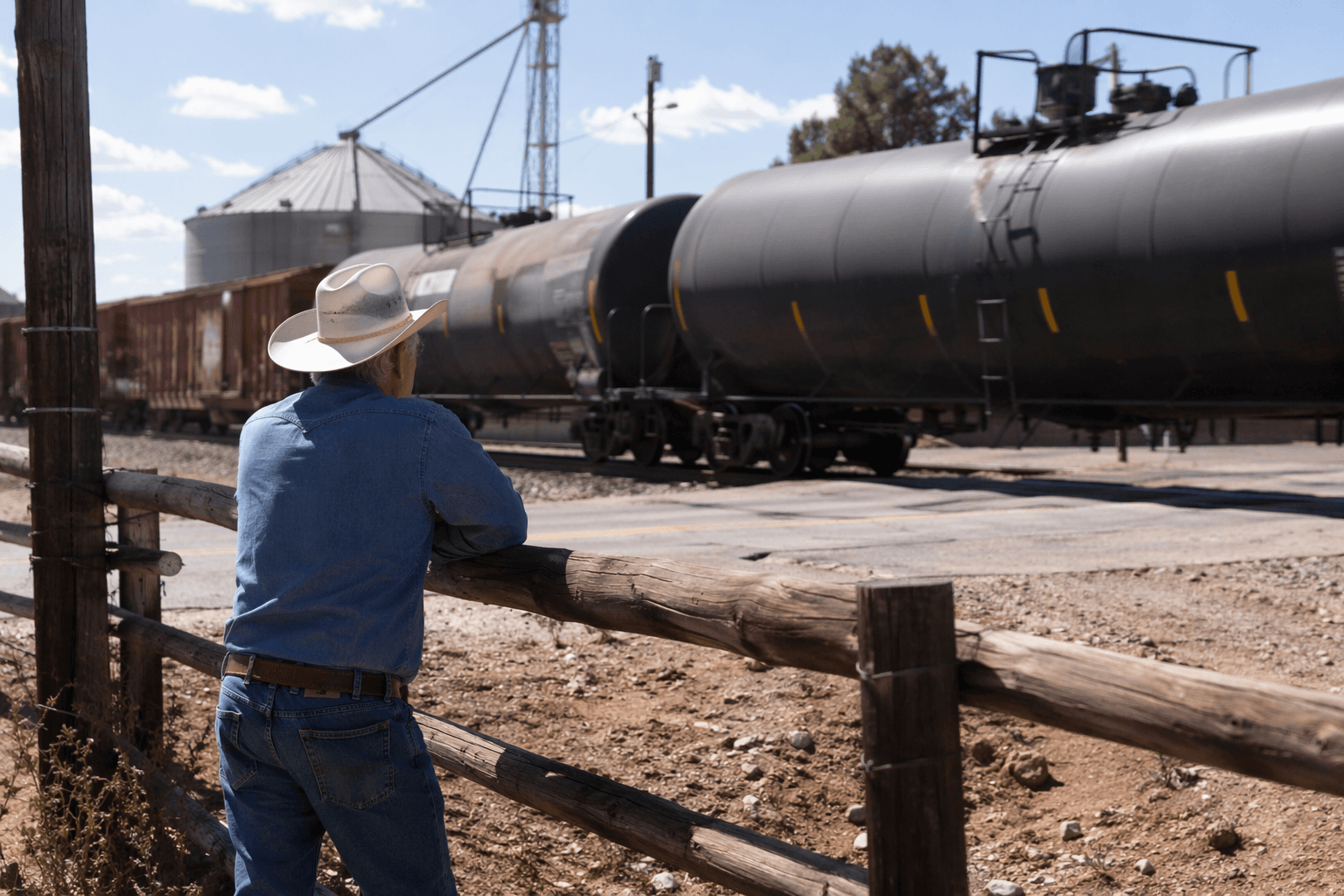
That role changed again in the 1950s, when the Farmington area’s oil-and-gas boom sent heavy traffic over the line. Drilling equipment and pipe loads became a major part of the freight picture. The branch had started as a lifeline for agricultural production, then became a route for energy development, which is a reminder that infrastructure often outlives the first economy it was built to serve.
The decline came as roads improved and trucking became more economical. The last freight moved over the Farmington Branch in August 1968, and the line was removed by 1971. What disappeared was not just a track bed. It was the county’s first major bulk-transport system, the one that had once made distant markets possible.
How the branch favored some towns and weakened others
The line’s path helped explain why some places grew and others faded. Farmington benefited directly as the branch’s endpoint, and Aztec became part of the rail-connected corridor that linked the valley to the outside world. Junction City lost the county-seat competition and was absorbed by Farmington, which shows how transportation, political power and town growth were tied together.
That pattern matters because railroads rarely just follow growth. They create it, then concentrate it. In San Juan County, the branch helped concentrate commercial activity where the rail access was strongest, while settlements outside that corridor had a harder time competing for trade, capital and county influence.
The newspaper trail shows a real local economy
The rail era also supported a broader civic life. The Library of Congress history of The San Juan Times notes that six newspapers were launched in the region after settlement, but only two survived. That is a sign of a small but active market, one that was large enough to sustain competing voices and enough commerce to keep local publishing alive.
The paper itself tells part of the story. The San Juan Times moved to Farmington in 1893, after starting as the Junction City Times, and it was succeeded by the Farmington Times on June 8, 1900. The University of New Mexico’s digital newspaper archive shows the San Juan County Index being published in Aztec every Thursday, with 178 issues from July 24, 1890, through December 26, 1902, and 73 more from January 2, 1903, through October 18, 1912. Those dates show a county with enough population and business activity to support repeated runs of local journalism before and after the railroad reshaped the valley.
Why the old branch still matters now
The same question that drove the Farmington Branch still sits inside modern transportation debates: how does San Juan County move bulk goods cheaply enough to compete? The current Four Corners Freight Rail Project is being studied as a possible new freight link for northwest New Mexico, and San Juan County signed a memorandum of understanding with the Navajo Nation in 2020. HDR Engineering’s first-phase study projected roughly 2,000 construction jobs and about 17,000 direct, indirect and induced jobs if the line is built, along with reduced truck traffic and less wear on highways.
That modern proposal is not a repeat of the old railroad, but it rests on the same economic logic. The county that once depended on wagons to reach Durango, Gallup and Albuquerque still has to decide how its crops, minerals and industrial goods will reach broader markets. The Farmington Branch was the original answer, and the debate over freight access shows that San Juan County is still living with the consequences of that first infrastructure decision.
This article was produced by Prism’s automated news system from verified source data, official records, and press releases, then run through automated quality and moderation checks before publishing. The system is built and supervised by the people who set the standards it runs under. Read our full AI policy.
Did this article answer your question?