San Juan County farming depends on scarce surface water and irrigation
San Juan County farms run on a river system that supplies 99% of local water. With drought deepening and projects still unfinished, any shortfall hits crops, jobs and tribal lands fast.
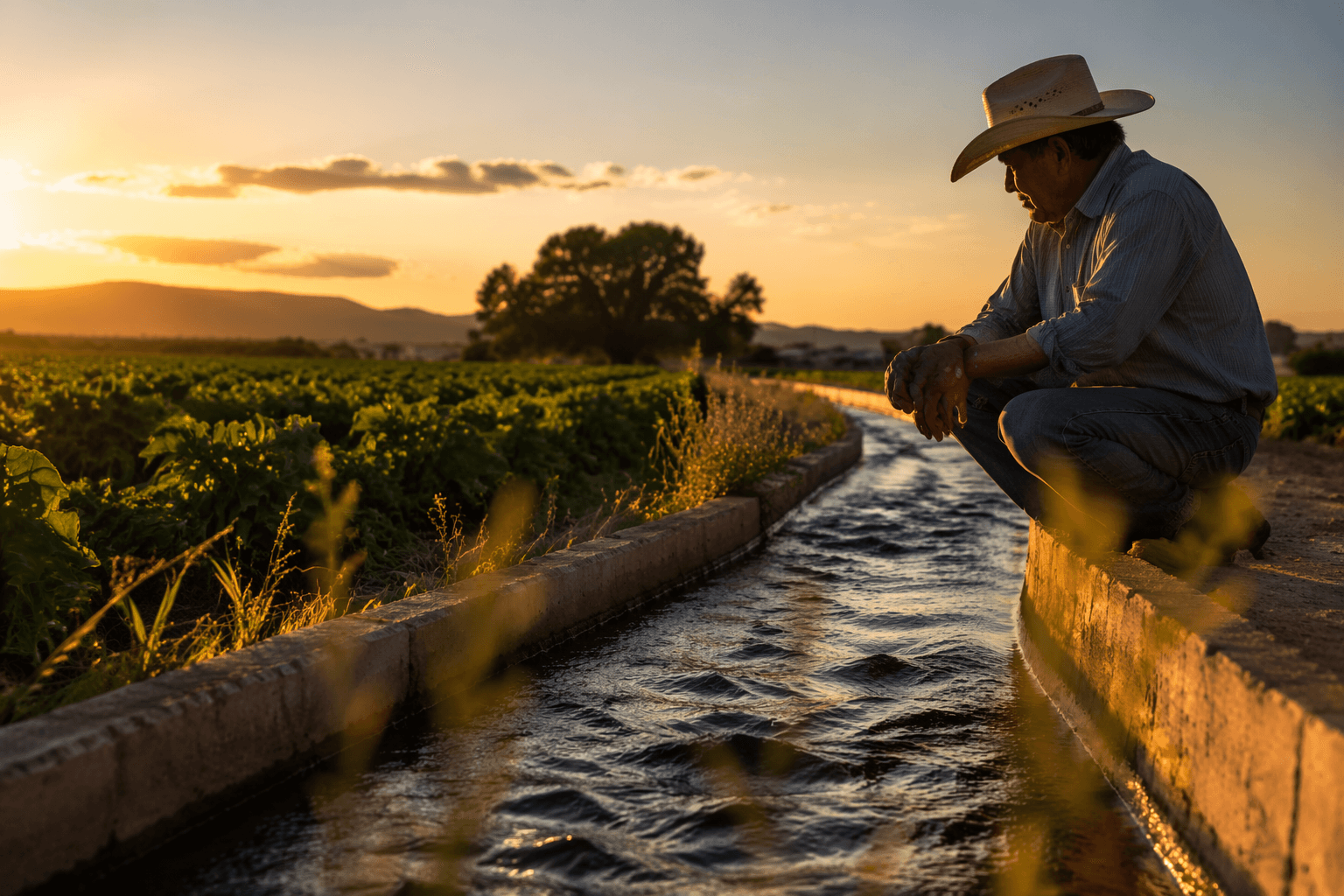
San Juan County’s farms sit on a thin ribbon of surface water, and the pressure is immediate. The county depends on the San Juan River and related diversions for almost all of its water supply, while 2,877 farms spread across 2,417,870 acres rely on 77,025 irrigated acres to keep crop production moving. When deliveries tighten, the impact is not abstract: it reaches fields, payrolls, tribal lands and the county’s ability to ride out drought.
A county built around surface water
San Juan County covers 5,517 square miles and had a population of 121,661 in the latest county factsheet, but the land is anything but evenly controlled. About 63.4 percent of the county lies on Navajo Nation land and 2.93 percent on Ute Mountain Ute tribal land, which means the water story is also a story about tribal sovereignty, federal infrastructure and local agriculture sharing the same river system. The UNM Southwest Environmental Finance Center says 99 percent of the water used in the county comes from surface water, with the San Juan River as the primary source.
That makes the county unusually exposed to changes in snowpack, runoff and diversion management. In a dry county, water does not arrive as a background utility; it arrives through specific projects, timed releases and legal rights that determine who gets to plant, when fields get watered and how much acreage stays in production.
How the irrigation system works
The farm economy in San Juan County is large enough to matter on its own. USDA’s 2022 county profile puts agricultural product sales at $127.261 million, with 95 percent of sales coming from crops rather than livestock. That crop-heavy profile is why irrigation is central to the county’s economy, not just its landscape.
The biggest pieces of the system are named, engineered and politically sensitive. The Navajo Indian Irrigation Project was approved by Congress in 1962 to improve economic conditions and encourage agricultural settlement for Navajo people, and it was designed for full-sprinkler irrigation. The project is authorized to divert 508,000 acre-feet a year from Navajo Lake to serve 110,630 acres of farmland, and the Navajo Nation Water Rights Commission says its priority date is October 16, 1957. Navajo Agricultural Products Industry says the project was divided into 11 blocks of about 10,000 acres each, a scale that shows how much of the county’s production is tied to one water system.
The gap between authorization and actual delivery matters. The Navajo Nation Water Rights Commission says the project’s average annual diversion is about 353,000 acre-feet, well below the 508,000 acre-foot authorization. That shortfall is not just a technical detail. It is the difference between a system built on paper and a system that can reliably keep acreage under irrigation through dry years.
The projects that move water beyond the farm gate
San Juan County’s water system is not limited to agriculture. The UNM factsheet also identifies the San Juan-Chama Project, which diverts about 100,000 acre-feet a year to the Rio Grande Basin, and the Navajo-Gallup Water Supply Project, which is designed to move water 280 miles south from Navajo Lake. Those projects show how the county’s river water is pulled into regional obligations that extend far beyond one set of fields.
The Bureau of Reclamation says the Navajo-Gallup Water Supply Project is designed to provide a long-term sustainable supply for about 250,000 people over 40 years and deliver 37,764 acre-feet a year. Of that total, 4,645 acre-feet is routed through the Cutter Lateral and 33,119 acre-feet through the San Juan Lateral. Reclamation says deliveries to Navajo communities began on the Cutter Lateral in 2020 and to the Jicarilla Apache Nation in 2022.
That project is still unfinished. A spring 2026 Reclamation newsletter says it is more than 70 percent complete, and a March 2026 press release from New Mexico’s congressional delegation said federal officials expedited release of $120 million in funding after lawmakers pressed Reclamation. For San Juan County, that means the basic plumbing of regional water security is still dependent on federal money and political follow-through.
Why snowpack and drought still set the pace
The county’s irrigation system may be engineered, but the supply still starts with snow. New Mexico State University’s Irrigation Management program says water available for irrigation in San Juan County depends heavily on winter snowfall in the San Juan and La Plata Mountains of southwest Colorado, and it warns that drought and rising demand may reduce future supplies. In other words, the county’s fields are tied to mountain snowpack far upstream and out of sight.
The drought numbers make that vulnerability plain. Drought.gov says 100 percent of people in San Juan County are affected by drought, and that January through May 2026 was the 30th driest year to date in the county over 132 years of record. Drought.gov’s Intermountain West update also says snow drought has affected spring runoff and future water supply in the Upper San Juan Basin, while warmer and drier outlooks may raise wildfire risk.
That matters because irrigation systems do not fail all at once. They strain first through timing, then through reduced allocations, and finally through the kind of operational restrictions that force growers to decide which acres to save and which to leave dry.
Who is managing the risk locally
Several local institutions already sit at the center of those decisions. The San Juan Water Commission was created in 1986 through a joint powers agreement to protect future and existing water rights and resources for Farmington, Aztec, Bloomfield, San Juan County and the San Juan County Rural Water Users Association. The San Juan Soil & Water Conservation District says its mission is to protect, restore, enhance and promote wise use of natural resources. Together, they represent the county’s local response to a system that is part agriculture, part municipal supply and part legal defense of water rights.
Farmers are already preparing for restrictions. In April 2025, Farmers Irrigation District board president John Lofgren said farmers in the district and other San Juan County districts likely would face water restrictions, with an official decision expected the following month. That warning fits the county’s broader pattern: when surface water tightens, the first effects are felt in scheduling, not slogans.
NMSU’s Agricultural Science Center at Farmington gives the county another layer of resilience. The center has served the San Juan River basin and the Four Corners region since 1966, operates on 254 acres leased from the Navajo Nation, and is the only agricultural research facility in New Mexico west of the Continental Divide. NMSU says the center serves the agricultural needs of San Juan County, the Navajo Nation, New Mexico, the Four Corners region and the United States, while the San Juan County Extension office says local agriculture has to stay competitive in local, national and international markets. That research and extension presence matters because yield gains, irrigation efficiency and crop choice are part of the county’s water strategy too.
The stakes if the system slips
San Juan County’s three main rivers irrigate more than 150,000 acres, a reminder that the county’s economy is built on managed flows, not abundant groundwater. The county already has 77,025 irrigated acres, and with 95 percent of sales coming from crops, even modest shortages can move quickly from water talk to financial damage. Fewer deliveries mean less planted acreage, tighter margins for growers, and more strain on the local institutions that manage rights, conservation and emergency planning.
The long-term picture is clear: San Juan County’s farming future depends on whether surface water can keep moving through a network of federal projects, tribal lands, local districts and mountain-fed rivers fast enough to match the county’s demands.
This article was produced by Prism’s automated news system from verified source data, official records, and press releases, then run through automated quality and moderation checks before publishing. The system is built and supervised by the people who set the standards it runs under. Read our full AI policy.
Did this article answer your question?