Aztec museum recreates San Juan County's pioneer town life
A walk through Aztec Museum & Pioneer Village shows how San Juan County's town life grew from a jail, schoolhouse and caboose into the oil era that still shapes the region.
A walk through Aztec Museum & Pioneer Village starts with a jail and ends with a drilling rig, but the bigger story is how San Juan County’s frontier years still shape downtown Aztec, Historic Main Avenue and the names locals use every day. The museum turns early town life into something you can cross on foot, with law, trade, transportation, school and home life all laid out in one compact place. It is one of the quickest ways to see how the county became the community it is now.
A town in miniature
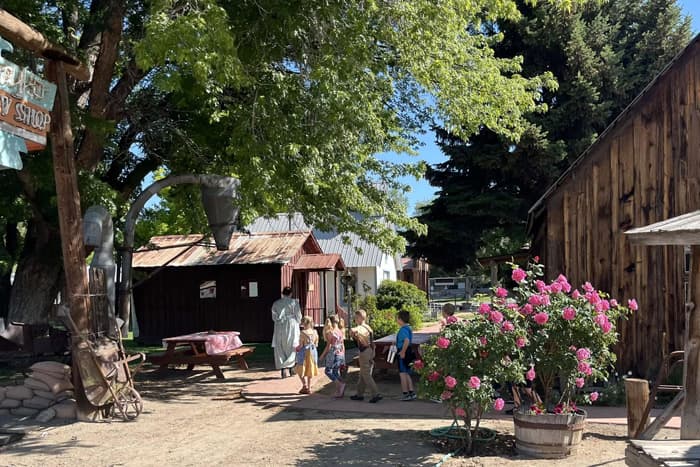
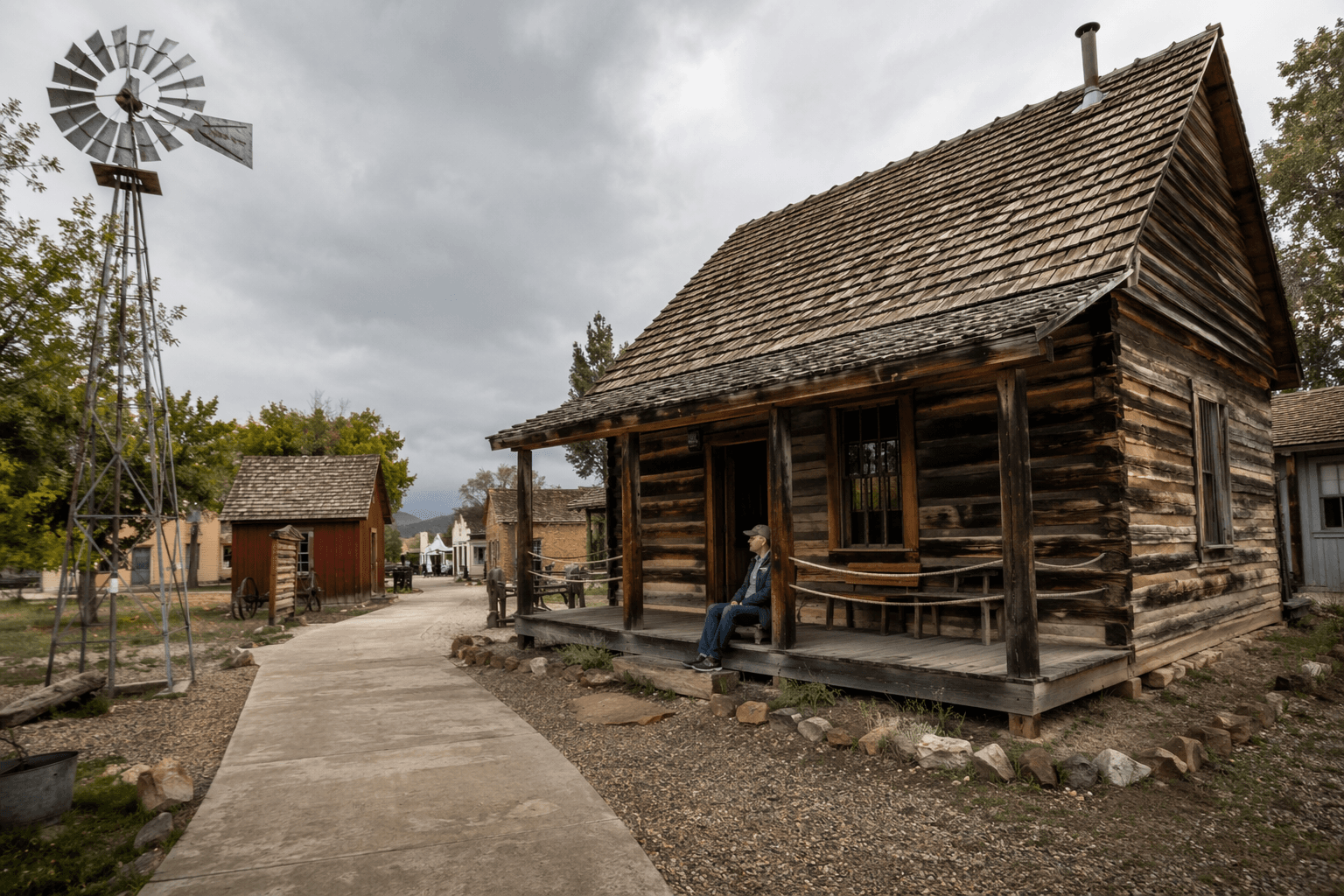
The Pioneer Village is built as a collection of 12 buildings that were moved or built on site to resemble early 20th-century structures. That layout matters because it does not present pioneer life as a single theme room or a row of labels. It recreates the operating parts of a town, so the old Aztec Jail sits near a tinsmith and print shop, a Denver & Rio Grande Railroad caboose, a blacksmith and carpentry shop, a log cabin, a farmhouse, a church, a one-room schoolhouse, a magistrate judge office, a post office, a general store and a doctor’s office.
Tourism materials also describe the Pioneer Village as having 14 original and replicated structures, which matches the feeling on the ground: this is not a display case but a walkable settlement. The railroad caboose, the schoolhouse and the judge’s office make the town’s old systems legible in a way a textbook cannot. You can see how arrival, work, schooling and justice all had to fit within the same few blocks.
What the main building adds
The museum’s main building widens the frame beyond pioneer structures. Rooms inside focus on Aztec’s early families, antique telephone equipment, geology and mining tools, Native arts and crafts, a historic barbershop, clocks, clothing and agriculture displays. Those exhibits push the story past a single era and show how communication, trade, farming and craft life shaped the county long before modern roads and stores did.
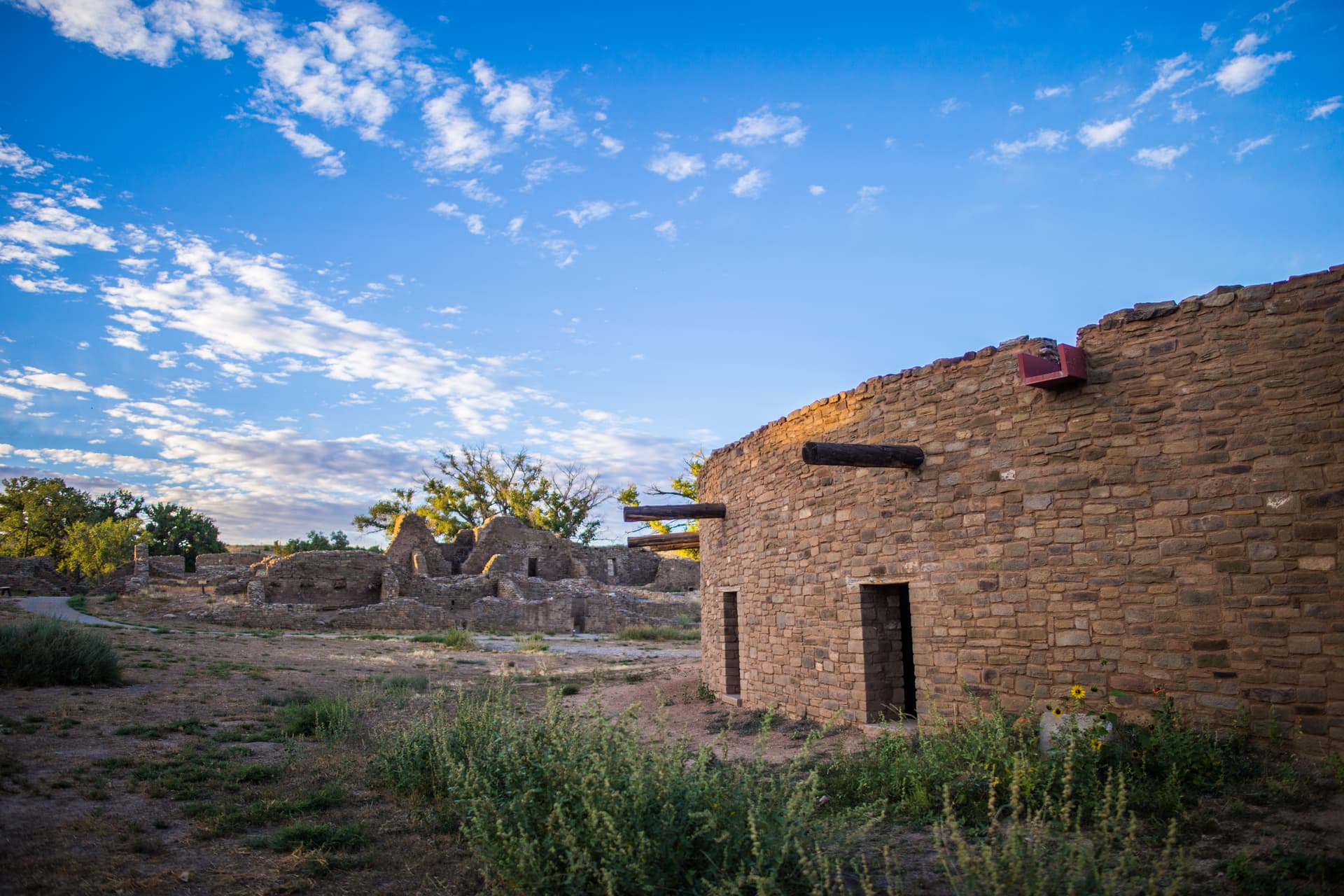
That mix also makes clear that the town’s history was never only about settlers arriving later. The museum says human habitation here goes back a thousand years, when Native Americans settled along the Animas River, and the remains of those ancient structures became Aztec Ruins National Monument. That link between the river corridor and the monument gives the museum a deeper local frame: the region’s story begins long before the pioneer buildings that now draw visitors.
Oil, gas and the county’s later growth
The Atwood Annex carries the narrative into the energy economy that later transformed the San Juan Basin. Historical photographs there document the San Juan Basin’s oil and natural gas industry, and the basin is one of the largest natural gas fields in the United States. Inside the exhibit, a restored Model TT Ford truck sits alongside a 1920 Fort Worth Spudder drilling rig, two industrial artifacts that make the scale of the region’s resource boom easier to picture.
That history is not just local nostalgia. The U.S. Geological Survey has completed multiple assessments of undiscovered oil and gas resources in the San Juan Basin Province of northwestern New Mexico and southwestern Colorado, underscoring the basin’s national importance. In Aztec, that energy story sits in the same museum complex as the jail, schoolhouse and general store, showing how railroad growth, homesteading and extraction all layered onto the same landscape.
From Aztec Ruins to downtown streets
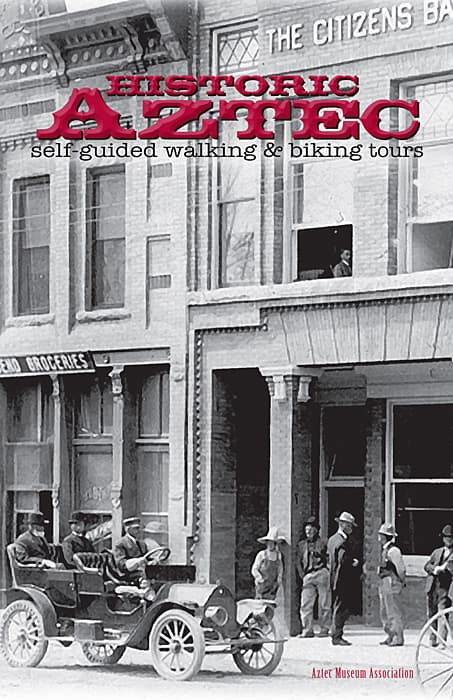
The museum fits into a wider historic route through town. The free Historic Aztec Self-Guided Walking and Biking Tours booklet starts at Aztec Ruins National Monument and moves into the heart of downtown Aztec, then on to homes, churches and irrigation ditches built by early settlers. Much of the tour focuses on historic structures built in the early 1900s, a period that helps explain why so much of central Aztec still feels tied to the town’s formative years.
That timeline lands squarely in the years after New Mexico gained statehood on January 6, 1912, becoming the 47th state. Today, Aztec boasts 78 structures listed on both the National Register of Historic Places and the New Mexico Register of Cultural Properties. The museum is not separate from that historic fabric; it is one of the places where the broader city’s preservation story becomes visible, from the Animas River corridor to downtown blocks and neighborhood streets.
How to plan a visit
Aztec Museum & Pioneer Village is housed in the historic Aztec City Hall and Fire Station buildings, which gives the institution its own layer of local history. The museum was founded in 1964, and the site remains active rather than ceremonial, with a 2026 season running from April 28 through October 31. Adult admission is $5, keeping it accessible for families, newcomers and anyone trying to understand the county without spending a full day or a lot of money.
The site also works well for children because the Pioneer Village is hands-on enough to make the era concrete. Tourism materials note that kids can climb aboard the caboose and visit the one-room schoolhouse, two stops that turn abstract history into something physical and memorable. In Aztec, that is the real strength of the museum: it shows how the county’s rail lines, homesteads, schools, energy fields and river settlements all occupy the same story, and the same ground, today.
This article was produced by Prism’s automated news system from verified source data, official records, and press releases, then run through automated quality and moderation checks before publishing. The system is built and supervised by the people who set the standards it runs under. Read our full AI policy.
Did this article answer your question?