Aztec Ruins offers a vivid window into ancestral Pueblo history
West Ruin’s half-mile trail, restored Great Kiva and museum make Aztec Ruins San Juan County’s clearest one-stop lesson in ancestral Pueblo history.
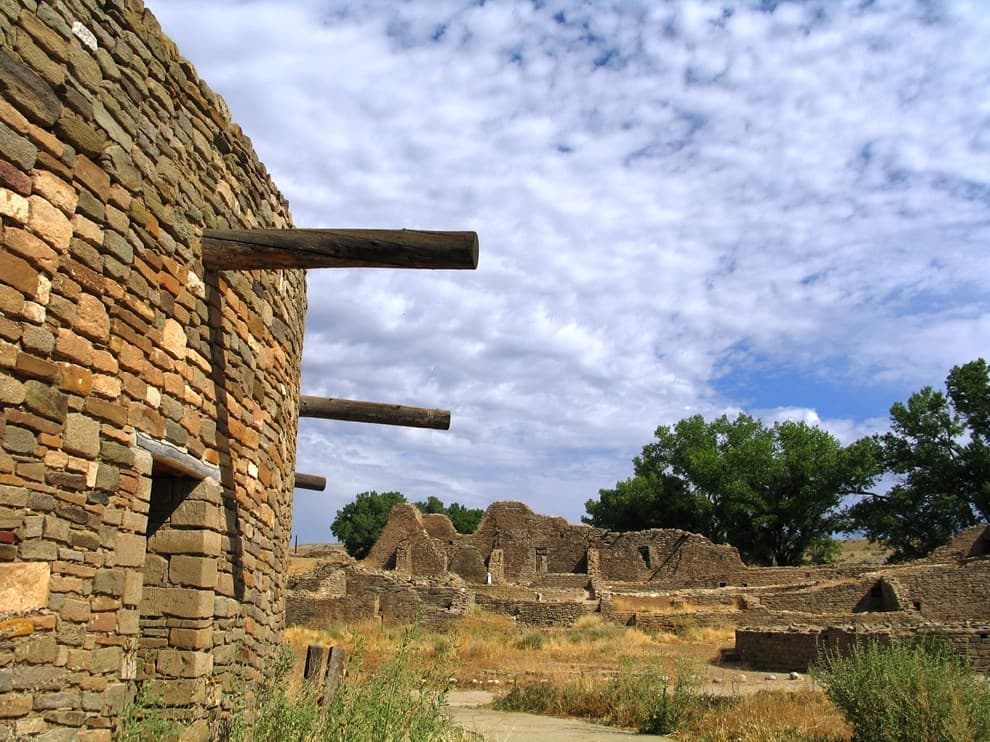
A reconstructed Great Kiva and original great-house rooms with intact timber ceilings make Aztec Ruins National Monument one of San Juan County’s most accessible, revealing looks at ancestral Pueblo history. The site is compact enough for a single visit, but its West Ruin and museum show how much was built, used and preserved here over centuries.
What sets Aztec Ruins apart
Aztec Ruins was established on Jan. 24, 1923, and later became part of the Chaco Culture UNESCO World Heritage Site on Dec. 8, 1987. It has some of the best-preserved Chacoan structures of its kind, placing it among the most important archaeological sites in the Four Corners region.
The monument preserves an extended, planned community built and occupied by Ancestral Puebloan people over a 200-year period. The remains include large multi-story public buildings, smaller residential structures, ceremonial kivas, remnants of linear roadways and earthen berms, along with thousands of well-preserved artifacts and original wood beams. The site records how people lived, built and organized space in the 12th and 13th centuries.
What you can see in one visit
Only West Ruin is open to visitors, while East Ruin is part of the larger Aztec community but not open. The half-mile self-guided trail gives a close view of the site without requiring a long hike. Along the route, visitors pass a reconstructed Great Kiva and original great-house rooms with intact timber ceilings.
The park’s museum is part of the experience and helps explain the ancestral Pueblo people who built and used the site. The museum and trail connect the masonry, the timber and the ceremonial spaces to the people who lived there and to the broader Chacoan world that shaped the site.
A local site with regional reach
The 1987 National Park Service brochure places Aztec about 65 miles south of Chaco, midway between two centers of Anasazi culture. The first settlers here, if not actually Chacoans, were strongly influenced by Chacoan ideas in architecture, ceramics and ceremonies. Later occupants added another chapter to the same landscape.
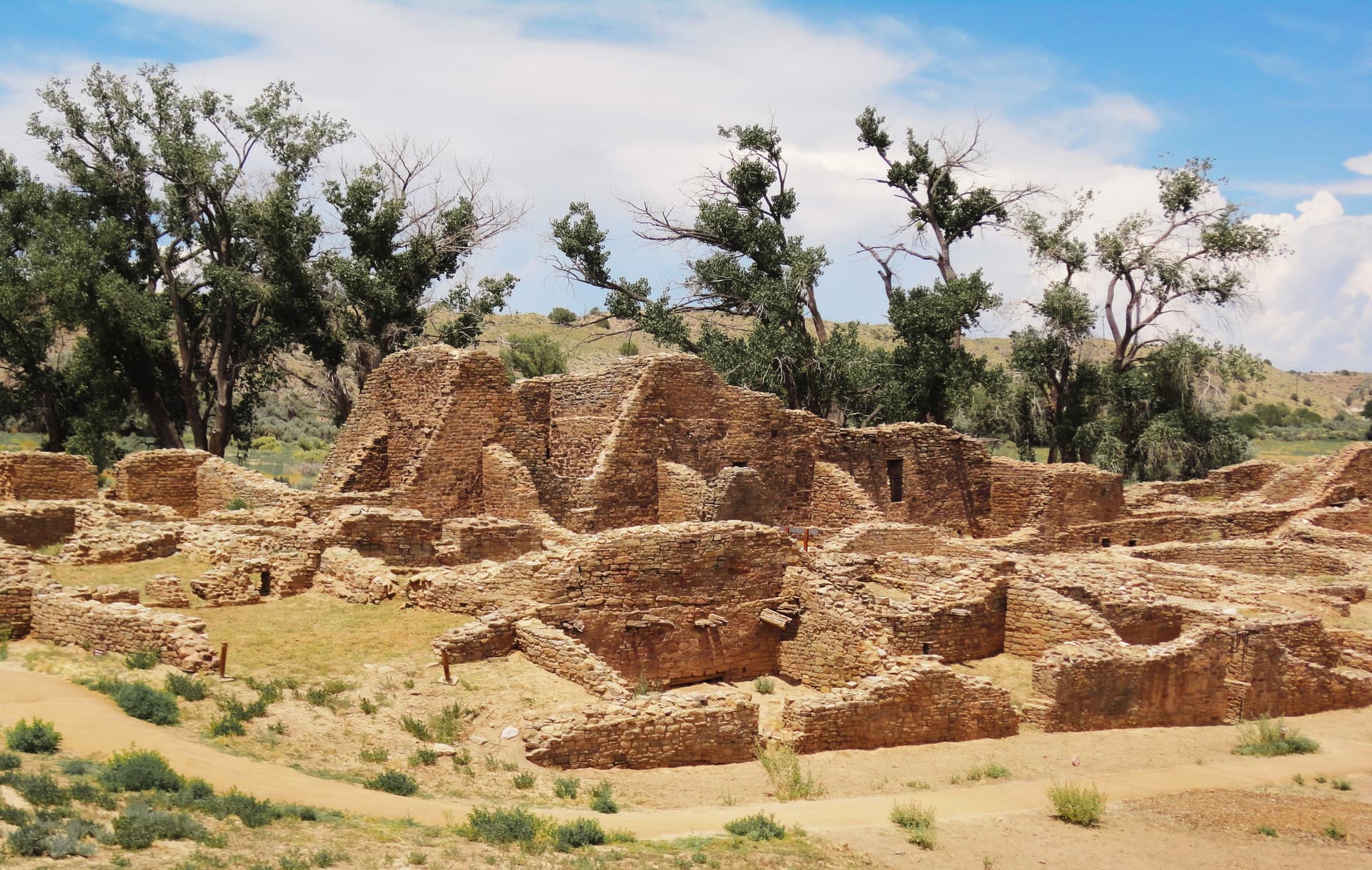
That regional connection is reinforced by the Old Spanish Trail retracement and wayside at Aztec Ruins. The monument is also tied to later travel and movement across the Southwest. In the Chaco Research Archive, the site appears as Aztec West Ruins with preserved Chacoan great-house architecture.
Preservation and stewardship still define the visit
Aztec Ruins is a deeply sacred place to many Indigenous peoples across the American Southwest, and the National Park Service asks visitors to come with respect. Federal stewardship preserves access through the trail, museum and interpretation while setting the tone for the visit.
The preserved West Ruin, the reconstructed Great Kiva and the museum create a visit that is easy to understand. For Aztec and the wider county, the monument also brings people into town for a destination that is both educational and practical, with the visit anchored in the community rather than set apart from it.
This article was produced by Prism’s automated news system from verified source data, official records, and press releases, then run through automated quality and moderation checks before publishing. The system is built and supervised by the people who set the standards it runs under. Read our full AI policy.
Did this article answer your question?