Bisti-De-Na-Zin Wilderness draws visitors with otherworldly badlands and fossils
Bisti-De-Na-Zin is a raw badlands landscape where bad roads, no water, and strict rules shape every visit. Its fossils and hoodoos make it a draw, but only careful, low-impact travel keeps it protected.
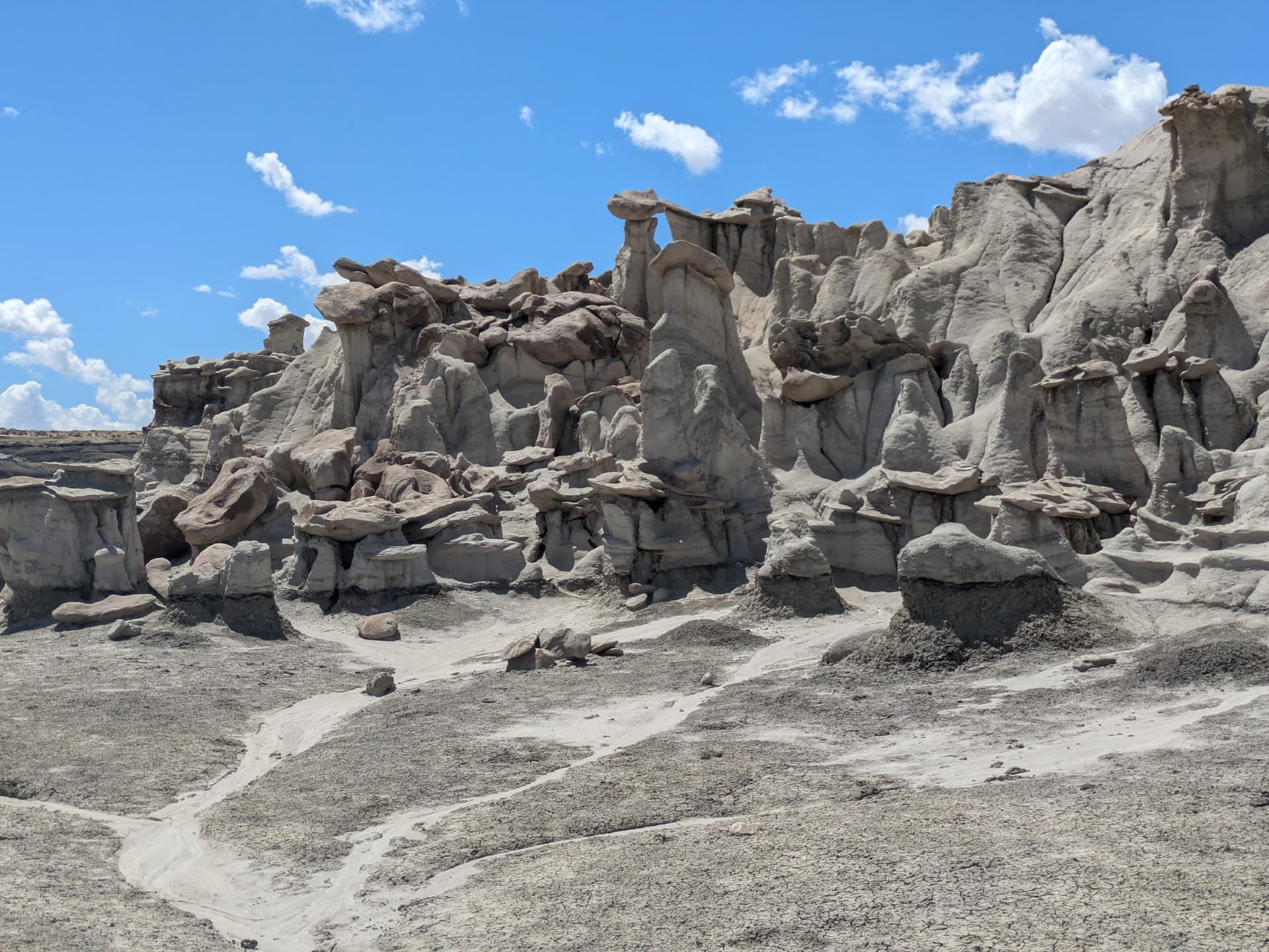
The 45,000-acre Bisti-De-Na-Zin Wilderness south of Farmington in the Navajo Nation has no paved scenic drive or built-up visitor center. It is all eroded badlands, colorful hoodoos, and fossil-bearing rock from the Late Cretaceous. Visitors step straight from the trailhead into a rolling wilderness of clay hills, sandstone outcrops, and fragile formations that have to be treated as part of the site, not souvenirs.
What makes this place different from a normal day trip
The Bureau of Land Management treats Bisti-De-Na-Zin as a wilderness unit, which means access is intentionally primitive. The main entry points are the Bisti Trailhead and the De-Na-Zin Trailhead, and from there the experience is on foot, across informal routes rather than marked park-style paths. Spring and fall are the most comfortable seasons, because the openness that gives the badlands their drama also means visitors face heat, wind, and little shelter.
The area is a fantasy-like spread of badlands formed in interbedded sandstone, shale, mudstone, coal, and silt, with petrified wood and vertebrate fossils protected across the landscape. The formations are the product of millions of years of weathering and preserve a fossil record that is lost once damaged.
Getting there means planning for no services
The roads are unpaved, and after rain or snow they can become slippery or impassable, which is why high-clearance vehicles are recommended. There is no water available on site, and cell service is minimal to nonexistent, so a quick outing can become a long problem if you arrive underprepared.
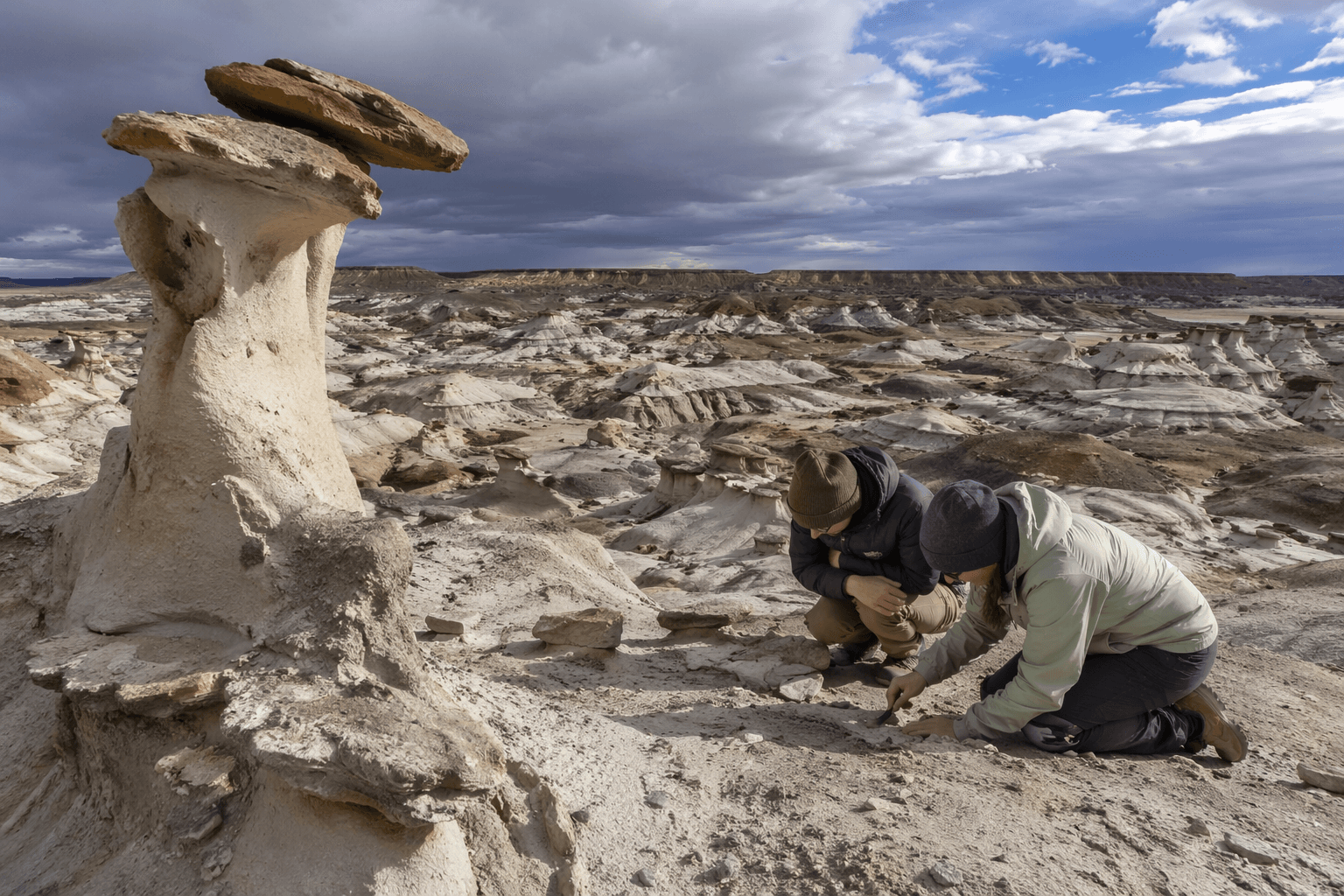
Bring more water than you think you need, especially in warm weather. Wear footwear that can handle loose clay and rough rock, and pack for exposure, because the wilderness offers very little in the way of shade, shelter, or rescue-by-signal if you run into trouble.
The rules are strict for a reason
Primitive dispersed camping is allowed, which gives the area an appeal for travelers who want to stay close to the landscape itself. Pets are allowed on leash, but the rest of the travel rules are deliberately restrictive. Motorized and mechanical travel, including bicycles, is prohibited, and drones are not allowed.
Visitors are asked not to damage fragile geologic features or disturb cultural objects and fossils, because the badlands are a living classroom for geology, paleontology, and regional history. A single step can scar a clay slope or disturb a fossil surface.
The names and landmarks help orient first-time visitors
De-Na-Zin is a Navajo word tied to cranes, and the name gives the wilderness a local identity that goes beyond its scientific reputation. The Egg Hatchery and the City of Hoodoos are signature features, two names that match the otherworldly look visitors expect when they reach the badlands. Nearby Ah-Shi-Sle-Pah includes features such as Alien Throne and King of Wings, names that have given the broader region a reputation for strange, photogenic stone formations.
The wilderness is part of a larger travel corridor, not an isolated destination. Visitors coming south from Farmington often pair Bisti with other northwestern New Mexico public lands, and that spreads the impact across gas stations, outfitters, motels, and restaurants in the county. When visitation rises, the payoff is real for local businesses that serve road-trippers and photographers, but the pressure on the landscape rises too if people leave trash, cut across fragile slopes, or ignore access limits.
Why the fossils draw so much attention
Long before it became a social-media landmark, this ground was part of a much older environment. The area once lay under an inland sea and coastal swamp that supported trees, reptiles, dinosaurs, and primitive mammals. Visitors are walking through a landscape that still holds evidence of ancient life.
Petrified wood and vertebrate fossils have shaped management of the site for decades. Congress considered the Bisti/De-Na-Zin Wilderness Expansion and Fossil Forest Protection Act in both the 103rd and 104th Congresses. The wilderness also sits within the broader federal conservation system shaped by the 1964 Wilderness Act and BLM wilderness authorities under the 1976 Federal Land Policy and Management Act.

How to visit without adding wear to the land
Leave the fewest traces possible. Stay on the least disruptive route possible once you leave the trailhead. Keep pets leashed, keep drones at home, and do not assume that a bicycle or motorized shortcut is acceptable just because the country looks open.
A practical checklist:
- Start from the Bisti Trailhead or De-Na-Zin Trailhead, not random pullouts.
- Bring all the water you will need, plus extra for delays.
- Expect weak or absent cell coverage.
- Use a high-clearance vehicle, especially after rain or snow.
- Visit in spring or fall when temperatures are more manageable.
- Camp only in allowed primitive dispersed areas and pack out everything you bring in.
This article was produced by Prism’s automated news system from verified source data, official records, and press releases, then run through automated quality and moderation checks before publishing. The system is built and supervised by the people who set the standards it runs under. Read our full AI policy.
Did this article answer your question?