Four Corners Monument marks where four states meet in San Juan County
Four Corners is more than a photo stop: it is San Juan County's gateway to Navajo vendors, border history and the only spot where four states meet.

Pull off Highway 160 about 60 miles northwest of Farmington and Four Corners Monument delivers one of San Juan County’s most recognizable scenes in a few steps: Arizona, New Mexico, Utah and Colorado meeting at a single point. The stop is quick to photograph but easy to linger in, especially when the plaza, the vendor tables and the surrounding landscape turn a novelty into a place with real economic and cultural weight.
What visitors see now
The monument sits within the Navajo Nation, and the site also marks the boundary between the Navajo Nation and the Ute Mountain Ute Tribe reservation. That setting matters as much as the marker itself. Native American artisans are on site with handmade jewelry, crafts and traditional Navajo foods, and Navajo Nation Parks & Recreation lists vendors daily from 8:00 a.m. to 5:00 p.m.
That schedule makes Four Corners more than a pullout for a fast photo. Travelers who arrive during vendor hours can buy directly from local sellers instead of treating the stop as a take-it-or-leave-it roadside view. The site is closed on major Navajo holidays, so timing matters, especially for road-trippers planning the stop as part of a longer day through San Juan County.
Why the landmark still draws people in
Four Corners Monument is the only place in the United States where four state lines meet at one point. That simple fact has given the site a lasting pull for generations of visitors, but the story is not just about a novelty photo. It is also about how boundaries are marked, accepted and preserved in the American West.
Navajo Nation Parks & Recreation says the original marker was erected in 1912 as a simple cement pad. It was later rebuilt in granite and brass, and NOAA’s National Geodetic Survey says the current monument complex was constructed in 1992 and includes a visitor plaza around a commemorative survey disk. The physical space has changed, but the idea behind it has stayed constant: this is a place where maps become something you can stand on.
The survey line behind the selfie
The monument’s modern form rests on 19th-century surveying work. NOAA’s National Geodetic Survey says Chandler Robbins was contracted in 1875 by the U.S. General Land Office to survey the Arizona-New Mexico boundary and establish the Four Corners monument at the northern terminus of that line. Robbins used Ship Rock’s coordinates as a reference point, anchoring the work to a landmark that remains one of the region’s most familiar natural features.
That survey history matters because boundary monuments carry legal force once they are established and accepted by the relevant parties. NOAA says the physical monument becomes the authority for the boundary. In practice, that makes Four Corners part of the legal architecture of the West, not just a tourist stop.
The legal backdrop was settled again in New Mexico v. Colorado, decided by the U.S. Supreme Court on January 26, 1925, with the original decree entered on April 13, 1925. The court’s decision affirmed the surveyed boundary as legally controlling, which is one reason the site remains more than a commemorative marker. It is a fixed point in a region where survey work, federal authority and state borders all intersect.
A place shaped long before the state lines
The monument sits in a landscape with a far older human record than the survey lines that cut across it. The National Park Service says the Four Corners region was home to tens of thousands of Ancestral Pueblo people between about 500 CE and 1300 CE. The agency also notes that the Navajo, or Diné, moved into the Four Corners area from the north around 1300 CE.
That longer history helps explain why the site carries cultural meaning beyond its border-stone status. The monument is planted in a region shaped by Indigenous presence over centuries, including Navajo, Ute, Paiute, Hopi and Apache ties to the broader area. Visitors who stop for a picture are standing in a place where the historical layers run much deeper than the pavement under their feet.
Why San Juan County benefits from the stop
Four Corners also functions as a gateway point for San Juan County, not an isolated roadside attraction. New Mexico Tourism & Travel describes Farmington as the regional basecamp for Four Corners-area attractions and places the monument 60 miles northwest of Farmington on Highway 160. That matters because road-trippers often plan around the county’s services, fuel stops, lodging and restaurants before heading farther afield.
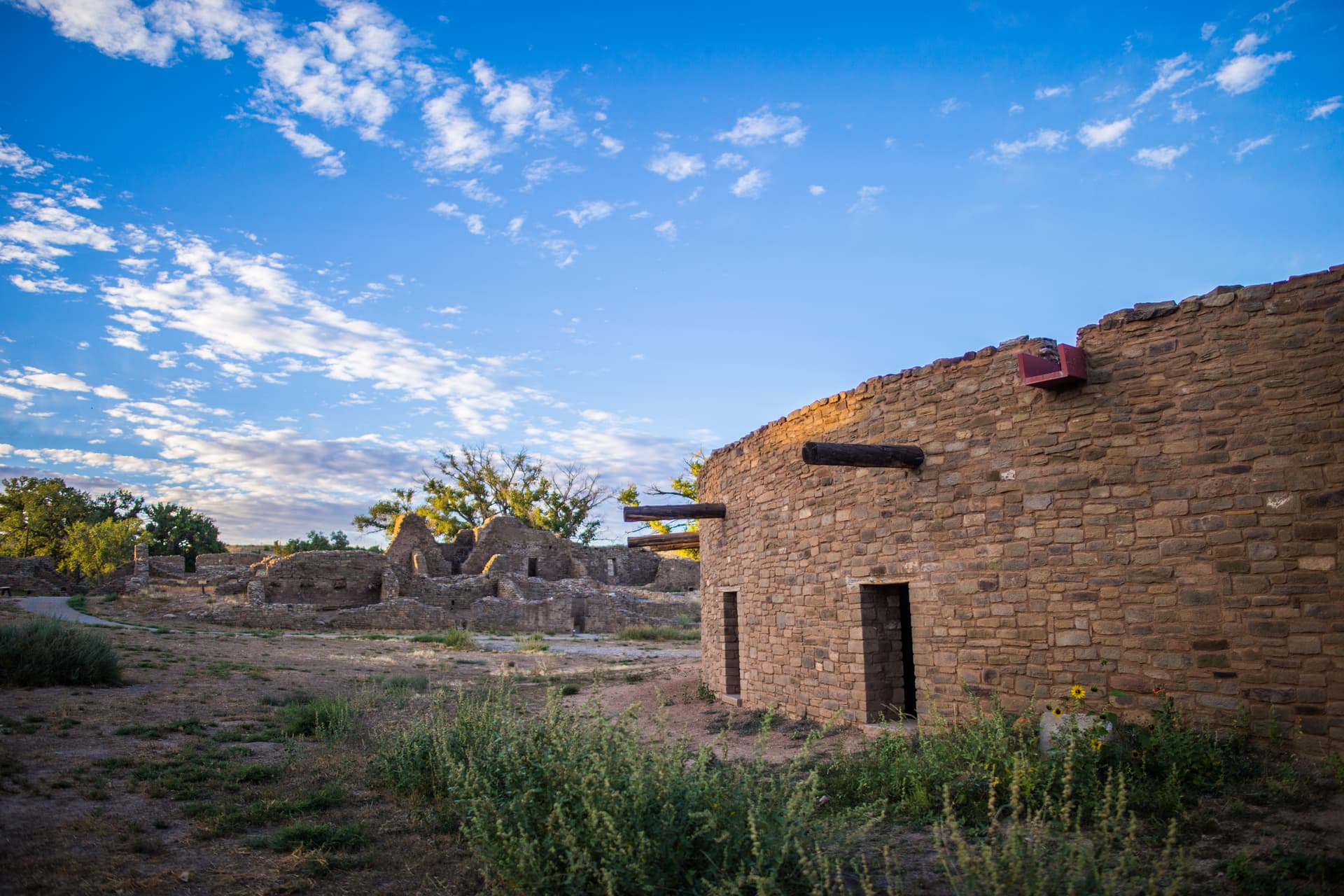
The practical travel circuit stretches well beyond the monument itself. New Mexico Tourism links Four Corners with nearby destinations such as Aztec Ruins, Salmon Ruins, Shiprock, Bisti/De-Na-Zin Wilderness, Chaco Culture and Mesa Verde. That web of sites gives visitors a reason to spend more than a few minutes in the county, and every added hour increases the chance that a photo stop becomes a meal, a craft purchase or an overnight stay.
For the vendors at the monument, the effect is immediate. For Farmington and the surrounding communities, the broader effect is just as important: Four Corners helps move travelers through San Juan County as a destination corridor, not merely a pass-through stretch of highway.
How to make the stop count
A useful visit comes down to timing and pacing. Arrive during vendor hours if you want the full on-site experience, and plan around major Navajo holidays when the monument is closed. Build enough time to walk the plaza, look at the survey disk and browse the artisan tables instead of treating the stop like a drive-by attraction.
- Leave Farmington with enough daylight for the round trip on Highway 160.
- Expect a cultural marketplace as well as a photo spot.
- Pair the monument with another San Juan County site if you want the trip to feel more like a regional tour than a quick detour.
Four Corners remains memorable because it is easy to understand and hard to reduce. It is a border marker, a Native-owned visitor stop, a legal landmark and a gateway into the wider San Juan County travel economy, all at the same point on the map.
This article was produced by Prism’s automated news system from verified source data, official records, and press releases, then run through automated quality and moderation checks before publishing. The system is built and supervised by the people who set the standards it runs under. Read our full AI policy.
Did this article answer your question?