Our Lady of Guadalupe Chapel survives San Juan County’s lost communities
Our Lady of Guadalupe Chapel is one of the few visible survivors of Navajo Lake’s drowned villages. Its annual Mass and historic status keep Los Martínez and other lost communities present in San Juan County.
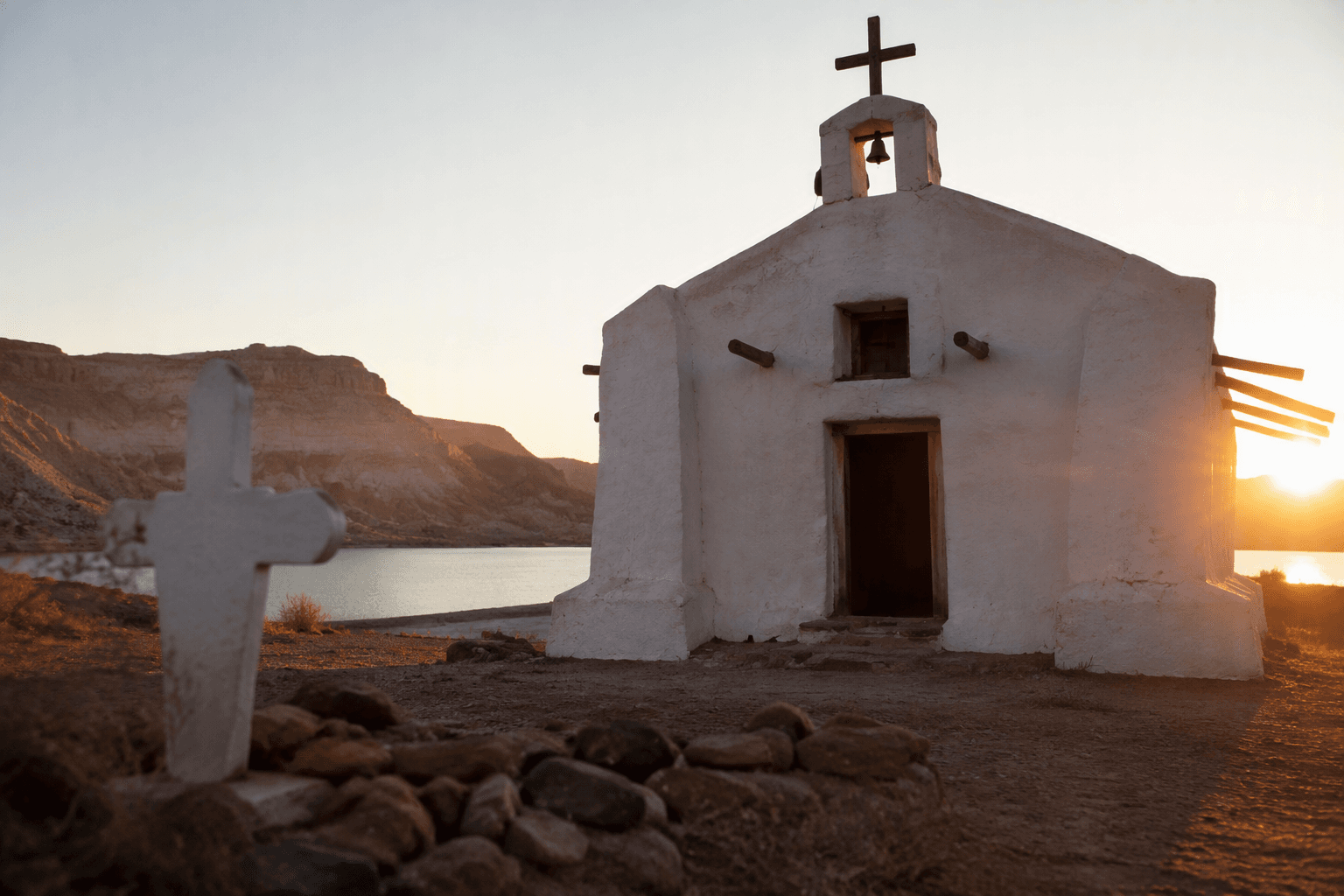
Our Lady of Guadalupe Chapel sits just below Navajo Dam on the San Juan River canyon road, but its meaning reaches far beyond the roadside view. The small church survives as one of the last physical markers of the Hispanic ranchito communities that stood where Navajo Lake later spread, making it a direct link to the families and villages displaced by the reservoir project.
A chapel tied to the communities that disappeared
The chapel is associated with Los Martínez, one of the old settlements affected by construction of Navajo Dam and the filling of Navajo Lake. New Mexico Magazine described how rising waters erased much of the old landscape, but spared the chapel, leaving it as a rare reminder of what once stood there. That survival matters in San Juan County because so much of the surrounding geography changed when the lake formed.
The larger story is not just about one church. A 2021 Farmington Local News video described a San Juan County Historical Society booklet that concluded a four-year project on the “lost communities” of Los Martinez, Los Pinos, Rosa and Arboles. Those names matter because they map the people, homes, and family networks that were pushed aside as the reservoir expanded across northwest New Mexico.
The scale of displacement still shapes the site
The chapel’s importance is easier to understand when the scale of the displacement is kept in view. A 2019 Durango Herald report said hundreds of families were forced to leave their homes and communities to make way for the waters of Navajo Lake. That was not a single relocation but a broad breakup of a lived-in landscape, with ties to land, church, and kinship spread across places that no longer sit above water.
That is why the chapel reads as more than a preserved building. It stands for a cluster of erased or relocated communities and for the memory carried by descendants who still recognize those names. In a county where major public lands, archaeological sites, and recreation often dominate the map, this small structure anchors a very different kind of history: one built around family settlements, Catholic devotion, and loss.
A living place, not only a landmark
The chapel is still used for an annual Mass on December 12, the feast day of Our Lady of Guadalupe. That date connects the site to a wider Catholic observance in the United States and gives the chapel an active role in local religious life rather than leaving it as a museum piece. The annual gathering keeps the building tied to worship, memory, and the traditions that have outlasted the old village landscape.
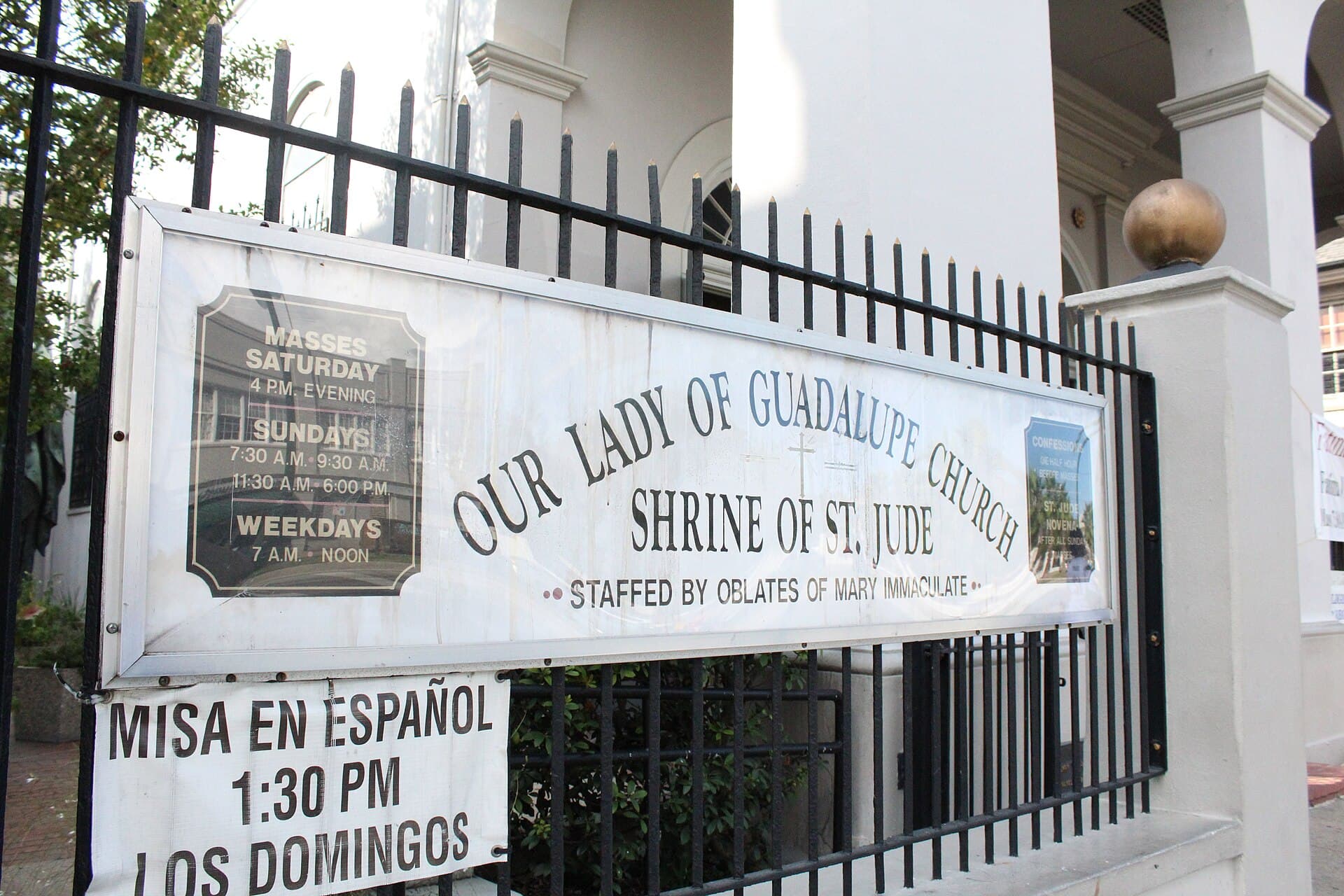
That continuity is one reason the chapel remains so resonant for San Juan County residents. The chapel’s preservation does not recreate the communities that were displaced, but it does give families and parish communities a place where those histories can be named and remembered in the open. The liturgy keeps the site in use, and that use keeps the story from fading into a purely archival record.
What to notice on a visit
The setting along the San Juan River canyon road is part of the chapel’s power. The drive itself makes clear how dramatic the transformation was: the church occupies ground near Navajo Dam while the broader basin around it was reshaped by the lake. Visitors see a small chapel in a steep, rugged corridor, then learn that the quiet site once belonged to a much larger network of ranchitos and villages.
A respectful visit is rooted in that history. The chapel is not simply a scenic stop, and it should be approached as a place of memory tied to displaced families, ongoing devotion, and historic change. The most important details to carry with you are the names attached to the lost communities, the annual Mass on December 12, and the fact that the building endured when much of the old landscape did not.
Why preservation still matters
The San Juan County Historical Society recognizes Our Lady of Guadalupe Chapel at Navajo Dam among the sites it has designated as a historic landmark. That recognition gives local preservation a practical role: it helps ensure that the chapel remains visible as older firsthand memories of the dam era fade. Without places like this, the story of Los Martínez, Los Pinos, Rosa and Arboles would survive mostly in family recollection and scattered documentation.
In San Juan County, the chapel holds together several histories at once: displacement, faith, and the reshaping of the San Juan River corridor. Its survival turns a roadside landmark into a record of what was lost, who was moved, and how communities keep a vanished landscape present through ritual and place.
This article was produced by Prism’s automated news system from verified source data, official records, and press releases, then run through automated quality and moderation checks before publishing. The system is built and supervised by the people who set the standards it runs under. Read our full AI policy.
Did this article answer your question?