Salmon Ruins shows how Chaco culture reached beyond the canyon
Salmon Ruins is Bloomfield’s museum, park, and preservation project in one, showing how a Chacoan outlier connected San Juan County to the wider Chaco world.
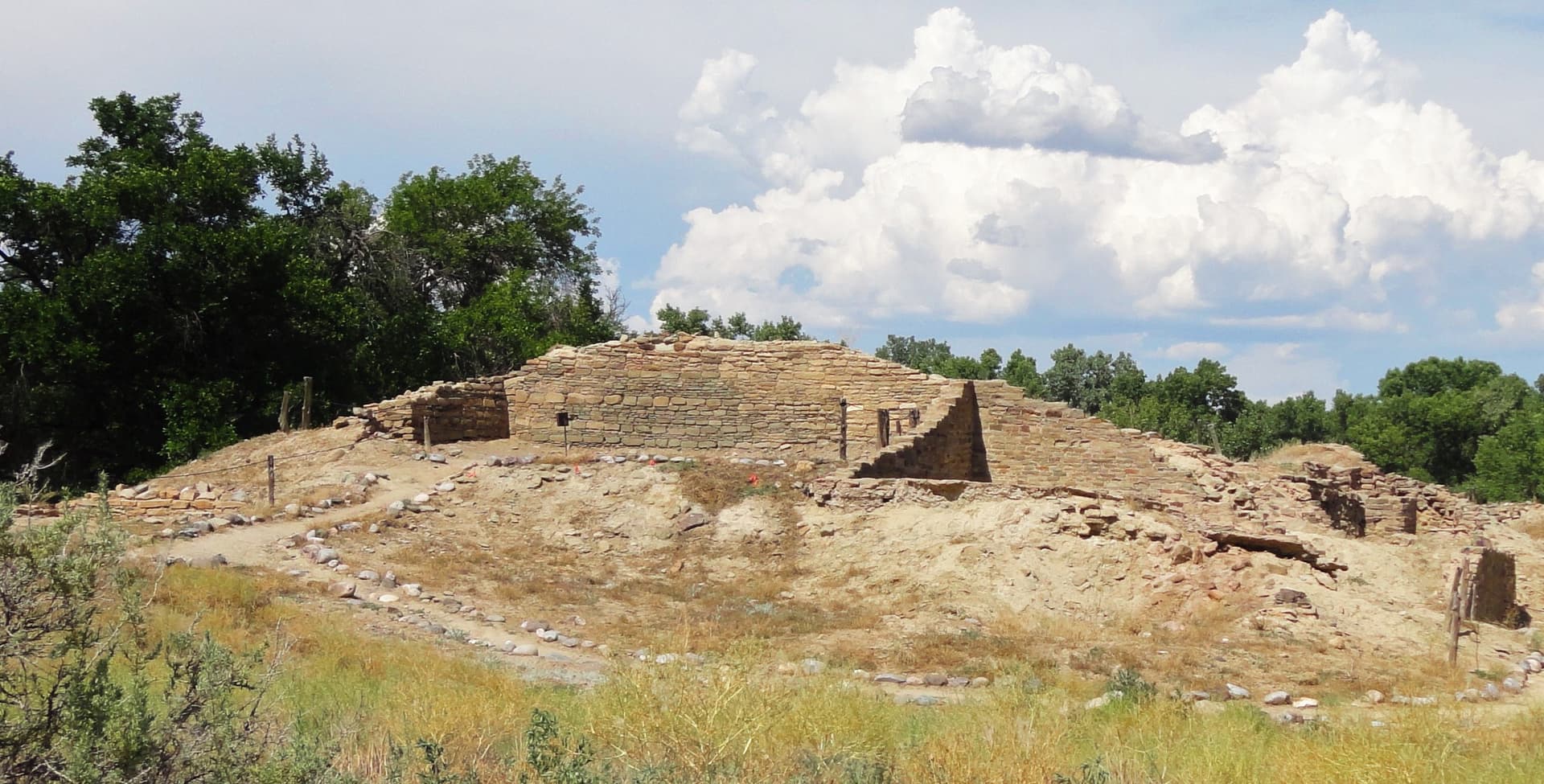
Salmon Ruins sits just west of Bloomfield as a place where Chaco history is still being walked, studied, and shared. The excavated pueblo, museum, Heritage Park, Pioneer Homestead, and research library make it one of San Juan County’s clearest links between the ancient canyon culture and the community that preserves it today.
A Chacoan outlier in Bloomfield
Salmon Pueblo was built in the late 11th century, with site histories dating construction to A.D. 1088 and Archaeology Southwest placing it around A.D. 1090. It remained occupied until around 1288. The village was a Chacoan outlier, part of the wider cultural world tied to Chaco Canyon rather than an isolated local ruin.
The scale explains why it matters. Archaeological histories describe Salmon Pueblo as home to an estimated 200 to 300 people, with more than 200 rooms, a central kiva, a great kiva, and three stories of construction. Archaeology Southwest places the original room count at 275 to 325, and the National Park Service lists Salmon Ruin in Bloomfield as one of the public outliers associated with Chaco Culture National Historical Park. Bloomfield describes it as an 11th-century pueblo ruin covering more than two acres, with two distinct occupations: an earlier Chaco Culture presence and a later San Juan occupation.
How local stewardship shaped the site
The modern story of Salmon Ruins is as much about protection as excavation. George Salmon owned the property from the early 1890s until the mid-1950s, and the Salmon family kept it from being lost before it became a public resource. The San Juan County Museum Association took over in 1969, then excavation ran from 1972 to 1978 under Dr. Cynthia Irwin-Williams.
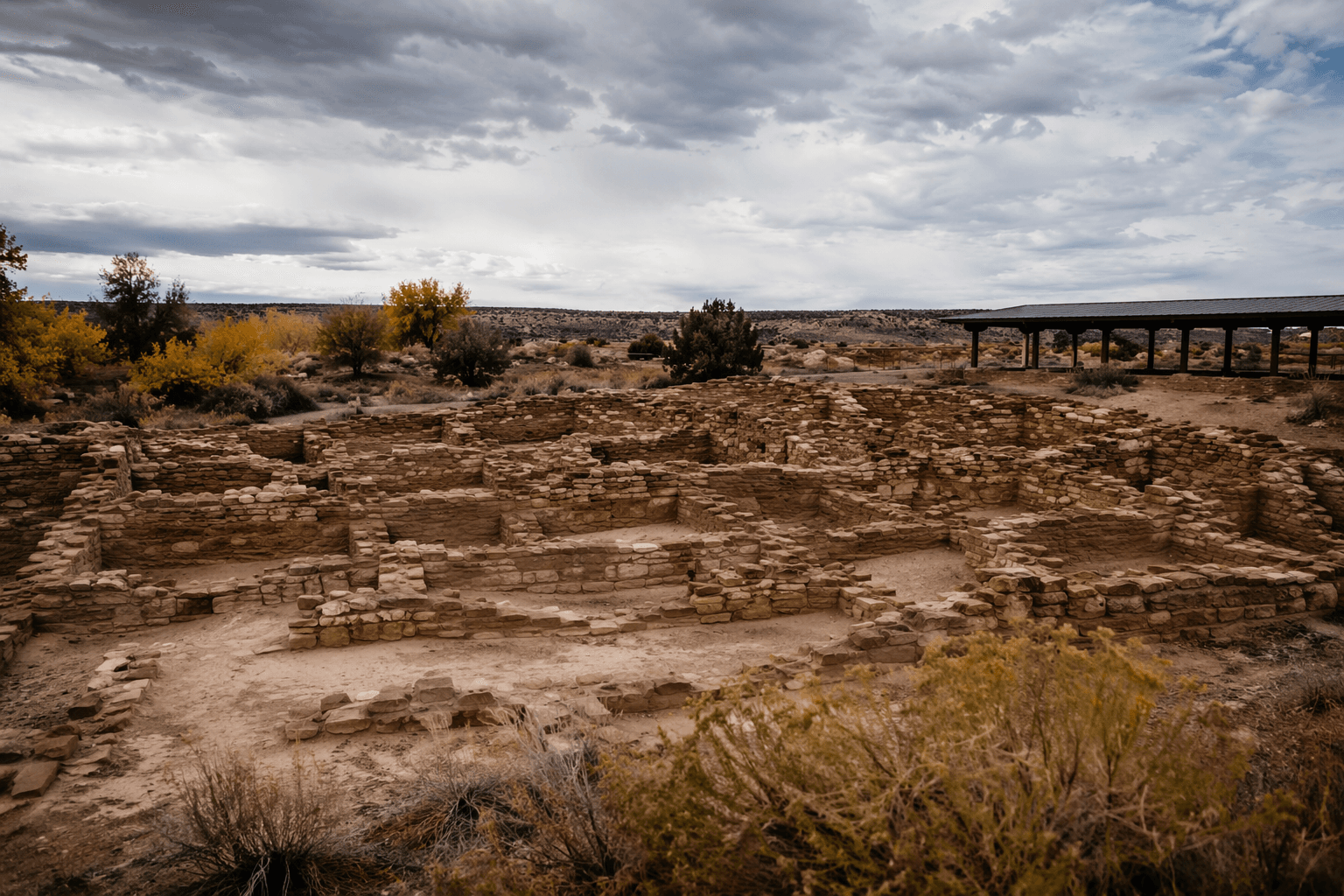
That sequence matters because it turned a privately held ruin into a county institution. The museum opened to the public in 1973, and today the site is owned by San Juan County and preserved through the efforts of the museum association. The association operates as a 501(c)3 nonprofit without federal or state tax support, relying on entrance fees, private tours, gift-shop sales, donations, and archaeological contract work to fund stabilization, structural repairs, and educational outreach.
What you can experience on site now
Salmon Ruins is built for a visit, not just a viewing. The complex includes the ruins themselves, the museum, Heritage Park, and the Pioneer Homestead, all tied together through the San Juan County Archaeological Research Center & Library. Visitors can move from an excavated pueblo village to reconstructed dwellings and a frontier homestead in the same stop, which makes the site unusually useful for understanding how different eras of settlement fit together in one place.
Most visitors receive an extensive trail guide at the front desk for a self-guided walk through the site. The museum adds exhibits that explain the settlement, the excavation history, and the broader Chacoan world, while the gift shop highlights local Native artists. For a deeper look, the site also offers full-day archaeology tours led by professional archaeologists, limited to six people maximum. Guided tours of the ruin itself are usually reserved for special occasions such as the Summer Solstice Alignment tour or for student groups.
The location is part of the appeal. Site materials place Salmon Ruins about 2 miles west of Bloomfield on US Highway 64, while Bloomfield’s community page describes it as about 1 mile west of town. Either way, it is close enough to fit into a half-day local outing, but substantial enough to reward a longer visit.
Events that keep the site active
Salmon Ruins is not a static display. The museum hosts lectures, exhibits, summer solstice events, Heritage Preservation Month programming, and an annual arts and crafts fair that brings the site into regular contact with the community. Those programs give the complex a calendar as well as a collection, and they make the place useful to families, teachers, travelers, and local residents who return for more than one reason.
The holiday arts and crafts fair is one of the site’s biggest public draws. It features more than 90 vendors, uses a $1 admission donation, and admits kids 12 and under free. The event also serves as a fundraiser, which ties the public face of the site directly to the cost of maintaining it.
Why it matters in San Juan County
Salmon Ruins shows how Chaco culture reached beyond the canyon and into the daily geography of this county. The site gives local people a way to see that connection in stone walls, room blocks, kivas, and museum displays instead of only in textbooks or map labels. It also shows how preservation here depends on local institutions, local fundraising, and local use, not just on academic interest.
That is why the site endures as more than archaeology. It is a county-owned place with a museum association behind it, a public trail, a research library, a homestead area, and a steady calendar of programming. In Bloomfield, Salmon Ruins is where Chaco history becomes a living preservation effort that still belongs to the people who live around it.
This article was produced by Prism’s automated news system from verified source data, official records, and press releases, then run through automated quality and moderation checks before publishing. The system is built and supervised by the people who set the standards it runs under. Read our full AI policy.
Know something we missed? Have a correction or additional information?
Submit a Tip