San Juan Regional Medical Center Matches Four Physicians to New Residency Program
Four physicians matched to SJRMC's first-ever internal medicine residency in Farmington, as 32 of New Mexico's 33 counties face acute doctor shortages.
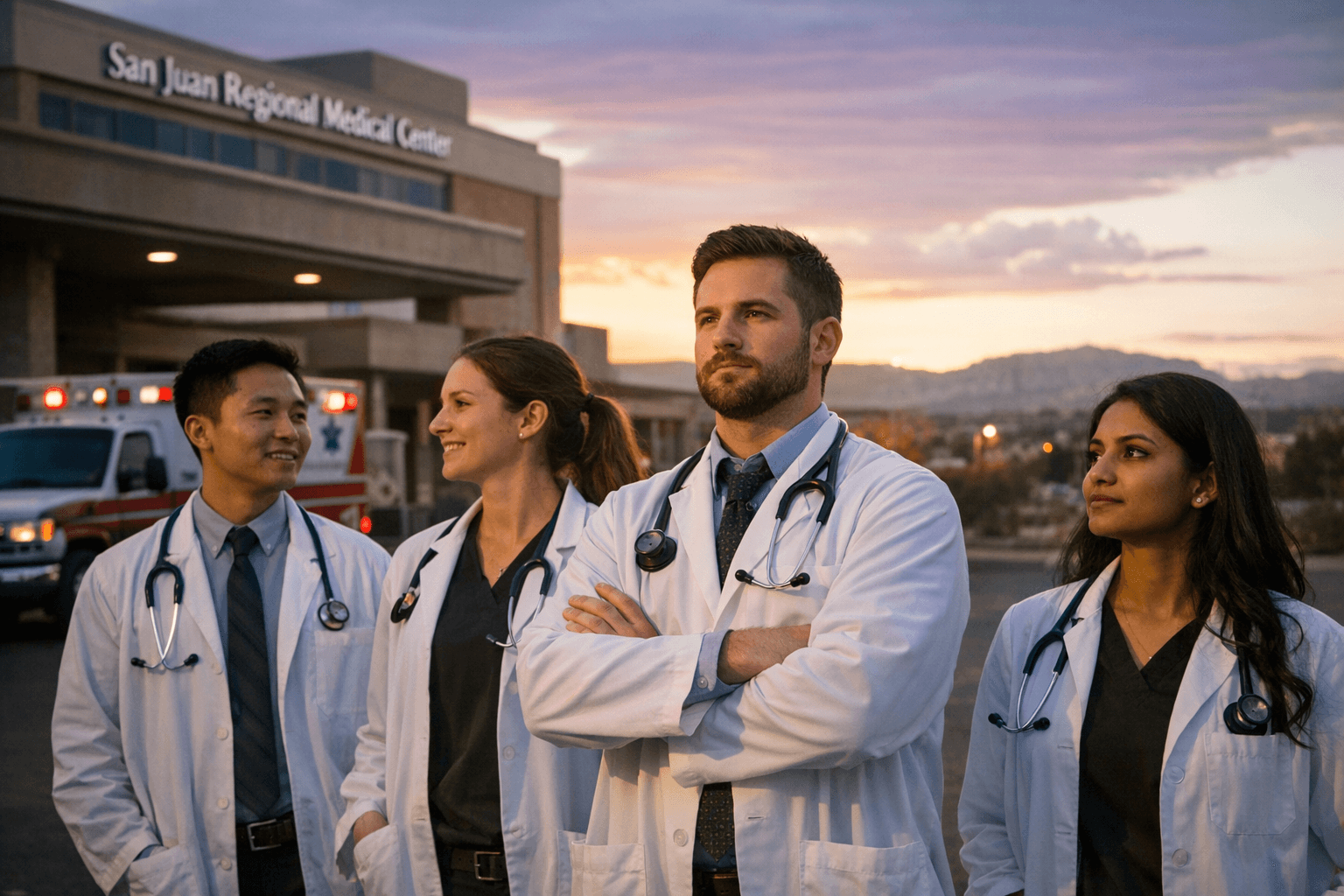
Chathurika Priyabhashinie, Shafqat Ullah, Mahnoor Shah, and Maryam Abbas Malik will arrive at San Juan Regional Medical Center in July as the inaugural class of a residency program that could, if it works as designed, chip away at one of the most persistent healthcare problems in the Four Corners: not enough doctors, and too few reasons for them to stay.
SJRMC announced the Match results on March 25, confirming all four physicians for its newly accredited internal medicine residency. The three-year program received Accreditation Council for Graduate Medical Education approval in September 2025, the culmination of years of planning by hospital leadership, medical staff, and accrediting bodies.
The shortage those four residents are training into is severe. Thirty-two of New Mexico's 33 counties are designated health professional shortage areas. The state is projected to be short more than 2,100 physicians by 2030, with primary care alone accounting for 326 of that deficit. Only 95 primary care residency slots exist statewide annually, and more than 45 percent of physicians trained in those slots leave New Mexico to practice elsewhere.
Program director Dr. Erin Philpott, an internal medicine physician who helped build the curriculum from the ground up, framed retention as the program's defining purpose. "I am honored to be in the position to help guide these brilliant young physicians through their training to hopefully stay and work in our culturally rich and geographically unique region," she said. She described the curriculum as deliberately community-centered, structured around the complex, high-acuity cases that move through SJRMC and attuned to the specific health needs of the Four Corners population. The program includes both inpatient and outpatient training, positioning graduates for primary care or subspecialty pathways.
That word "hopefully" carries the honest weight of what research consistently shows about physician retention. States that invest in community-based rural training programs can retain 75 percent or more of their graduates locally. New Mexico's overall record sits far below that benchmark: just 24 percent of physicians trained at the University of New Mexico stay in state to practice. The evidence does support one consistent finding: physicians who train in a community are meaningfully more likely to build their careers there.
Whether Priyabhashinie, Ullah, Shah, and Malik choose Farmington after completing their training in 2029 is the metric that will define this program. Hospital leaders and local health advocates say they will track graduate retention closely. The match is made; the harder number to hit comes three years from now.
Sources:
Know something we missed? Have a correction or additional information?
Submit a Tip