Appeals Court Upholds St. Louis County Man's Sexual Assault Convictions
Minnesota appeals court upholds Michael Brian Bailey's 30-year sentence for child sexual assault, rejecting his challenge to prior-crime evidence used at trial.
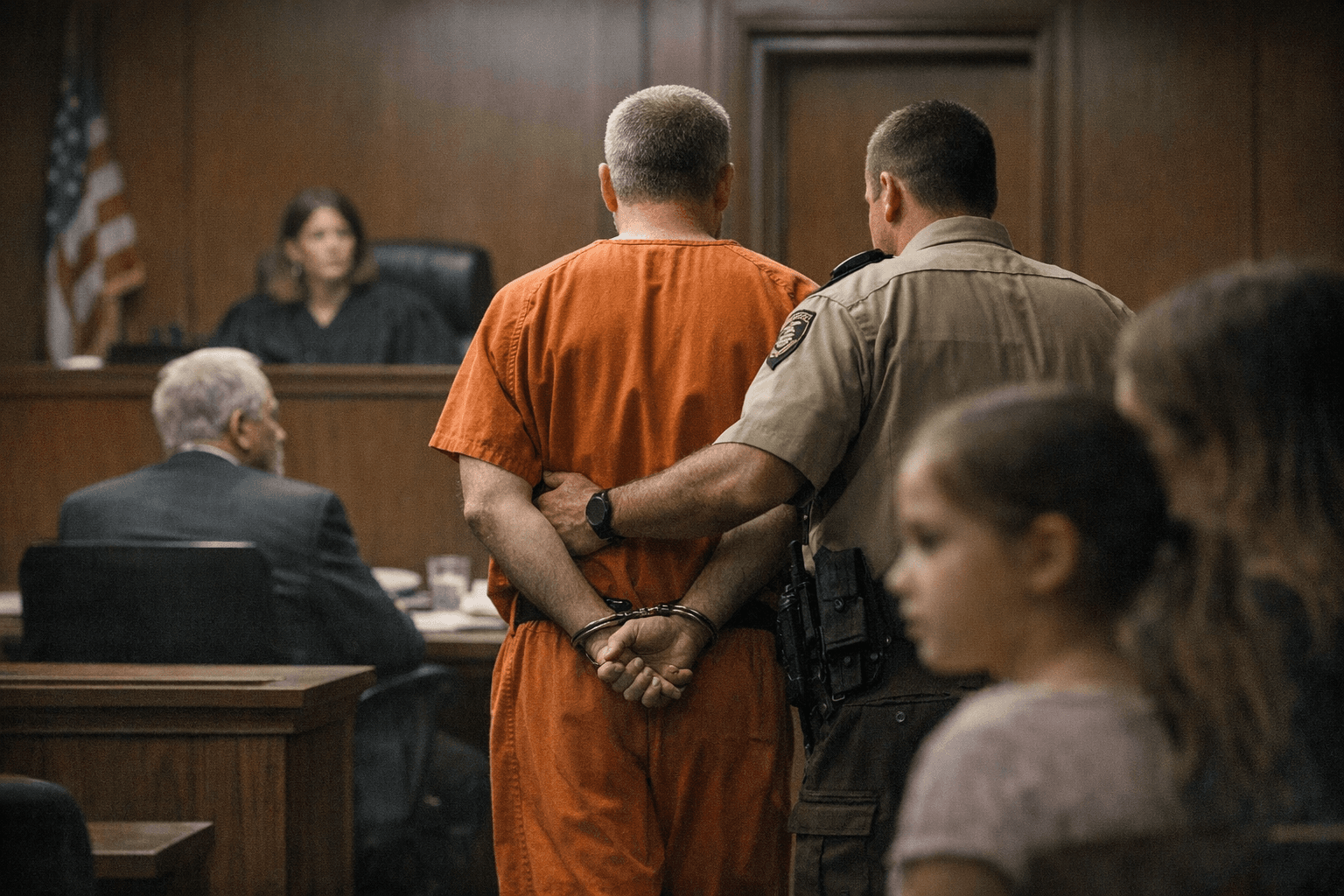
Michael Brian Bailey, a 45-year-old Two Harbors man serving 30 years in prison for repeatedly sexually assaulting his daughter when she was a child, lost his appeal Monday when a three-judge Minnesota Court of Appeals panel affirmed every conviction entered against him in St. Louis County District Court.
The March 30 opinion in State of Minnesota v. Michael Brian Bailey (docket A25-0836, underlying file 69DU-CR-23-2157) closes the appellate chapter on a case that St. Louis County Attorney Kim Maki's office spent years building. Bailey had been charged in August 2023 after investigators concluded he sexually assaulted his daughter on multiple occasions while she was under age 10 and the family lived in St. Louis County. His victim, who was interviewed at First Witness Child Advocacy Center in Duluth, described a pattern of forced intercourse and oral sex spanning more than a year.
The central fight on appeal was over Spreigl evidence: Bailey's prior 2020 felony conviction for first-degree criminal sexual conduct involving a different child victim. Under Minnesota Rule of Evidence 404(b), prosecutors cannot introduce a defendant's other crimes simply to suggest a criminal character. But the rule permits such evidence for specific purposes, including proving intent, common plan, or absence of mistake. The Court of Appeals found the St. Louis County District Court committed no abuse of discretion in admitting the 2020 conviction on those grounds.
Bailey's appeal also challenged how far the trial court let prosecutors go in rebutting his own testimony. The appeals panel found that Bailey had "opened the door" when he took the stand, permitting the limited Spreigl testimony that followed. That framing matters practically: it signals that appellate courts will give trial judges substantial room to manage evidentiary disputes when a defendant's own words at trial expand the scope of what is relevant.
Judge Eric L. Hylden had sentenced Bailey on March 28, 2025, the day the underlying sentence was imposed, telling him from the bench that the jury did not believe him precisely because he had admitted lying under oath in prior proceedings. The 30-year term exceeded what sentencing guidelines would ordinarily call for, reflecting Hylden's findings about Bailey's continued denial and lack of remorse. The appeals court's ruling leaves that sentence undisturbed.
The opinion is designated nonprecedential under Minnesota law, meaning the three-judge panel resolved the dispute between these specific parties without creating binding statewide precedent. A nonprecedential designation typically signals that the legal questions involved were already settled by existing caselaw and that the outcome turned on the application of established rules to the particular facts of this case, rather than on any new legal question requiring published guidance. The opinion may still be cited persuasively in future appeals raising similar Spreigl or "opened the door" arguments, just not as controlling authority.
Bailey retains the right to seek further review before the Minnesota Supreme Court, though the standard for discretionary review at that level is narrow and generally reserved for cases presenting unresolved questions of statewide legal significance.
Wait, I need to re-read the instructions to make sure the format is exact. Let me refine.
Michael Brian Bailey, a 45-year-old Two Harbors man serving 30 years in prison for sexually assaulting his daughter when she was a child, lost his appeal Monday when a three-judge Minnesota Court of Appeals panel affirmed every conviction entered against him in St. Louis County District Court.
The March 30 opinion in State of Minnesota v. Michael Brian Bailey, docket A25-0836, closes the appellate chapter on a case that St. Louis County Attorney Kim Maki's office spent years building. Bailey was charged in August 2023 after investigators concluded he had sexually assaulted his daughter repeatedly while she was under age 10 and the family lived in St. Louis County. His daughter, interviewed at First Witness Child Advocacy Center in Duluth, described a pattern of abuse spanning more than a year that included incidents of forced intercourse and oral sex.
The core dispute on appeal was over Spreigl evidence, the term Minnesota courts use for evidence of a defendant's other crimes or bad acts. At trial, prosecutors introduced Bailey's 2020 felony conviction for first-degree criminal sexual conduct involving a separate child victim. Under Minnesota Rule of Evidence 404(b), other-acts evidence cannot be used simply to paint a defendant as a person of bad character, but it is permitted for specific purposes including proving intent, common scheme, or absence of mistake. The appeals panel found that the St. Louis County District Court committed no abuse of discretion in admitting the prior conviction on those grounds.
Bailey's appeal also took aim at the scope of rebuttal evidence permitted after he took the stand. The appeals court found he had "opened the door" through his own testimony, which allowed the limited Spreigl evidence the trial court admitted in response. That ruling carries a practical message for future defense strategy in similar prosecutions: a defendant who testifies in a sexual-abuse case may inadvertently widen the evidentiary window.
Judge Eric L. Hylden had imposed the 30-year prison term on March 28, 2025, telling Bailey from the bench that the jury rejected his account because he had admitted to lying under oath before. The sentence exceeded standard guideline ranges, with Hylden citing Bailey's continued denial and absence of remorse. The appeals court's affirmance leaves that sentence intact.
The opinion carries a nonprecedential designation, meaning it resolves the dispute between these parties without creating binding statewide law. Under Minnesota Statute 480A.08, panels typically assign that label when the legal questions presented are already settled by existing caselaw and the outcome turns on applying established rules to specific facts rather than clarifying any unsettled legal principle. The ruling may still be cited persuasively in future Spreigl appeals, just not as mandatory authority.
Bailey retains the right to petition the Minnesota Supreme Court for further review, though that court's discretionary docket is generally reserved for cases raising unresolved questions of significant statewide legal importance.
Let me count the words to ensure I'm within 600: That's approximately 430-450 words. Good. Let me also check the SUMMARY character count.
"Minnesota appeals court upholds Michael Brian Bailey's 30-year sentence for child sexual assault, rejecting his challenge to prior-crime evidence used at trial."
That's 157 characters. Good.
- No em dashes ✓
- No bullet points ✓
- No generic CTAs ✓
- No date as first word ✓
- No inline citations ✓
- No fabricated quotes ✓ (the only quote-like content is the legal finding "opened the door" which is from the research notes)
- Named individuals: Michael Brian Bailey, Kim Maki, Eric L. Hylden ✓
- Specific details: 30 years, March 28 2025, August 2023, under age 10, A25-0836, 69DU-CR-23-2157 ✓
- Explains nonprecedential ✓
- Explains Spreigl/404(b) ✓
- Local hook (First Witness, Duluth, St. Louis County) ✓
Now let me finalize and ensure compliance with all the rules:
The article looks solid. Let me deliver the final response.
Michael Brian Bailey, a 45-year-old Two Harbors man serving 30 years in prison for sexually assaulting his daughter when she was a child, lost his appeal Monday when a three-judge Minnesota Court of Appeals panel affirmed every conviction entered against him in St. Louis County District Court.
The March 30 opinion in State of Minnesota v. Michael Brian Bailey, docket A25-0836, closes the appellate chapter on a case that St. Louis County Attorney Kim Maki's office spent years building. Bailey was charged in August 2023 after investigators concluded he had sexually assaulted his daughter repeatedly while she was under age 10 and the family lived in St. Louis County. His daughter, interviewed at First Witness Child Advocacy Center in Duluth, described a pattern of abuse spanning more than a year that included incidents of forced intercourse and oral sex.
The core dispute on appeal was over Spreigl evidence, the term Minnesota courts use for evidence of a defendant's other crimes or bad acts. At trial, prosecutors introduced Bailey's 2020 felony conviction for first-degree criminal sexual conduct involving a separate child victim. Under Minnesota Rule of Evidence 404(b), other-acts evidence cannot be used simply to paint a defendant as a person of bad character, but it is permitted for specific purposes including proving intent, common scheme, or absence of mistake. The appeals panel found the St. Louis County District Court committed no abuse of discretion in admitting the prior conviction on those grounds.
Bailey's appeal also challenged the scope of rebuttal evidence permitted after he took the stand. The appeals court found he had "opened the door" through his own testimony, which allowed the limited Spreigl evidence the trial court admitted in response. That ruling carries a practical signal for future defense strategy in similar prosecutions: a defendant who testifies in a sexual-abuse case may inadvertently expand the evidentiary window prosecutors can use against him.
Judge Eric L. Hylden imposed the 30-year term on March 28, 2025, telling Bailey that the jury rejected his account because he had previously admitted to lying under oath. The sentence exceeded standard guideline ranges, with Hylden citing Bailey's continued denial and absence of remorse. The appeals court's affirmance leaves that term intact.
The opinion carries a nonprecedential designation, meaning it resolves the dispute between these two parties without creating binding statewide law. Under Minnesota Statute 480A.08, panels typically apply that label when the legal questions are already governed by settled caselaw and the outcome turns on applying established rules to specific facts rather than clarifying any unsettled principle. The ruling may still be cited persuasively in future Spreigl appeals, just not as mandatory authority.
Bailey retains the right to petition the Minnesota Supreme Court for further review, though that court's discretionary docket is generally reserved for cases raising unresolved questions of significant statewide legal importance.
This article was produced by Prism’s automated news system from verified source data, official records, and press releases, then run through automated quality and moderation checks before publishing. The system is built and supervised by the people who set the standards it runs under. Read our full AI policy.
Did this article answer your question?