Duluth Mayor Warns of Fiscal Stress, Housing Shortfalls in City Address
Duluth Mayor Roger Reinert warned of a $7M+ budget deficit and a shortfall of 9,000 housing units over the next decade, as protesters interrupted his address six times.
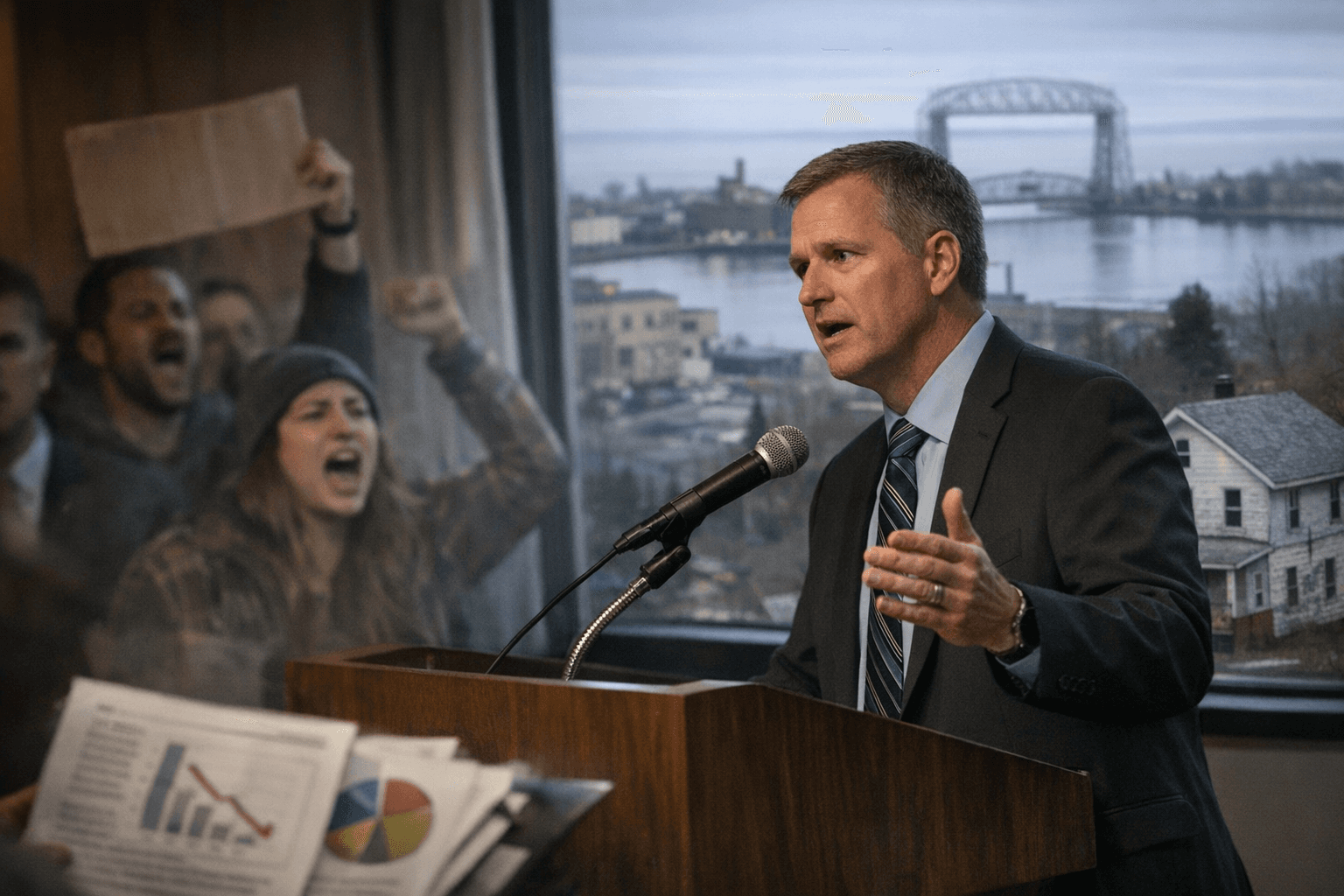
Mayor Roger Reinert delivered his State of the City address Tuesday night at Lincoln Park Middle School, telling the residents of St. Louis County's largest city that fiscal pressure has been building for years and the reckoning is now arriving. Reinert delivered a dose of harsh reality, informing residents there is little financial give to the budget decisions they will face this coming year.
"Duluth is strong. We're a resilient city with extraordinary natural assets, vibrant neighborhoods with unique identities, committed public servants and people who care deeply about this place — from third-generation Duluthians to brand new ones who just moved here. But friends, the state of our city is being tested," he said.
Reinert cited "aging infrastructure, deferred maintenance, rising service costs and flat revenues" as some of the challenges the city confronts. Maintaining the city's extensive aging infrastructure is another challenge, with 477 miles of streets and alleys plus about 500 miles of both water and sewer pipes requiring care. On average, Duluth water pipes are about 75 years of age, and a typical sewer pipe is 60 years old. The mayor did not spare the bottom line: the city's expenses continue to grow more quickly than its current tax revenues, and a 1% increase in the city levy yields a mere $455,000. "There's literally no levy big enough to provide a solution," Reinert said.
That grim arithmetic played out in the days before the address. The speech was interrupted six times by protesters. Their outrage stems from a recent lawsuit by a retired Duluth police lieutenant, David Drozdowski, who is suing the city after whistleblowing over what he called blatant discrimination, claiming the city retaliated by putting him on administrative leave. Those who interrupted were escorted out by police officers, and all left the auditorium peacefully.
On the budget, the Duluth City Council had approved the final 2026 budget and property tax levy just the night before, on Monday. Reinert said balancing a more-than-$7 million deficit was a grueling process. "We did a lot of hard work this year to try and land that plane without a significant property tax increase," said Reinert. To close the gap, the city addressed massive overtime costs in the Duluth Fire Department by adding three full-time staff members, while cutting and consolidating positions in other departments.
The housing shortage loomed equally large. Reinert noted that Duluth is projected to need more than 9,000 additional units within the next decade to keep pace with demand, equating to about 900 new homes per year, and contrasted that with the 800 or so units the city has seen built in the past two years, saying Duluth must do more. The math carries real economic weight: "In fact, every manufacturer in Duluth would tell you that they would add more if they could. But they can't find the employees, and they can't find the employees because we're not providing the housing for them," Reinert said.
For downtown Duluth, Reinert said the future is residential, pointing to a capacity for 1,500 additional housing units that could help address citywide need. City Council President Lynn Marie Nephew echoed the urgency. "Housing is not just a challenge, it is the foundation for everything that comes next," she said.
City expenses are rising at roughly 5% annually, driven largely by wages, benefits and operational costs, while revenue growth remains closer to 1.5% per year, a structural gap Reinert made clear will not close without hard choices. He warned that a lack of housing and readily available commercial sites has made it more difficult to grow commercially, which puts more pressure on residential taxpayers. That pressure extends beyond City Hall: Duluth Public Schools has separately recommended $4.2 million in budget cuts for the 2026-27 school year, compounding the sense of fiscal strain across the city's institutions.
Reinert framed the moment not as a crisis to be managed but as a structural reckoning long in the making. He cautioned against relying on past practices, arguing that "continuing to do what we've always done in the way we've always done it may be the easy button, but that's the wrong button to push.
This article was produced by Prism’s automated news system from verified source data, official records, and press releases, then run through automated quality and moderation checks before publishing. The system is built and supervised by the people who set the standards it runs under. Read our full AI policy.
Did this article answer your question?