Duluth Native Sues FAA Over Drone Ban Near Immigration Agents
Duluth native Rob Levine sued the FAA over a drone ban that creates invisible no-fly zones around unmarked ICE vehicles with no way for pilots to know where they are.
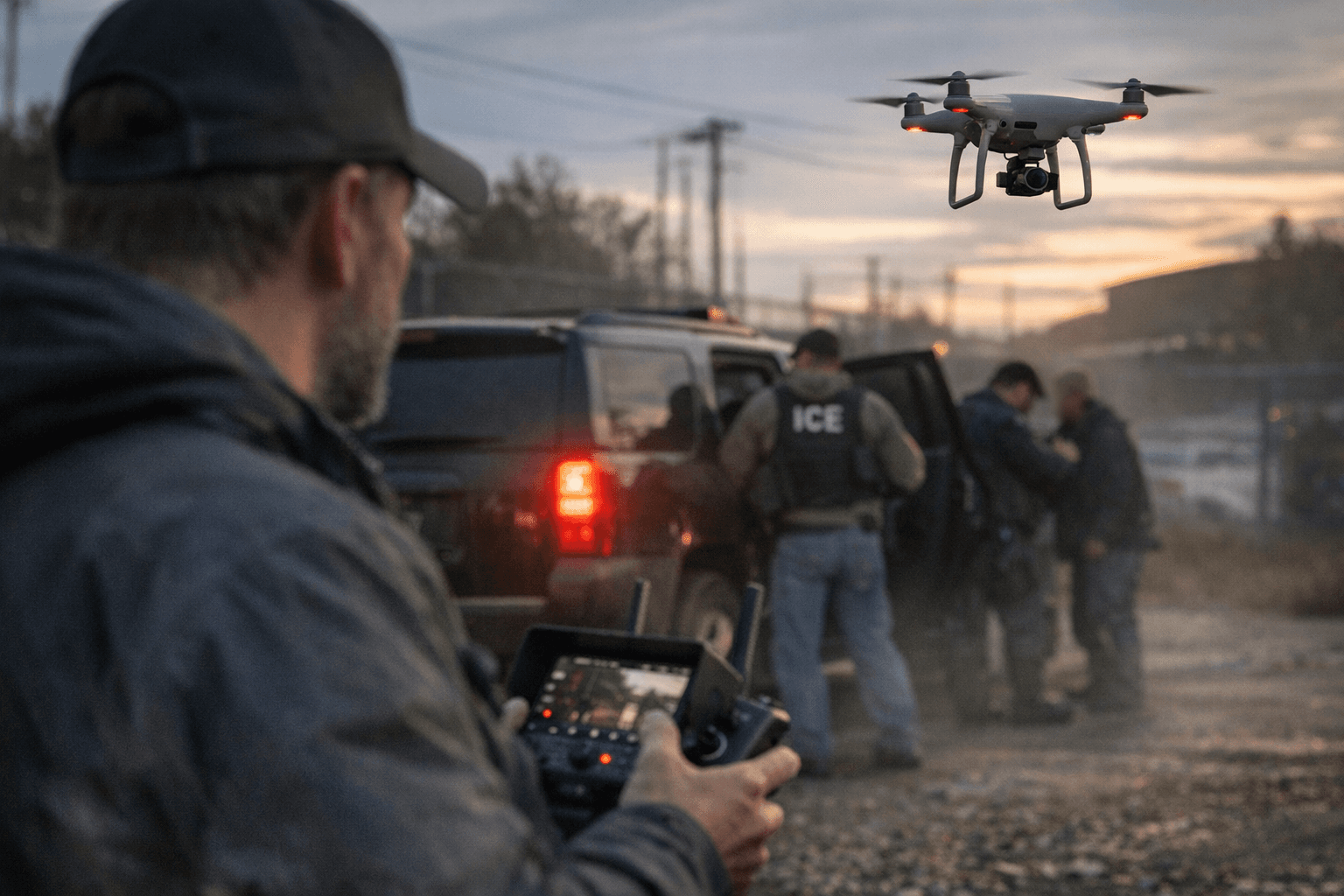
Rob Levine, a 1980 Duluth graduate and Minneapolis-based freelance photojournalist, filed a federal lawsuit against the Federal Aviation Administration on March 16, challenging a drone flight restriction so broad it creates an invisible, perpetually moving no-fly zone around unmarked ICE vehicles whose locations are never publicly disclosed.
The petition for judicial review, filed in the U.S. Court of Appeals for the District of Columbia Circuit, targets NOTAM FDC 6/4375, issued by the FAA on January 16, 2026, the same day Operation Metro Surge was underway across the Twin Cities. The NOTAM bans all unmanned aircraft from operating within 3,000 feet laterally and 1,000 feet vertically of any Department of Defense, Department of Energy, or Department of Homeland Security facility or mobile asset, including vehicle convoys. Classified as "National Defense Airspace," the restriction is scheduled to remain in effect until October 29, 2027.
Levine is represented by Grayson Clary and Adam A. Marshall of the Reporters Committee for Freedom of the Press. The petition argues the NOTAM violates the First Amendment, is unconstitutionally vague, and runs afoul of the Administrative Procedure Act, with attorneys asking the court to vacate the restrictions entirely.
"You have no way of knowing in advance before you fire up the drone whether you are within a prohibited distance of, say, an unmarked car that ICE is using for immigration enforcement," said Clary.
The case is rooted in Operation Metro Surge, which the Department of Homeland Security described as "the largest DHS operation ever." Beginning in December 2025, the sweep deployed more than 3,000 ICE and Customs and Border Protection officers, initially targeting the Twin Cities before expanding statewide. It resulted in approximately 3,000 arrests and the deaths of two U.S. citizens, Renée Good and Alex Pretti, both shot by federal agents. Levine said the operation's treatment of civilian observers left him afraid to fly his drone. "I could get arrested, have my drone destroyed, and be roughed up," he said.
The enforcement stakes for violators are severe. A January 2026 FAA order eliminates enforcement discretion entirely, requiring investigators to refer all qualifying violations directly to FAA Chief Counsel William McKenna. Penalties under the NOTAM include criminal charges, civil penalties, certificate revocation, and the potential seizure or physical destruction of the aircraft itself.
The restriction has drawn sharp criticism from across the press freedom community. Mickey Osterreicher, General Counsel of the National Press Photographers Association, said the NOTAM represents a greater threat to journalism than the 935-square-mile civilian drone ban DHS imposed over Chicago during Operation Midway Blitz in October 2025, calling it a "sweeping extension of no-fly space" that "raises serious concerns for journalists and news organizations that depend on aerial footage to report on matters of public concern."
Brandon Youngblood, the former FAA official whose office wrote the predecessor NOTAM, broke sharply with its current form, writing publicly that the rule "was never meant to cover all DHS ground assets which are literally everywhere." Attorney Charles Tobin, representing a news media coalition that submitted a formal letter opposing the restriction, called it "sweeping and unprecedented."
Levine has clashed with the FAA before over access to restricted airspace. In 2016, after the agency initially denied his request to fly a drone over the Standing Rock protests in North Dakota, he appealed and became the only journalist granted a waiver, a three-day, quarter-mile radius exemption that ultimately left him too far from the main action to photograph it effectively. NOTAM FDC 6/4375 offers no comparable waiver mechanism.
"Drones have helped photojournalists capture powerful perspectives that a reporter on the ground can't," Levine said. "But these restrictions force drone pilots to choose between not gathering the news and risking criminal charges, massive fines, or a career-ending revocation of their right to fly. That's unacceptable."
The FAA did not respond to press requests for comment.
This article was produced by Prism’s automated news system from verified source data, official records, and press releases, then run through automated quality and moderation checks before publishing. The system is built and supervised by the people who set the standards it runs under. Read our full AI policy.
Did this article answer your question?