Minnesota DNR Drill Core Library in Hibbing Runs Out of Room
Nine semi-loads of new drill core are headed to Hibbing this summer with nowhere to go, forcing the DNR to eye rental trailers as its library hits full capacity.
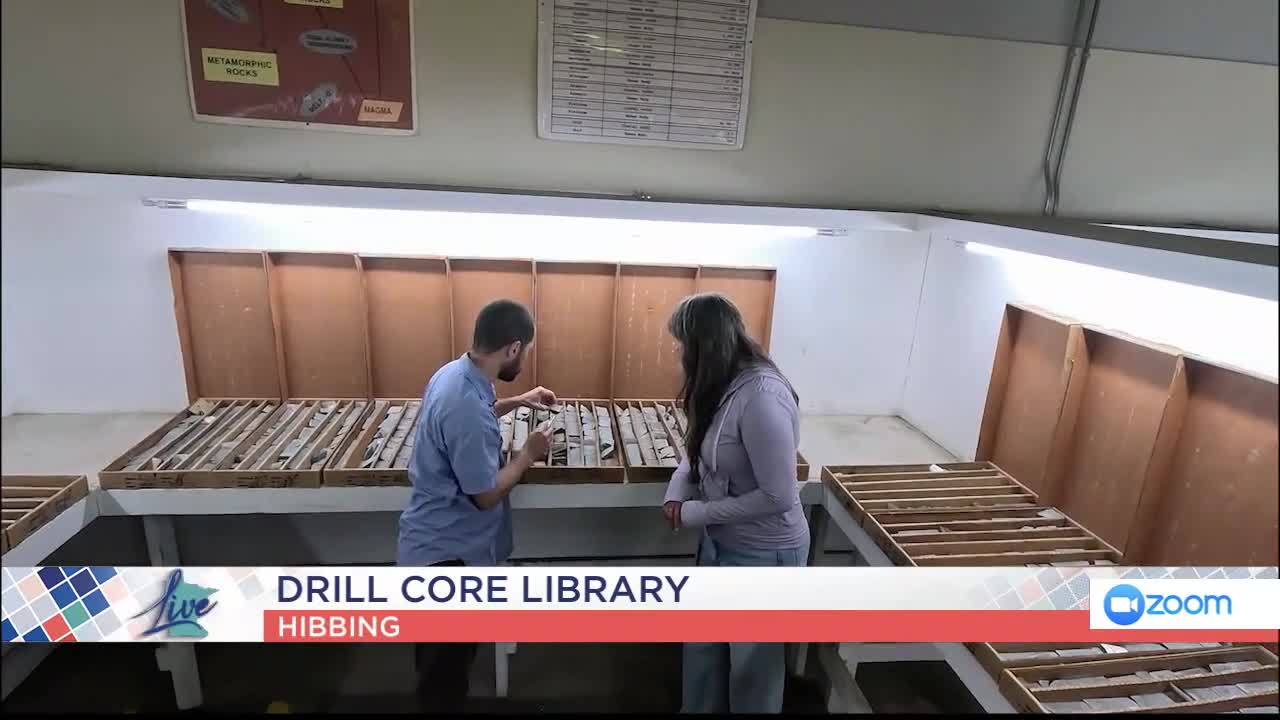
The storage shortage at the Minnesota Department of Natural Resources Lands and Minerals Division Drill Core Library in Hibbing has grown so dire that incoming drill cores may have to be stored off-site. Joe Henderson, director of lands and minerals, told lawmakers the department expects to receive at least "nine semi loads of drill core coming in" this summer alone, prompting the DNR to explore whether it can rent storage trailers.
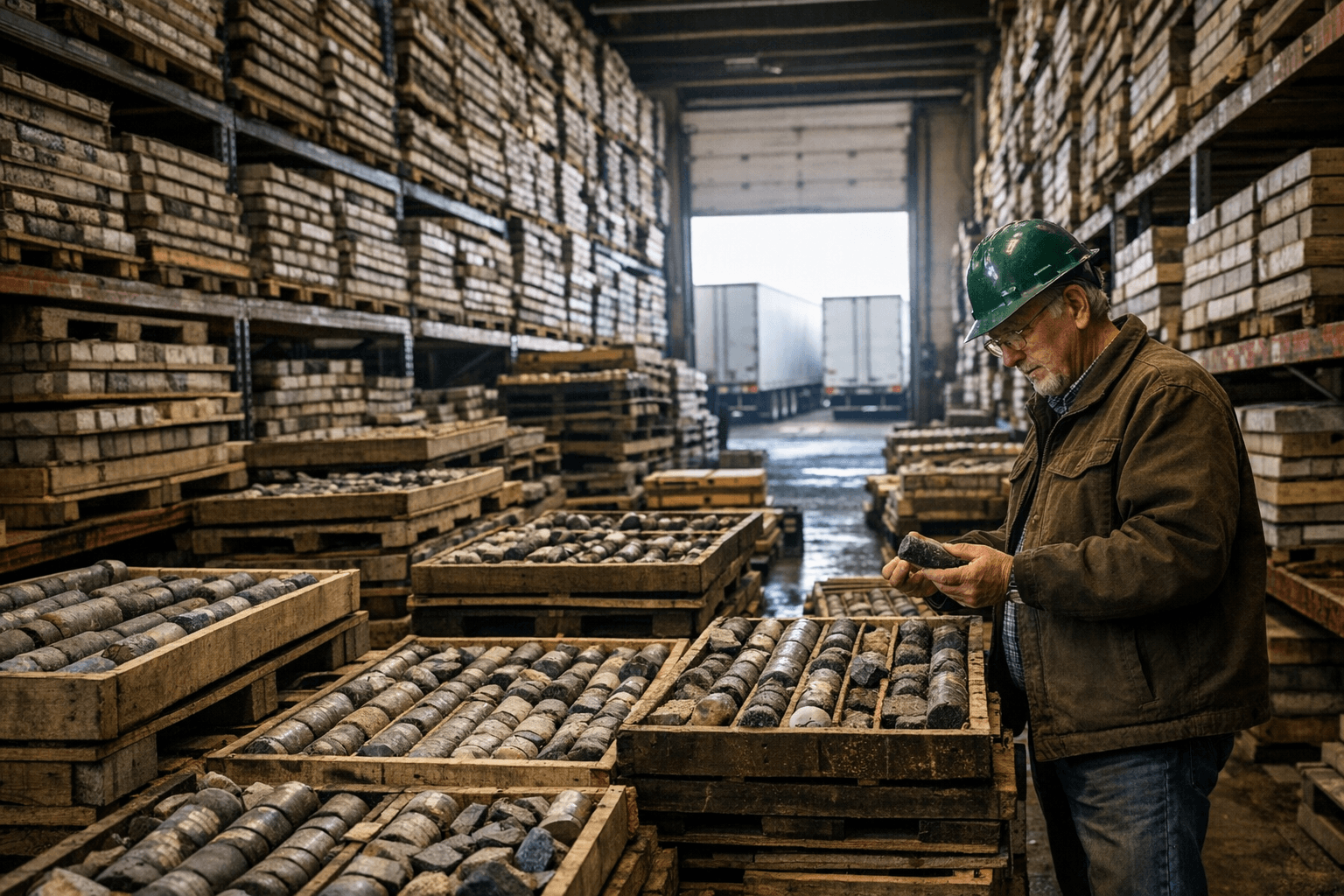
The library in north Hibbing stores decades of drill core from iron ore operations and non-ferrous exploration sites from across northeastern Minnesota. About 3.5 million lineal feet of drill core are currently stored in three buildings at the site — enough material, laid end-to-end, to stretch from International Falls to Chicago. The facility houses rock from more than 20,000 holes drilled into Minnesota's ground. Minnesota's collection is one of the largest in North America — Carter estimates it ranks in the top five.
With the three buildings now jam-packed, some drill core has had to be stored in the aisles of the storage buildings. The core is kept in boxes two feet long containing five segments per box. During a recent tour of the facility, mineral potential supervisor Matt Carter pointed to towering racks where nearly every shelf was full. "We did walk past one rack that was kind of empty, and this rack here has some shelving capacity on the top," Carter said. "Otherwise, all the shelves are pretty much full of materials."
The Drill Core Library is nearing its storage capacity with very limited space to accept additional materials. Although the DNR has prepared a shovel-ready design for expanding the facility and has actively sought funding since 2017, construction is on hold until funding is legislatively secured. Until then, the DNR is only able to accept a limited amount of drill core on a case-by-case basis.
That legislative fix is now moving through St. Paul. Funding for a fourth storage building has been sought for several years, and the design is complete, but funding from state bonding bills has continued to come up empty. Funding hopes came up empty again in the 2025 state bonding bill even though $33 million was allocated for natural resources preservation and replacement of state-owned facilities. Earlier cost estimates for a fourth storage building were $12 million.
Legislation authored by Rep. Spencer Igo, R-District 07A, and Sen. Rob Farnsworth, R-District 07, would give the DNR commissioner temporary authority to store drill core at a location other than the library while a permanent solution is pursued. The legislation would give the Minnesota Legislature up to three years to work out a permanent solution, Henderson said.
"This bill to allow for cold, safe storage for drill core is a step to make sure we don't lose this critical data because we don't have the space," Igo said. "This bill with a sunset allows for safe storage while we secure funds for the drill core library in Hibbing."
Farnsworth pointed to a legal obligation that makes the status quo untenable. "It's a problem," he said. "We've been trying to get bonding to add on to the current building (building three). State law says if they take drill core, they have to have it available for people to study and right now they don't have room for it."
Henderson said the DNR Lands and Minerals Division is working with the city of Hibbing and Iron Range Resources and Rehabilitation on potential buildings that could house the semi trailers. Henderson described trailer storage as a stopgap: inefficient, expensive, and a risk to samples that, once damaged, cannot be replaced.
The collection's scientific and economic value is substantial. Drill core samples stored at the library have contributed to the discovery of three valuable nonferrous mineral deposits: the Birch Lake deposit, the Maturi deposit, and the Tamarack deposit, according to the DNR. A new mineral, Hibbingite, was discovered in the archive, and there is evidence of a 1.85-billion-year-old meteorite impact among the collection.
The library's aging infrastructure had already forced one costly intervention. The DNR is now replacing aging shelves in Buildings 1 and 2; from November 2024 to June 2026, materials in those buildings may be temporarily unavailable for viewing, while Building 3 remains accessible throughout the project. The DNR used $1 million from the state's 2023 surplus to fund that reshelving effort, during which staff and Conservation Corps Minnesota & Iowa members moved more than 38,000 boxes of drill core to temporary storage and created a digital archive of each box.
At issue in the years ahead is the state's looming budget situation. A state surplus of $616 million forecast for 2026-2027 is now projected to shrink to $456 million, with a $6 billion deficit forecast for 2028-2029. That fiscal horizon dims the prospects for a permanent fourth building even as nine more semi-loads of irreplaceable rock head toward a library with nowhere to put them.
This article was produced by Prism’s automated news system from verified source data, official records, and press releases, then run through automated quality and moderation checks before publishing. The system is built and supervised by the people who set the standards it runs under. Read our full AI policy.
Did this article answer your question?