St. Louis County Board Meetings Open to Residents, Here Is How to Participate
The St. Louis County Board set a $202 million property tax levy on a 6-1 vote; here's how to track bids, land sales, and budget votes before they pass.
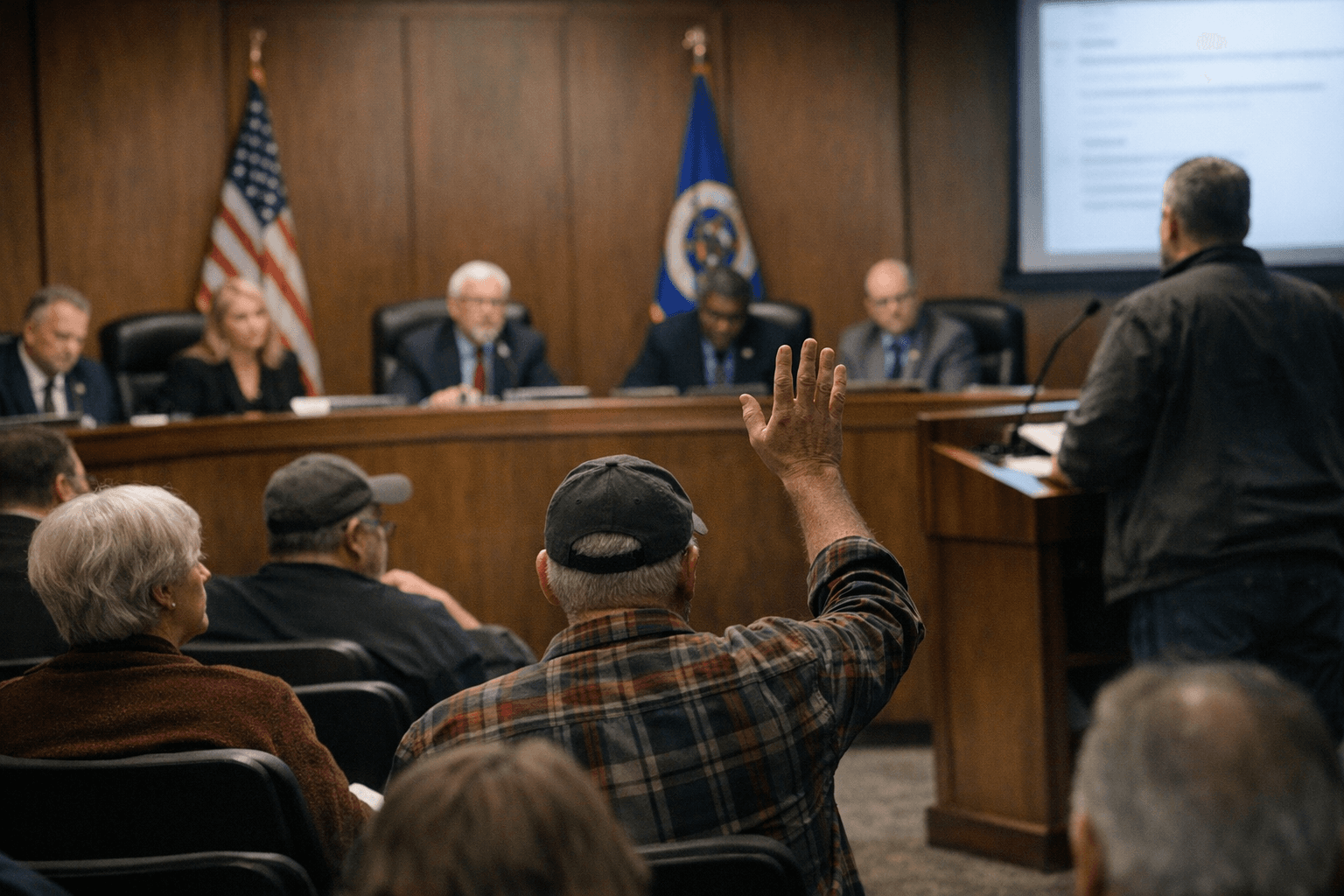
When the St. Louis County Board of Commissioners voted 6-1 to set the 2026 maximum property tax levy at $202,669,428, a 12.4 percent jump over the roughly $180 million collected in 2025, the meeting was public, the agenda had been posted, and residents from Duluth to Hibbing to Virginia could have weighed in. Most didn't, because most didn't know it was happening. That vote, shaped in part by unfunded state and federal mandates flagged by Commissioner Paul McDonald of Ely, locked in what every property owner in the county will pay for another year. The board makes decisions like this routinely. Here is how to track them before they become final.
Where every decision lives before the vote
The Clerk of the County Board is the county's central record-keeper for board activity. Meeting schedules, full agenda packets, supporting documents, and approved minutes are all posted through the Clerk-of-the-County-Board pages on the county website. The Agendas & Communications document library holds not just the agendas themselves but also staff communications and the register of actions, a running record of every vote and adopted resolution. A document search tool on the county site lets anyone pull archived packets by date or keyword, which is useful for tracking how commissioners voted on similar contracts or zoning questions in prior years.
The Board meets multiple times per month and rotates among venues, including regular sessions in Duluth, Hibbing, and Virginia, plus other commission district locations. Before planning to attend in person, confirm the specific address in the meeting notice. Locations shift, and driving to the wrong city is a common and avoidable mistake.
Your watch list: four categories that move money
Not every item on a 40-page consent agenda has direct financial stakes for residents or local businesses. These four categories do, reliably:
- Property tax levy and annual budget. The levy is set by resolution each fall. Once adopted at the maximum, it can only be reduced before December certification, never increased. Watching the preliminary levy vote in September and the final certification in December tells you the direction of your tax bill months before statements arrive.
- Contract awards and bid solicitations. Road work, bridge replacements, and human services contracts flow through the board's consent and regular agendas. In November 2025, the board authorized grant funding through the state's Local Bridge Replacement Program for two county bridges, 522 and 523, in the Arrowhead region. In July 2025, a single consent agenda included a $400,000 community living infrastructure grant from the Minnesota Department of Human Services. These items move quietly unless you're reading the packets.
- Land and tax-forfeited property sales. The county's Land and Minerals Department manages auctions and over-the-counter sales of tax-forfeited parcels. Board resolutions authorize those transactions. Watching this category tells you which properties in your area are changing hands, at what terms, and whether they are being returned to the tax rolls or conveyed to public entities.
- Zoning, cartway, and ordinance changes. Formal public hearings are required before these votes. A Proctor cartway proceeding illustrates the typical arc: an alignment hearing in December 2024 was followed by appraisals, then a damages and costs hearing in July 2025 at Proctor City Hall. Adjacent landowners had legal standing at both stages. If a road, easement, or rezoning is proposed near your property, the notice for that hearing is your window to participate.
Step-by-step: get notified before the meeting
1. Navigate to the Board of Commissioners section of the county's website, then to County Board Meetings, Agendas and Minutes.
2. Subscribe to the county's news release notification service. St. Louis County sends agenda postings and public notices by email through its GovDelivery subscription system. Enter your email once and alerts arrive automatically.
3. Monitor the county's public-notices page for formal hearing announcements. Each notice lists the date, location, subject matter, and available methods for remote attendance.
4. Use the Agendas & Communications document search tool to review packets from prior meetings. Cross-referencing the register of actions shows how commissioners voted historically on comparable contracts or land-use items.
5. Build a calendar reminder five to seven days before each scheduled meeting to download the newly posted packet and flag any items on your watch list.
How to participate, in person or remotely
Every regular board meeting includes time for public comment. For items requiring a formal hearing, the process is more structured: written comments can be submitted to the Clerk of the County Board before the meeting date, or you can speak during the designated comment window as specified in the notice. Many meetings now allow hybrid attendance via video or phone when the public notice authorizes it, which matters for residents in the county's more remote communities who cannot easily drive to a mid-morning session in Duluth.
The Clerk of the County Board and the departments that manage permitting and public hearings all maintain contact information on the county website. If you are unsure which department handles your issue, the clerk's office is the right first call.
Making your comment count
The mechanics of showing up are straightforward. Making it effective takes a bit more preparation:
- Review the agenda several days early to confirm your item is listed and note where it falls in the order of business.
- Keep comments concise and factual. Attach cost estimates, survey data, or supporting documentation if you have it. Commissioners receive staff analysis in advance; your job is to add perspective that staff reports may not capture.
- Respect posted time limits. A tightly organized two-minute comment outperforms a rambling ten-minute one on every measured dimension of board attention.
- If you represent a business association, neighborhood group, or nonprofit, divide topics among speakers before the meeting. Coordinated testimony signals organizational credibility and avoids the board tuning out repetition.
- After the vote, pull the register of actions to confirm what was actually adopted, then follow up with the relevant county department to track implementation against the resolution's language.
What the board actually controls
St. Louis County commissioners set policy, allocate millions in public dollars each year, and oversee services that touch roads, public safety, health care delivery, land use, and economic development across the largest county east of the Mississippi River. The $202 million levy vote was not a closed-door decision. It moved through weeks of open meetings, with public comment invited at every stage. The infrastructure to track it, the clerk's page, the document library, the public-notice feed, exists and is free to use.
The residents and businesses that engage with that infrastructure before votes are taken shape outcomes. Those who arrive after adoption are left contacting commissioners about decisions that are already law.
This article was produced by Prism’s automated news system from verified source data, official records, and press releases, then run through automated quality and moderation checks before publishing. The system is built and supervised by the people who set the standards it runs under. Read our full AI policy.
Did this article answer your question?