Jamestown girl keeps making strides after cochlear implant
Renley Hill’s cochlear implant is helping the Jamestown toddler build new daily skills, and her family’s early instincts turned a worry into progress.
A small warning that changed everything
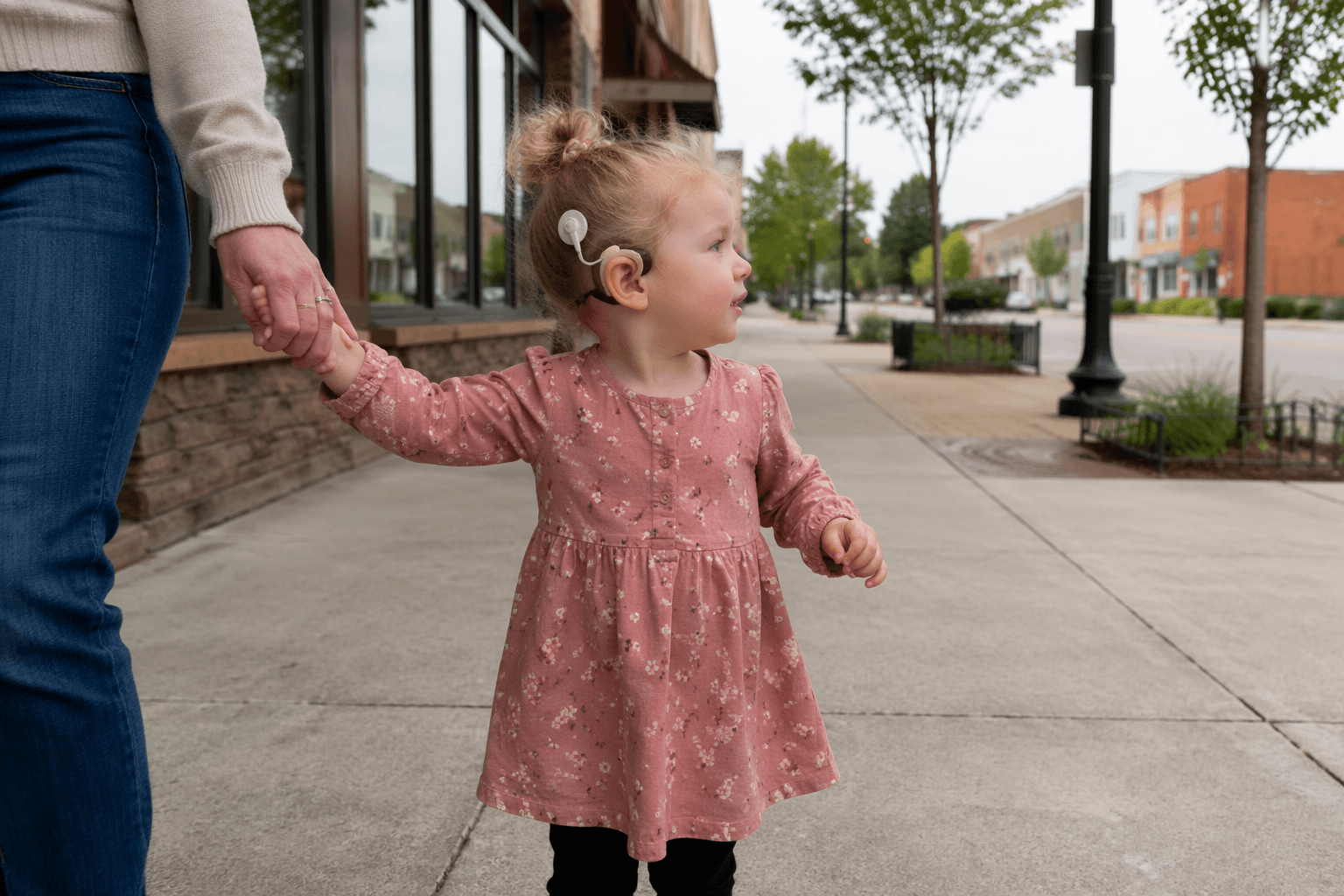
Renley Hill’s progress is measured in the quiet, ordinary moments that families notice first. In Jamestown, that has meant watching a child who was once a source of concern keep making strides after a cochlear implant, with each new step carrying more weight because of how early the problem appeared and how carefully her parents responded.
Renley was born on Oct. 7, 2021, to Stephanie Saxberg and Garrett Hill. In her first months, routine doctor visits did not reveal anything unusual, but by Jan. 31, 2022, when she was about four months old, her family felt something was off and took her back to the doctor. That decision marked the beginning of a longer hearing journey, one that moved from uncertainty to diagnosis to treatment, and now to the steady work of growing, communicating and learning.
How the implant changes daily life
A cochlear implant is not a quick fix, and the family’s story shows why. The National Institute on Deafness and Other Communication Disorders explains that cochlear implants bypass damaged parts of the ear and directly stimulate the auditory nerve. Hearing through the device takes time to learn or relearn, which means progress often comes in layers rather than in one dramatic moment.
That makes the day-to-day experience especially important. For a young child, improvement may show up in the small routines that shape family life: listening more closely, responding more consistently and building confidence in communication. In Renley’s case, the point is not just that a procedure happened. It is that the family is now seeing what comes after it, and that the after is where so much of childhood is lived.
The medical reality also explains why patience matters. Since 2020, cochlear implants have been FDA-approved for eligible children beginning at 9 months of age. Johns Hopkins Medicine notes that the first three years of life are especially important for speech and language development in children with hearing loss, which is why early action can shape long-term outcomes.
Why timing matters so much
Renley’s story fits a much larger public health picture. The Centers for Disease Control and Prevention says more than 98% of U.S. newborns were screened for hearing loss in 2022, and more than 6,000 U.S. infants born that year were identified with permanent hearing loss. The CDC’s hearing-loss materials also emphasize the 1-3-6 benchmark: screening by 1 month, diagnosis by 3 months and early intervention by 6 months.
That timeline matters because it gives families a roadmap at a moment when every month counts. The goal is not simply to identify hearing loss, but to move quickly enough that children can be connected to the supports they need while language and development are still unfolding rapidly. CDC also supports state and territorial early hearing detection and intervention programs so children with hearing loss can receive timely diagnosis and intervention services.
In a story like Renley’s, that public-health framework becomes personal. Her parents noticed something felt wrong, went back to the doctor and entered a system that is designed, at least in the best case, to catch hearing issues early enough to make a difference. The result is not only medical care, but a chance to keep building language, connection and confidence.
Support close to home
For North Dakota families, the path after a diagnosis often involves more than one provider and more than one kind of support. North Dakota Health and Human Services offers Early Intervention services that include free developmental screening and follow-along for children birth to 3. The North Dakota School for the Deaf/Resource Center serves individuals of all ages who are deaf and hard of hearing and offers a Parent-Infant Program for families with children from birth to 3 or birth to 5 years, depending on the service description.

Those services matter in a place like Stutsman County, which covers 2,221.9 square miles of land and is the second-largest county in North Dakota by total area. Jamestown often serves as a hub for families spread across that wide rural geography, and specialty care or follow-up can mean more coordination, more travel and more planning than it would in a smaller, denser place.
That is part of the social reality behind Renley’s story. A hearing diagnosis can quickly become a family logistics issue as well as a medical one, with appointments, therapies and check-ins layered onto ordinary life. Support systems that are family-centered and accessible are not extras in that setting. They are the difference between a plan that can be sustained and one that becomes too hard to keep up.
What this story means for Jamestown
Local human-interest stories matter because they give a face to experiences that many people know only in theory. Renley’s journey turns a broad medical topic into something neighbors can recognize: a young child, attentive parents, an early concern that would not go away and a long stretch of work that followed. It is the kind of story that reminds readers how much of childhood development depends on being heard, assessed and supported early.
It also speaks to the resilience of families who keep showing up for appointments, follow-up and everyday practice even when the process is slow. In a community the size of Jamestown, those gains are felt widely. They become part of the shared life of the town, a reason to hope along with the family every time a new milestone arrives.
Renley’s progress is still unfolding, and that is what makes it powerful. Her story is not about one moment of transformation. It is about the quieter, harder and more hopeful work of building a child’s future one step at a time.
This article was produced by Prism’s automated news system from verified source data, official records, and press releases, then run through automated quality and moderation checks before publishing. The system is built and supervised by the people who set the standards it runs under. Read our full AI policy.
Know something we missed? Have a correction or additional information?
Submit a Tip