JRMC Blood Drive Collects 42 Life-Saving Products From 32 Donors
32 Jamestown donors left 42 blood products at JRMC on March 31 already flowing toward surgery, cancer and trauma patients; regional supplies are still dangerously short.
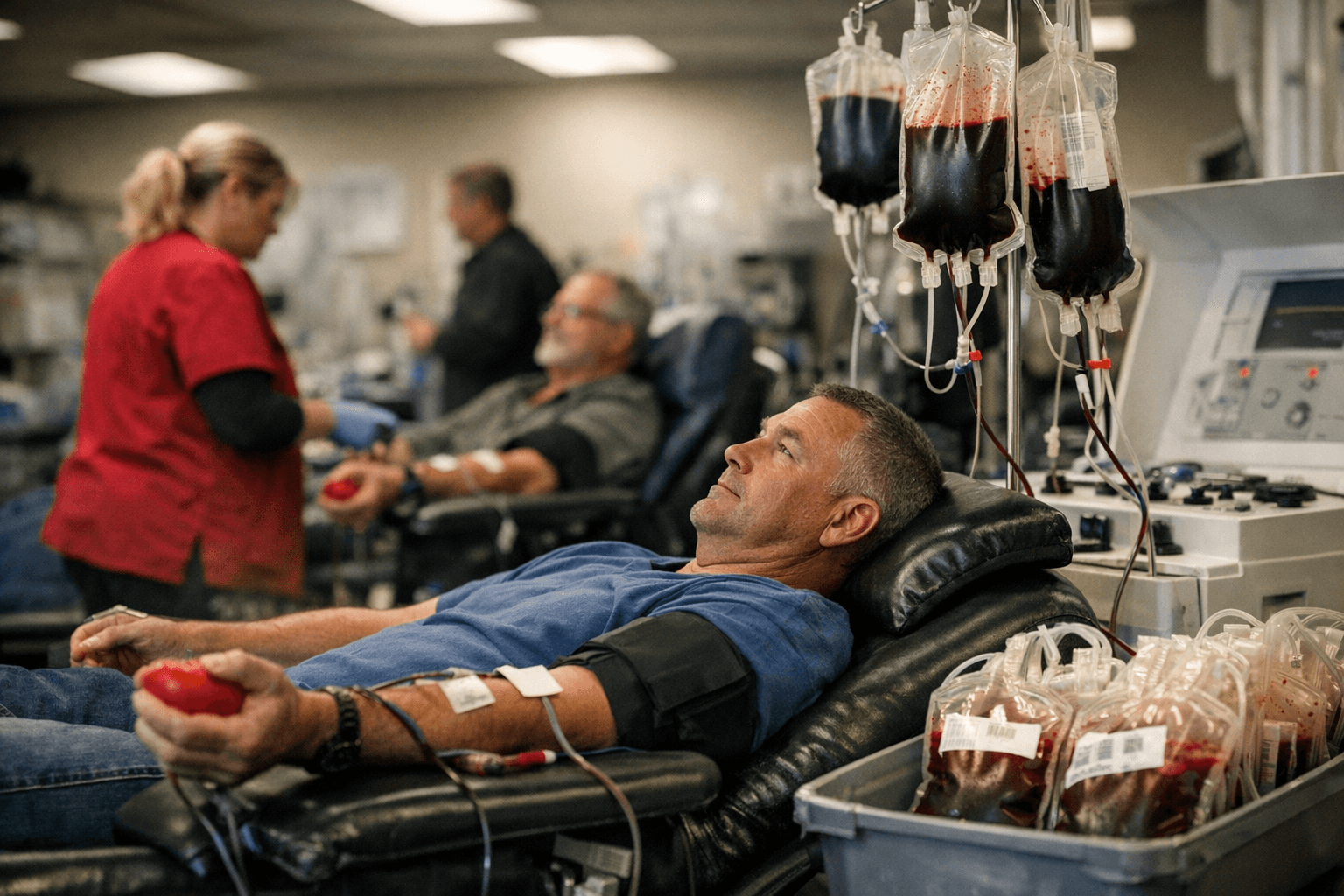
The 32 donors who walked into Jamestown Regional Medical Center on March 31 didn't leave with much: a bandage, maybe a cup of juice. What they gave away could help more than 100 patients.
Forty-two blood products were collected at JRMC's first drive of 2026, organized in partnership with Vitalant and JRMC's Community Engagement Committee. Hospital officials confirmed the blood would immediately flow toward surgeries, chemotherapy and trauma recovery across the region. According to Vitalant, a single donation can help up to three patients, making 42 products a meaningful reserve for a hospital that draws on its blood supply every single day.
"We love being able to host events like this," said Shayley Salisbury, JRMC Event and Service Coordinator. "It's a privilege to give community and staff members an opportunity to save a life. Blood supply is a critical part of health care, and we're happy to make an impact where we can."
The March 31 drive landed at a pressure point. In January, the American Red Cross reported that its national blood supply had dropped roughly 35% in a single month, with type O, A-negative and B-negative blood under particular strain. In the eastern North Dakota to western Minnesota corridor that Vitalant tracks, roughly 250,000 donations are collected annually, but officials say that total has not kept pace with rising demand. Vitalant provides blood to nearly 70 hospitals across the region, meaning a shortfall in Jamestown extends well past city limits.
When drives underperform, the downstream consequences are direct: elective surgeries get postponed, patients are transferred to facilities with available supply, or hospital staff operate on thinner reserves during trauma events. Blood cannot be stockpiled indefinitely; it is perishable, which means the need is structural and permanent, not episodic.
JRMC plans to continue scheduling drives through Vitalant and will announce upcoming dates as they are confirmed. To sign up for a future drive, visit vitalant.org. Eligibility basics: donors must be at least 17 years old, weigh a minimum of 110 pounds, and be in general good health. The full process, from check-in to recovery, runs about an hour.
This article was produced by Prism’s automated news system from verified source data, official records, and press releases, then run through automated quality and moderation checks before publishing. The system is built and supervised by the people who set the standards it runs under. Read our full AI policy.
Did this article answer your question?