Stutsman County explains township reports, budgets and official contacts
Stutsman County's township pages spell out where annual reports go, who signs them and who to call. The directory even names Alexander Township officials and their staggered terms.
Stutsman County’s township pages are built for the moments when a rural resident needs a real answer, not a dead end. The county points township officials to the forms for general information, annual financial reports and budgets, then tells treasurers to complete two copies of each report, send one to the County Auditor and keep one for township files. That filing trail matters because the Stutsman County Auditor is the county’s chief financial officer, which makes the auditor’s office the natural checkpoint for township money and records.
What the county’s township pages actually give you
The Township Support page is more than a directory link. It directs people to Township General Information, Township Annual Financial Reports and budget forms, which means a township board member, clerk or treasurer can move from a question to the right paperwork without chasing multiple departments. For residents, that same page helps clear up one of the most common points of confusion in rural government: whether a local issue belongs with the township, the county or a municipality like Jamestown.
The clearest instruction on the page is also the most practical. Township treasurers are told to complete two copies of the annual report, submit one to the County Auditor and retain one for township files. That is a small instruction with a large effect, because it shows how township government is local and independent while still tied into county oversight, recordkeeping and financial review.
Who does what in a civil township
North Dakota law sets the basic structure. Under North Dakota Century Code 58-05-02, a civil township must have three or five supervisors, one township clerk, one assessor except as otherwise provided, and one treasurer. That framework explains why township government in Stutsman County is not just a single office with a single person answering the phone. It is a small system with specific roles, and the county’s forms are designed around those roles.
The annual township meeting is another key piece of the calendar. North Dakota Century Code 58-04-01 requires the electors of each township to assemble and hold a township meeting in March, with at least ten days’ notice. That meeting is where township business is handled in public, and it is one reason the county’s budget forms and officer listings matter long before a filing deadline arrives.
The board of township supervisors carries the operational weight. North Dakota Century Code 58-06-01 says the supervisors manage and control township affairs not assigned to other officers and draw orders on township funds. The treasurer’s job is also defined in law: North Dakota Century Code 58-08-01 allows township treasurers compensation of up to $100 a day for work necessarily devoted to the office, capped at $4,000 per calendar year, with the rate set by the electors at the annual township meeting.
The officer directory turns the system into real names and numbers
Stutsman County’s Township Officers directory is where the abstract structure becomes usable. The PDF lists named officials, street addresses, terms, phone numbers and email information where available, so residents do not have to guess who is responsible for a township question. That matters when a person needs to confirm a meeting, ask about local administration or track down the right township officer instead of reaching the wrong county desk.
Alexander Township shows how concrete the directory can be. Kevin Ova is listed as chairman, Rob Hess and Neil Suko are listed as supervisors, and Daniel Suko is listed as clerk/treasurer. Their terms are staggered across 2022-2025, 2023-2026, 2024-2027 and 2025-2028, which shows that township offices renew on a rolling basis rather than all at once. For anyone trying to follow township leadership over time, that staggered structure is useful because it keeps some institutional memory in place even as offices turn over.
How the budgets and reports fit together
Township finances are not handled with a single form and a signature. The North Dakota Township Officers Association says its Annual Township Ledger Report software is version 3.0, and the association says the software was created to help townships file accurate annual reports. That makes the annual reporting process less of an administrative mystery and more of a defined workflow for local officials who may only deal with it once a year.
Stutsman County’s budget instructions reinforce that sequence. Officials are told to prepare Schedule C first, then Schedule B, then the Certificate of Levy, with one copy of each filed with the County Auditor. The order matters because township budgeting is a chain of documents, not a loose collection of forms. Once those pieces are assembled, the County Auditor receives the paper trail that ties township spending and levy decisions back to the county’s chief financial officer.
Why the township map still matters
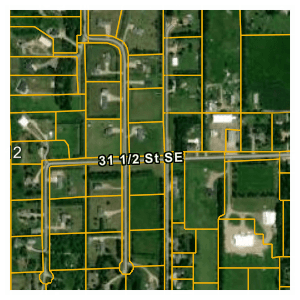
Stutsman County’s township map distinguishes organized and unorganized civil townships, which is a reminder that the county’s rural governance is not uniform from one corner to the next. Some places are fully organized into township structures, while others are not, and that difference affects where residents look for official answers. If you live outside city limits, the map helps you see whether township government is the layer you need before calling another office in Jamestown or elsewhere in the county.
The historical record shows that township organization has been part of the county’s geography for a long time. A 1911 atlas of Stutsman County included townships such as Ashland, Bloom, Buchanan, Chicago, Corinne and Corwin, showing that the township system has deep roots in local land division and civic administration. That history still shows up in today’s paperwork, officer directories and budget schedules, which is why the county’s township pages remain useful far beyond a single meeting cycle.
In Stutsman County, the township system runs on named officers, March meetings, annual reports and a filing route that reaches the County Auditor. The county’s pages give residents and township officials the tools to find the right person and the right form before small questions turn into larger administrative problems.
This article was produced by Prism’s automated news system from verified source data, official records, and press releases, then run through automated quality and moderation checks before publishing. The system is built and supervised by the people who set the standards it runs under. Read our full AI policy.
Did this article answer your question?