LaLota Touts Bipartisan Bill Targeting 70% Nitrogen Reduction in Suffolk Waterways
A House bill LaLota co-led passed 378-32, targeting a 70% cut in nitrogen choking the Peconic Estuary and Long Island Sound — but the Senate still must act.
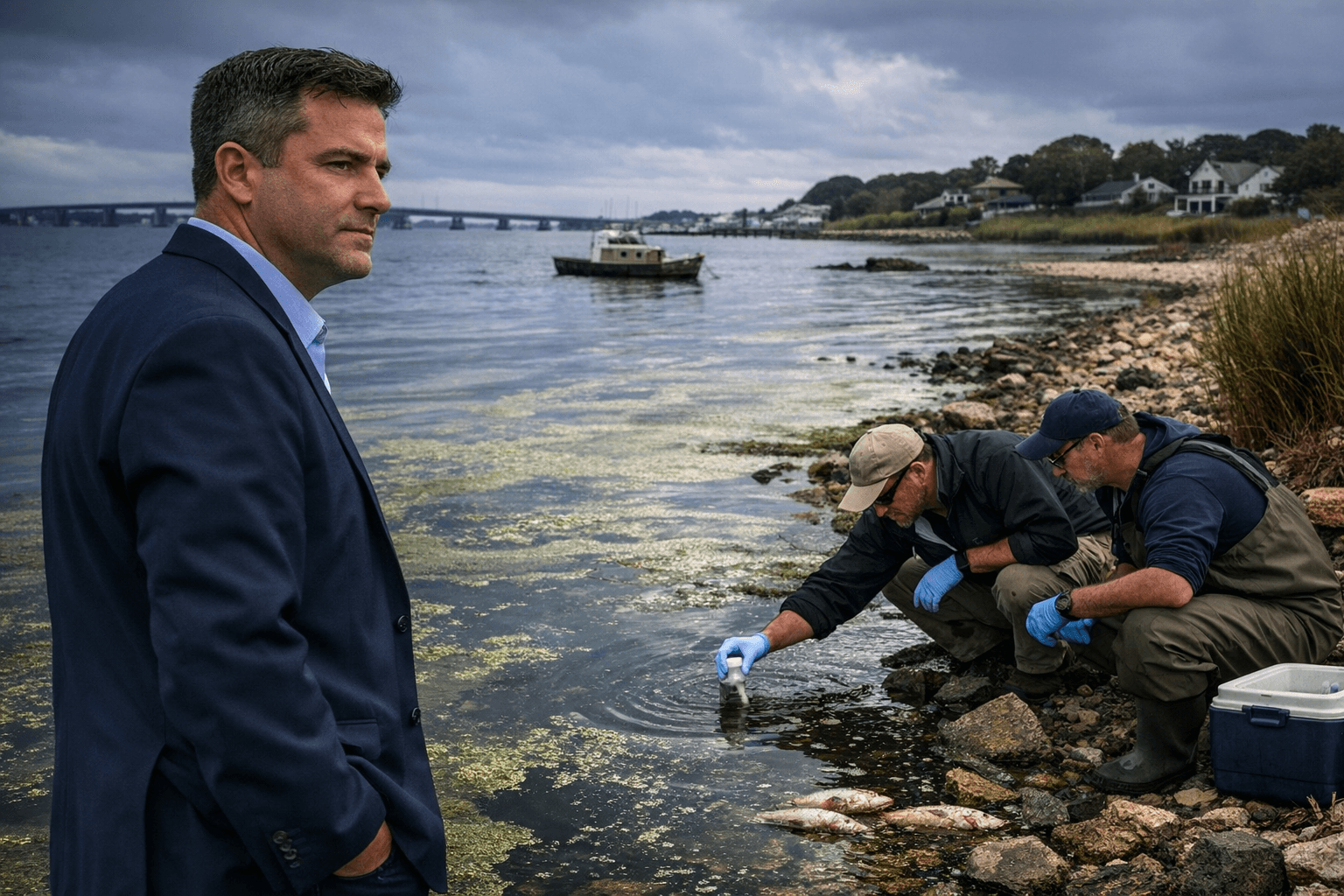
Rep. Nick LaLota has spent years pushing to protect the waterways that define life in eastern Suffolk County, and on March 24 the House gave him a significant win: the American Water Stewardship Act (H.R. 6422) cleared the floor 378-32, a margin that required a two-thirds majority under suspension of the rules and got it easily.
LaLota, who co-led the ESTUARIES Act component embedded within the larger bill, pointed to a projected 70% nitrogen reduction in targeted waterways and the restoration of thousands of acres across both the Peconic Estuary and Long Island Sound as the measure's central promise for Suffolk County.
"I lead the bipartisan ESTUARIES Act in the House because I represent two of our nation's 28 nationally recognized estuaries — and I know they're vital to our economy, our fisheries, and the coastal way of life we cherish," LaLota said.
The ESTUARIES Act, whose full name is the Estuaries Saving Through Efficient and Responsible Appropriations for Your Shoreline Act, reauthorizes the National Estuary Program (NEP) through Fiscal Year 2031. The NEP is the EPA-administered structure under which both the Peconic Estuary Partnership and the Long Island Sound Study operate, funding the monitoring and restoration work that local scientists and advocates carry out year-round. H.R. 6422 also reauthorizes the Long Island Sound Partnership and the BEACH Act through FY2031.
The stakes for Suffolk residents are concrete. Nitrogen pollution — driven primarily by sewage treatment plants, failing septic systems, and stormwater runoff — is the leading cause of water quality impairment across Long Island. Excess nitrogen triggers algal blooms that deplete dissolved oxygen, producing hypoxic dead zones in the Sound's western reaches each summer. In the Peconic Bay system, recurring Brown Tide events tied directly to nitrogen loading have hammered hard clam populations that once supported commercial shellfishing across the East End. Beach advisories, swimming closures, and disappearing eelgrass beds are among the visible consequences residents already navigate.
Joyce Novak, PhD, Executive Director of the Peconic Estuary Partnership, said the NEP reauthorization is foundational to reversing that trajectory. "Reauthorizing the NEP ensures that coastal communities can continue to lead with science, partner across sectors, and deliver real results where they matter most," Novak said. "We thank Congressman LaLota for his continued and unwavering support for clean water on Long Island."
Denise Stranko, executive vice president of Save the Sound, framed the legislation in operational terms for the regional advocacy groups that depend on federal dollars to sustain their work. "This critical federal funding enables groups to monitor and protect water quality, reduce nitrogen pollution stemming from stormwater runoff and sewage treatment plants, restore vital coastal habitat, strengthen resilience in the face of rising seas and extreme weather," Stranko said.
The bill now moves to the Senate, where companion legislation — the Long Island Sound Restoration and Stewardship Act (S. 781) and the ESTUARIES Act of 2025 (S. 2063) — remain pending. LaLota said he plans to work across the aisle "to ensure clean water and healthy habitats remain national priorities for generations to come." Without Senate passage, the 70% nitrogen reduction that LaLota is touting stays a House-approved aspiration rather than a funded federal mandate.
This article was produced by Prism’s automated news system from verified source data, official records, and press releases, then run through automated quality and moderation checks before publishing. The system is built and supervised by the people who set the standards it runs under. Read our full AI policy.
Did this article answer your question?