Luxury Building Boom Leaves Hamptons Scarred by Sprawling Dirt Mounds
Luxury home excavations are leaving East Hampton scarred by sprawling dirt mounds that threaten South Fork aquifers, with one town now weighing escrow bonds and stockpile limits.

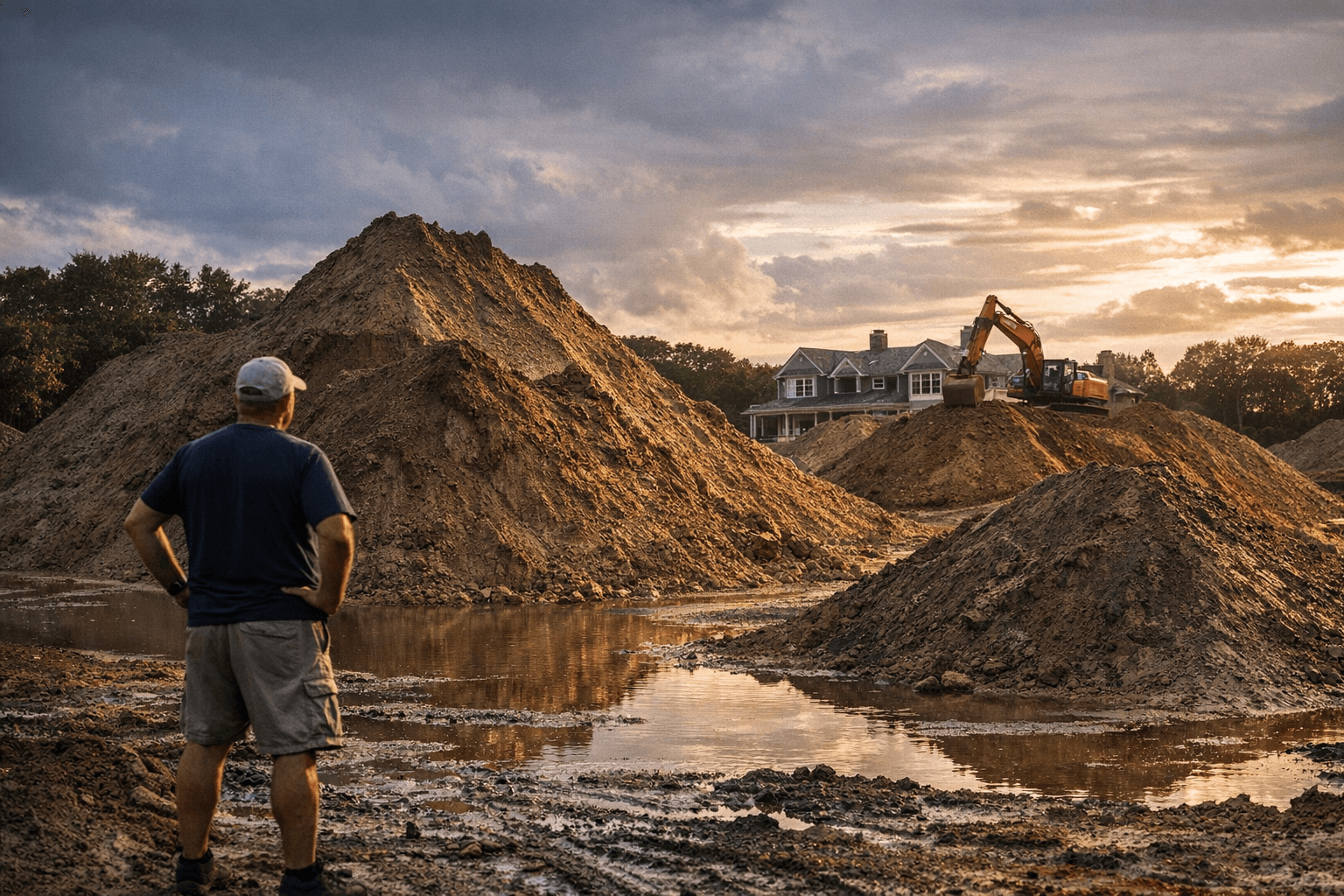
The mounds of excavated sand and stripped topsoil rising across East Hampton and neighboring South Fork communities have become as familiar a sight as the luxury homes driving them, and as persistent a source of alarm as the heavy rains now threatening to carry that disturbed earth directly into coastal wetlands.
Surging luxury residential construction and large-scale renovation projects left a patchwork of exposed earth across some of Suffolk County's most ecologically sensitive terrain. Sites documented this month showed grading and earth-moving operations that stripped vegetation wholesale, shifted sand and topsoil in bulk, and left uncovered stockpiles exposed through the recent wave of heavy precipitation battering the South Fork.
The environmental risk runs deeper than visual blight. The Hamptons sits atop porous sandy soils and shallow aquifers that recharge slowly and supply drinking water to a large portion of the South Fork. When bulk soil is excavated, left uncovered through storms, and inadequately contained, sediment and pollutants migrate quickly: first into streams and ponds, then into Peconic Bay and the ocean. Environmental advocates and some town officials argued that inadequate erosion controls at luxury construction sites amount to a direct and measurable threat to the region's groundwater supply, particularly given the proximity of active sites to fragile coastal wetlands and recharge zones.
In response, at least one Hamptons town advanced a package of proposed regulatory reforms targeting the problem. The tools under consideration include stricter erosion and sediment control requirements at active construction sites, hard limits on the size and permitted duration of soil stockpiles, escrow bonding requirements to guarantee that property owners fund any required cleanup, and expanded enforcement authority to give inspectors real power over noncompliant sites. Backers of the measures argued they would protect both the region's water quality and the rural coastal character that defines the South Fork's identity.
Opponents of tighter rules framed the debate as a property rights issue. Developers and some property owners warned that new regulatory layers would slow permitting, inflate project costs, and generate legal disputes. That friction between environmental protection and private development rights has intensified as luxury residential demand has pushed construction activity to levels that existing regulations were not designed to handle.
The stakes extend well beyond East Hampton. Across Suffolk County, towns facing accelerating residential redevelopment and more intense climate-driven storms confront the same fundamental question: whether land-use rules, inspection staffing, and enforcement budgets written for a slower era can contain the environmental damage that follows rapid, high-value construction. The regulatory choices made on the South Fork this year may establish the framework that other Suffolk communities are eventually pressured to adopt.
This article was produced by Prism’s automated news system from verified source data, official records, and press releases, then run through automated quality and moderation checks before publishing. The system is built and supervised by the people who set the standards it runs under. Read our full AI policy.
Did this article answer your question?