Stony Brook symposium spotlights Long Island water threats, cleanup fixes
Suffolk’s water crisis is moving from lab data to beach closures, shellfish bans and summer risk, even as new county money could fund faster septic upgrades.
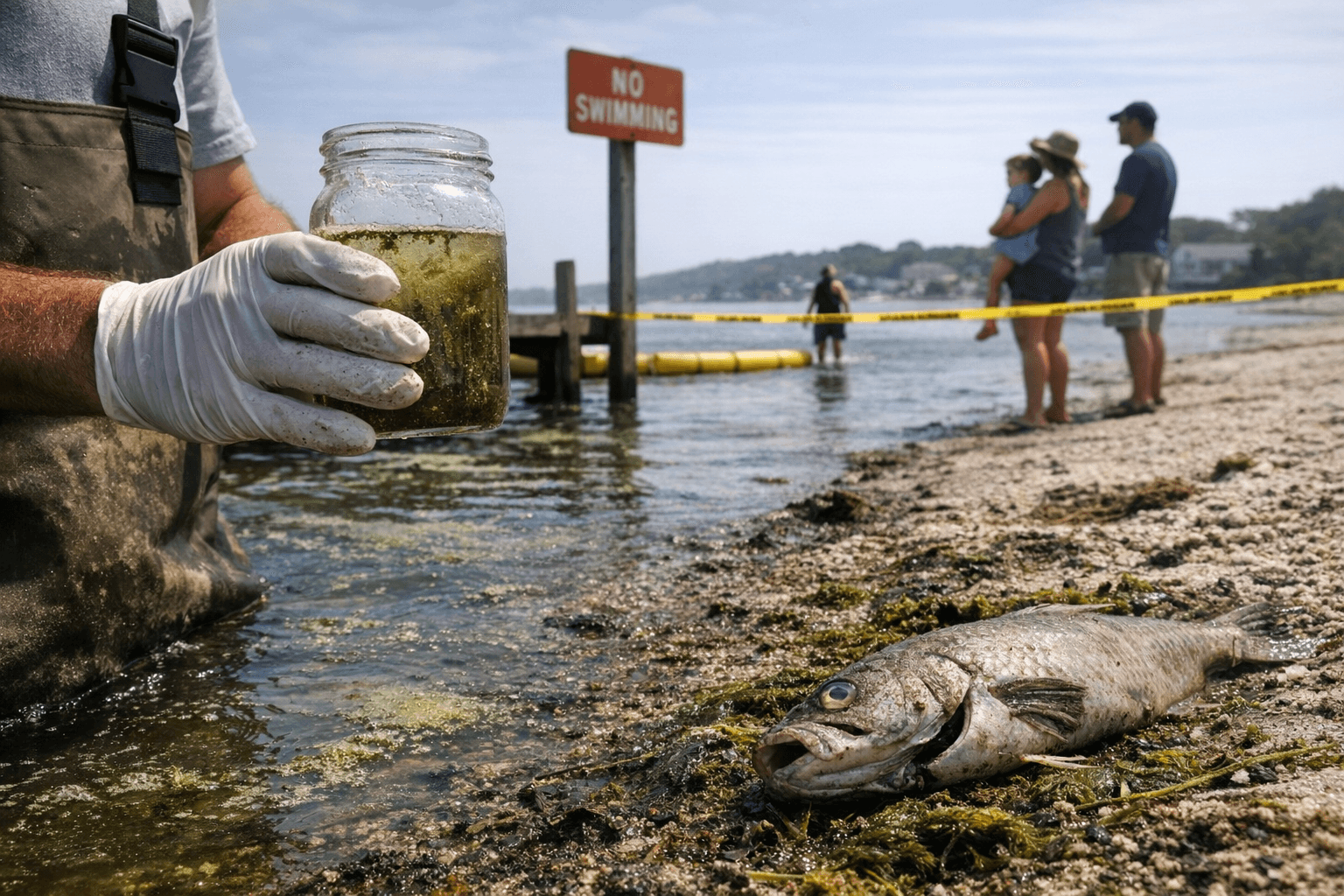
Christopher Gobler is warning Suffolk County that Long Island’s water problems are no longer just an environmental issue. They are a public health threat, an economic drag and a summer danger for families heading into bays and beaches.
At Stony Brook Southampton’s annual State of the Bays symposium on Friday, April 24, at 7 p.m. in the Avram Theater, Gobler and his team will lay out what Stony Brook is calling “No Time to Waste.” The event is free and open to the public, with registration required, and it will focus on record-breaking harmful algal blooms, low-oxygen dead zones, Vibrio vulnificus and microplastics.
Gobler said the message this year is that there is “no time to wait, but not out of solutions.” That matters in Suffolk, where the problems are already showing up in the water people use for fishing, shellfishing and recreation. In a briefing Tuesday in Riverhead, Gobler said Long Island water bodies failed to meet state and federal water-quality standards in 2025, and that 2026 is already off to a troubling start.
The scale is hard to ignore. Stony Brook researchers reported a record 36 distinct dead zones in Long Island waters during the summer of 2024, and said every major bay and estuary from June through September was affected by harmful algal blooms, oxygen-starved dead zones, fish kills or some combination of the three. The researchers tied the problems to excessive nitrogen from on-site wastewater, while also finding more than two dozen lakes and ponds with blue-green algal blooms. Suffolk County has now had more lakes with blue-green algal blooms than any other New York county for eight straight years, according to Stony Brook.
The risks are not confined to the lab. Gobler said three Southold water bodies are currently closed to shellfishing because of paralytic shellfish poisoning, and the western half of Shinnecock Bay is also closed to shellfishing. He said five locations last year were shut because of Alexandrium blooms and the saxitoxin they produce, including one Southold site where toxin levels in shellfish were high enough to be lethal if eaten. No one got sick only because the New York State Department of Environmental Conservation closed the area in time.
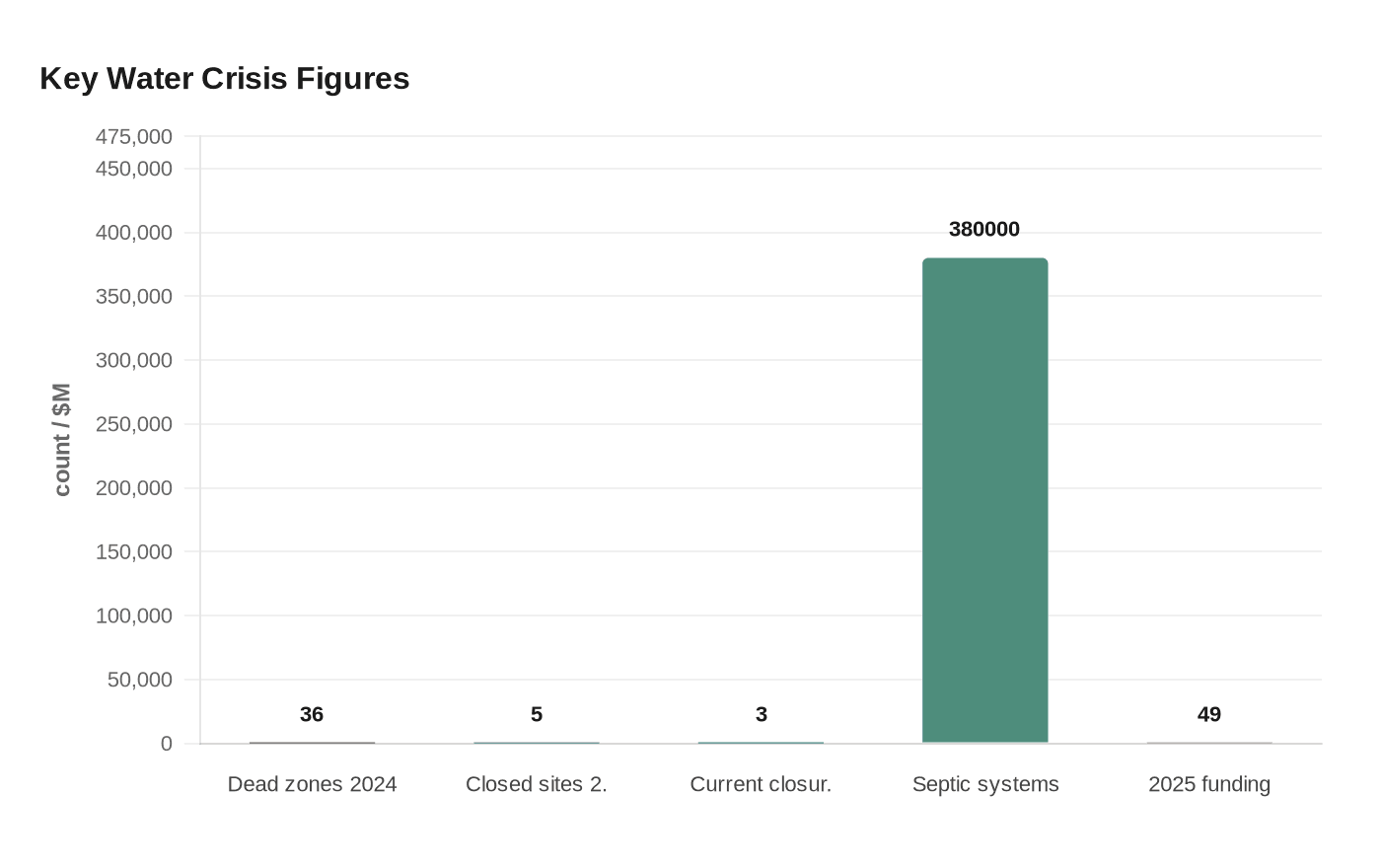
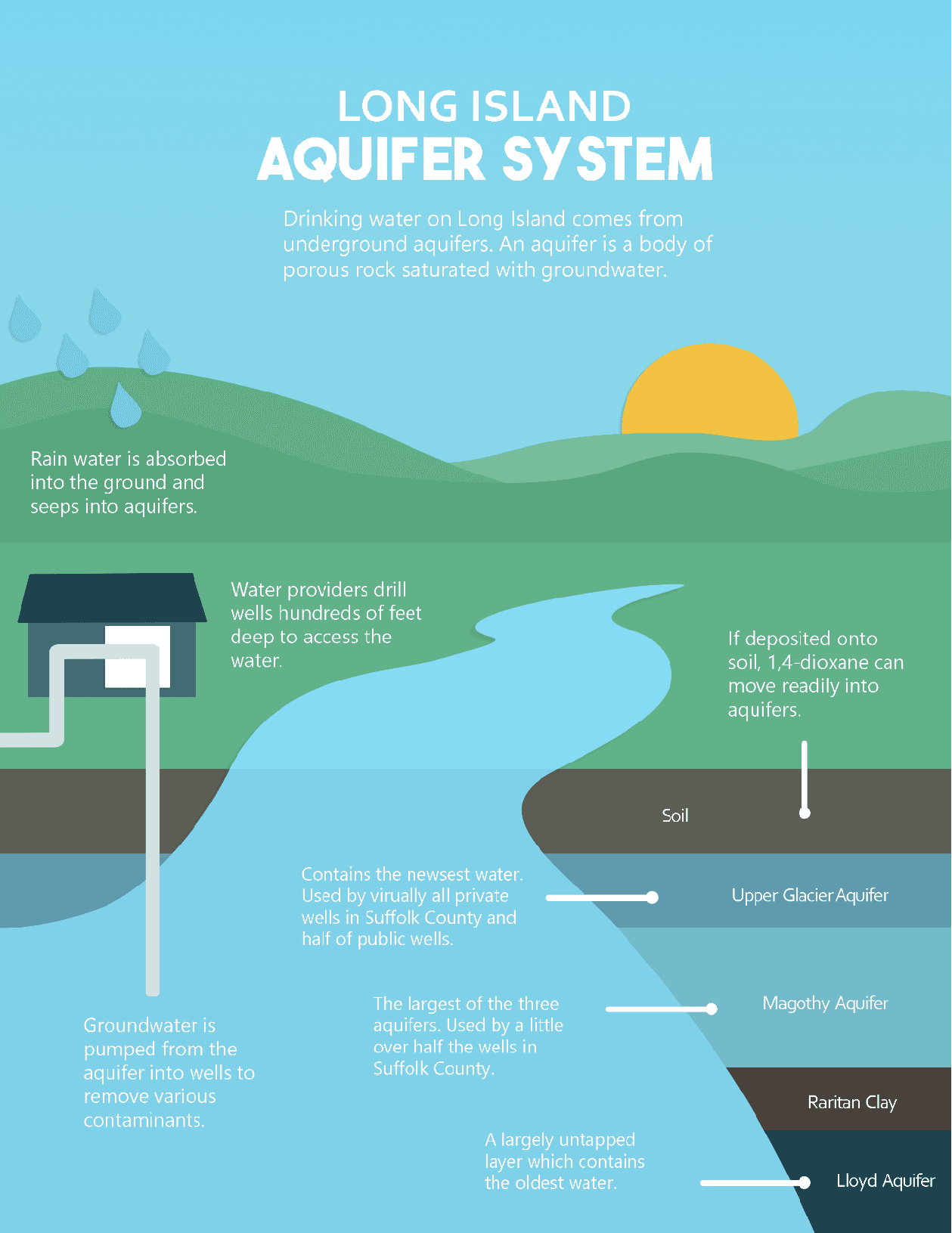
The warning comes with a path forward. Suffolk voters approved Proposition 2 in November 2024 by about 71% to 72%, creating a Water Quality Restoration Fund supported by a 1/8-cent sales tax. County officials say it should generate about $49 million in 2025, with money available beginning in 2026, to help replace outdated cesspools and septic systems with high-tech nitrogen-removal systems. Suffolk County says roughly 380,000 polluting septic systems are a major source of nitrogen pollution.
Suffolk County Legislator Ann Welker said Stony Brook Southampton’s water quality work is critically important to the county’s future, and that the new funding offers a real chance to move faster. For a region where groundwater feeds both drinking water and coastal contamination, the summer outlook now depends on how quickly that cleanup gets built.
This article was produced by Prism’s automated news system from verified source data, official records, and press releases, then run through automated quality and moderation checks before publishing. The system is built and supervised by the people who set the standards it runs under. Read our full AI policy.
Did this article answer your question?