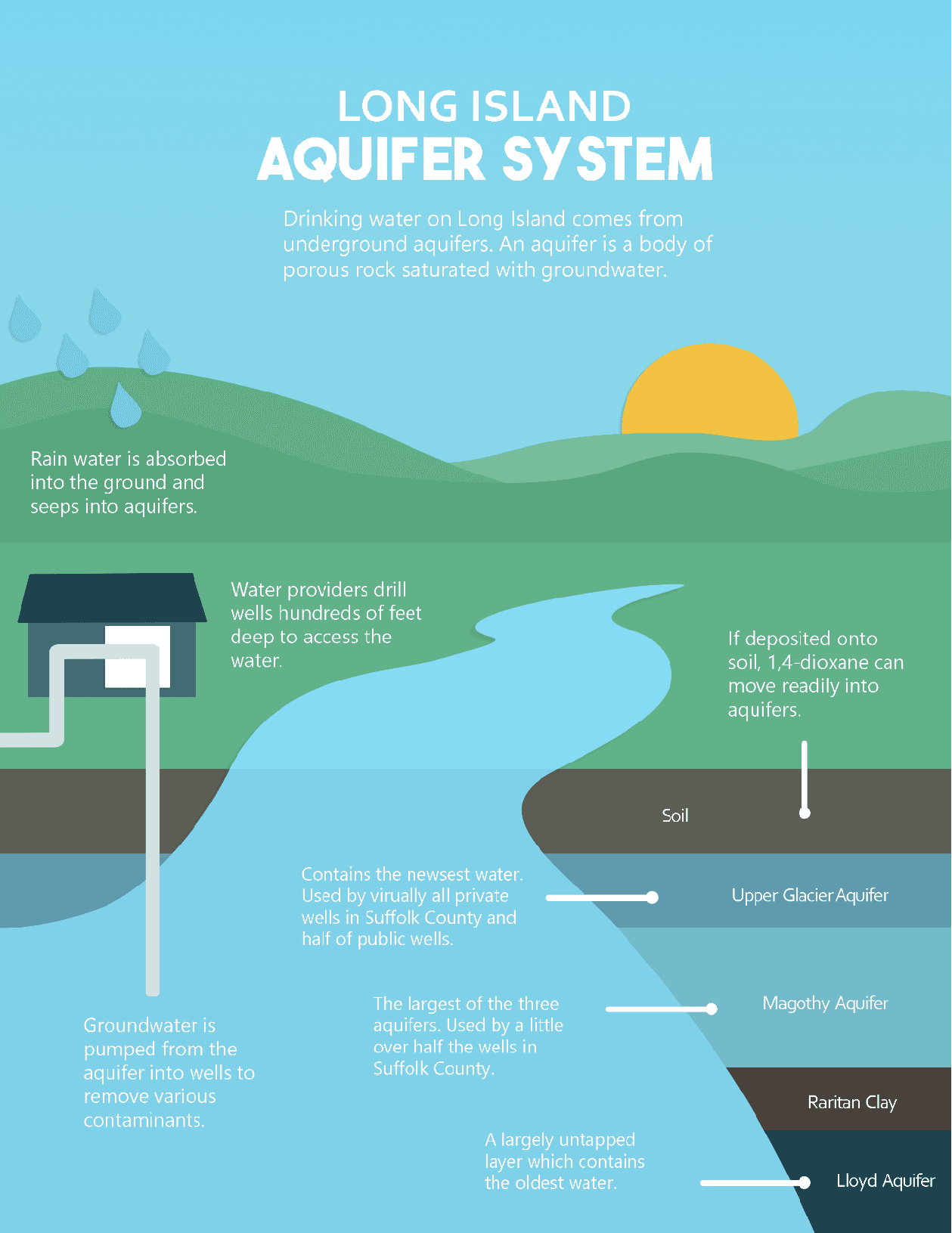
Suffolk water bodies closed as toxic algae, Vibrio warnings rise
Southold’s creeks and part of Shinnecock Bay are closed to shellfishing as Vibrio and toxic algae keep rising across Suffolk waters.
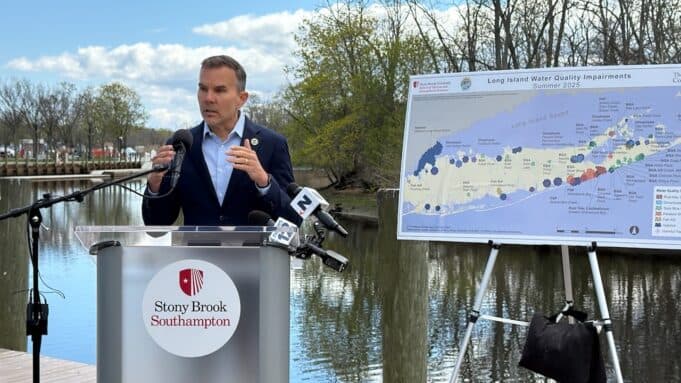
Southold’s Town, Jockey and Goose Creeks are closed to shellfishing, and the western side of Shinnecock Bay is closed too, putting Suffolk’s water crisis right where residents feel it: in the bays, on the docks and in the summer economy.
The state’s temporary shellfishing closures list those biotoxin restrictions in April 2026 because of paralytic shellfish poisoning. For the East End, that means another reminder that the water is still carrying risks that reach beyond environmental headlines and into daily life, from what can be harvested to how safely people use the shoreline.
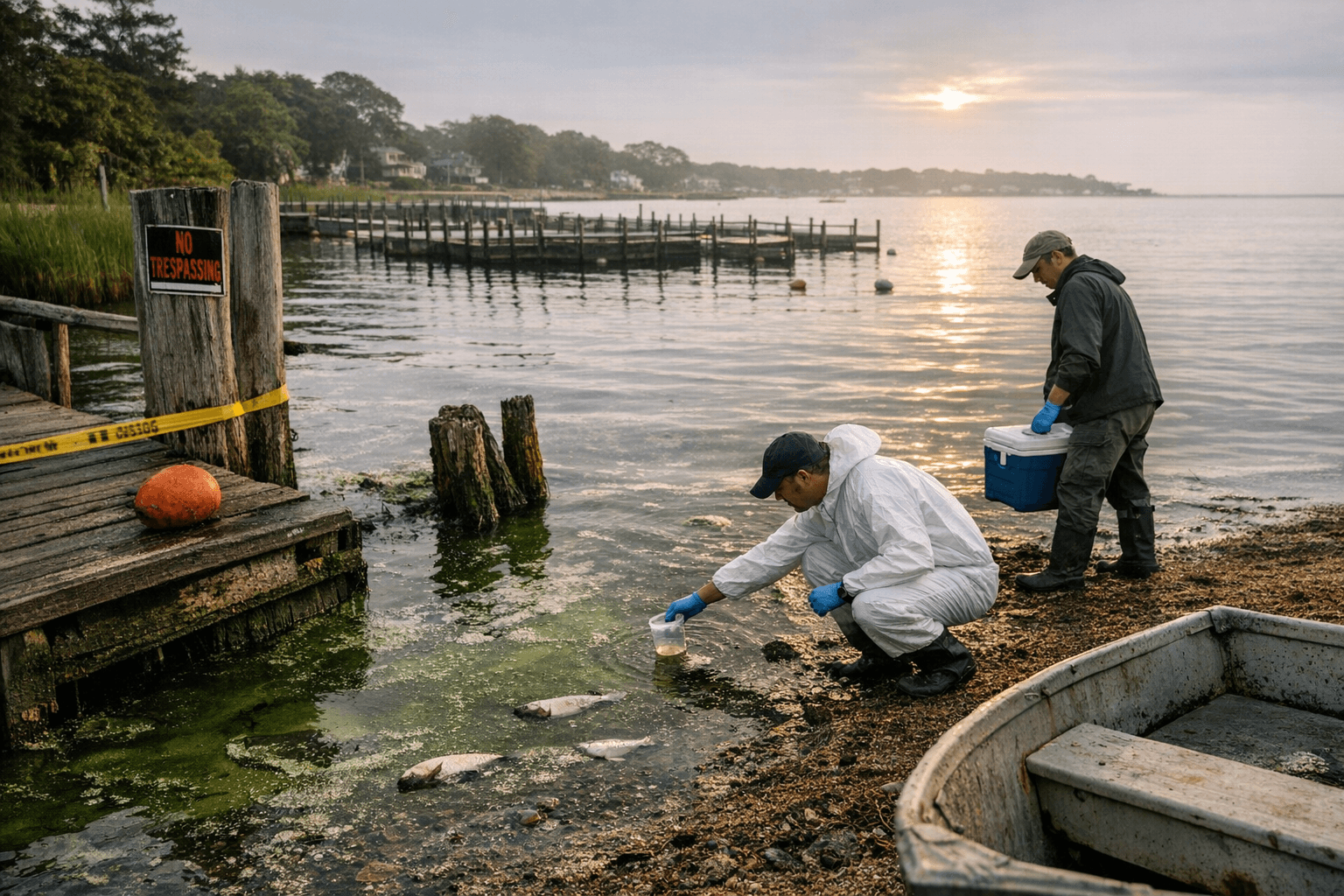
Christopher Gobler of Stony Brook University has also been tracking another threat that makes the public health stakes harder to ignore: Vibrio vulnificus in local coastal waters. Stony Brook researchers said the bacterium reached high levels in 2024 and that domestic wastewater helped fuel its growth, a connection that ties backyard septic systems directly to water quality and human health. The Gobler Lab has monitored Long Island waters weekly every summer since 1999, and the Long Island Water Quality App says that work now covers more than 30 locations across the region.
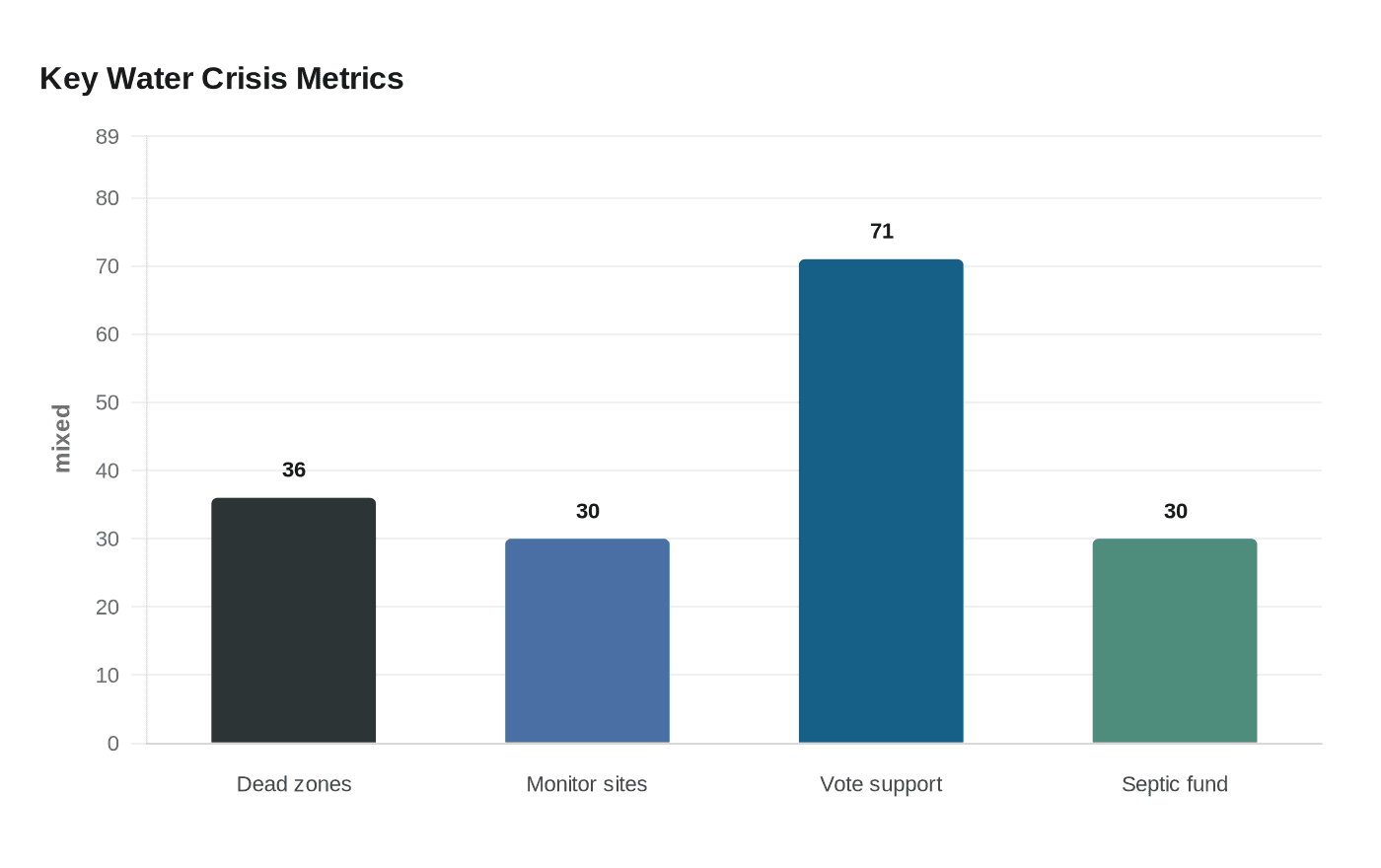
The larger scorecard is still sobering. Stony Brook scientists reported a record 36 distinct dead zones in Long Island waters during summer 2024, said every major bay and estuary on Long Island was affected by harmful algal blooms, dead zones or fish kills, and found more than two dozen lakes and ponds with blue-green algal blooms. That is not an abstract metric for Suffolk. It touches swimming access, shellfishing, boating, waterfront restaurants and the property values that rise and fall with clean water.
There are signs of a political response. Suffolk County voters approved Proposition 2 tied to the Suffolk Water Quality Restoration Act in November 2024 with more than 71 percent of the vote, and county officials have paired grants, low-interest financing and state money to replace cesspools and septic systems. Gov. Kathy Hochul also announced a $30 million Round 5 investment for the State Septic System Replacement Fund Program in 2025, and the state expanded septic grant funding for Suffolk County the same year.
Jennifer Juengst said Suffolk has built what she described as the nation’s most aggressive septic upgrade program, and that may be true. But the closures in Southold, the warning in Shinnecock Bay and the persistence of Vibrio and algal blooms show the same thing: the county has a path forward, not a finished recovery.
This article was produced by Prism’s automated news system from verified source data, official records, and press releases, then run through automated quality and moderation checks before publishing. The system is built and supervised by the people who set the standards it runs under. Read our full AI policy.
Did this article answer your question?