Charlestown emergency services page guides residents on safe outdoor burning
Charlestown puts the burn rules in one place: check the warden, the fire danger, and the permit window before you strike a match. A wrong day or hour can turn cleanup into a violation.
What Charlestown’s emergency page is really for
The safest time to think about a burn pile in Charlestown is before you light anything. The town’s Emergency Services page pulls the key pieces together in one place: emergency contact information, the local forest fire warden, and the fire-danger guidance that tells you whether outdoor burning is a bad idea that day.
That matters because spring yard work, brush cleanup, and outdoor cooking all start to overlap once the weather warms up. In a small town, clear instructions can be the difference between a routine cleanup fire and an avoidable fire call, a permit problem, or a dangerous spread into nearby woods and yards.
Why the permit system exists in the first place
New Hampshire has required fire permits since 1911, and the state says the system is meant to do two things at once: reduce wildfires and educate the public about safe burning. The Division of Forests and Lands also posts Daily Fire Danger classifications each weekday morning, with the weekend classification posted Friday afternoon, so people are expected to check conditions before they burn.
The state’s fire-danger scale runs from Low to Extreme. Burning is not recommended at Very High, and it is unsafe at Extreme. That is not just a technical warning for foresters; it is the state’s way of telling you when a burn pile can become a liability fast, especially in the wildland-urban interface where homes and flammable forest fuels sit side by side.
New Hampshire’s forest protection footprint is large, covering more than 4.5 million acres of public and private forestlands. In that setting, the state’s annual reporting that 10 structures were threatened by wildfires in 2025 is a reminder that even small fires can become neighborhood emergencies when conditions line up the wrong way.
The Charlestown rules that matter before you burn
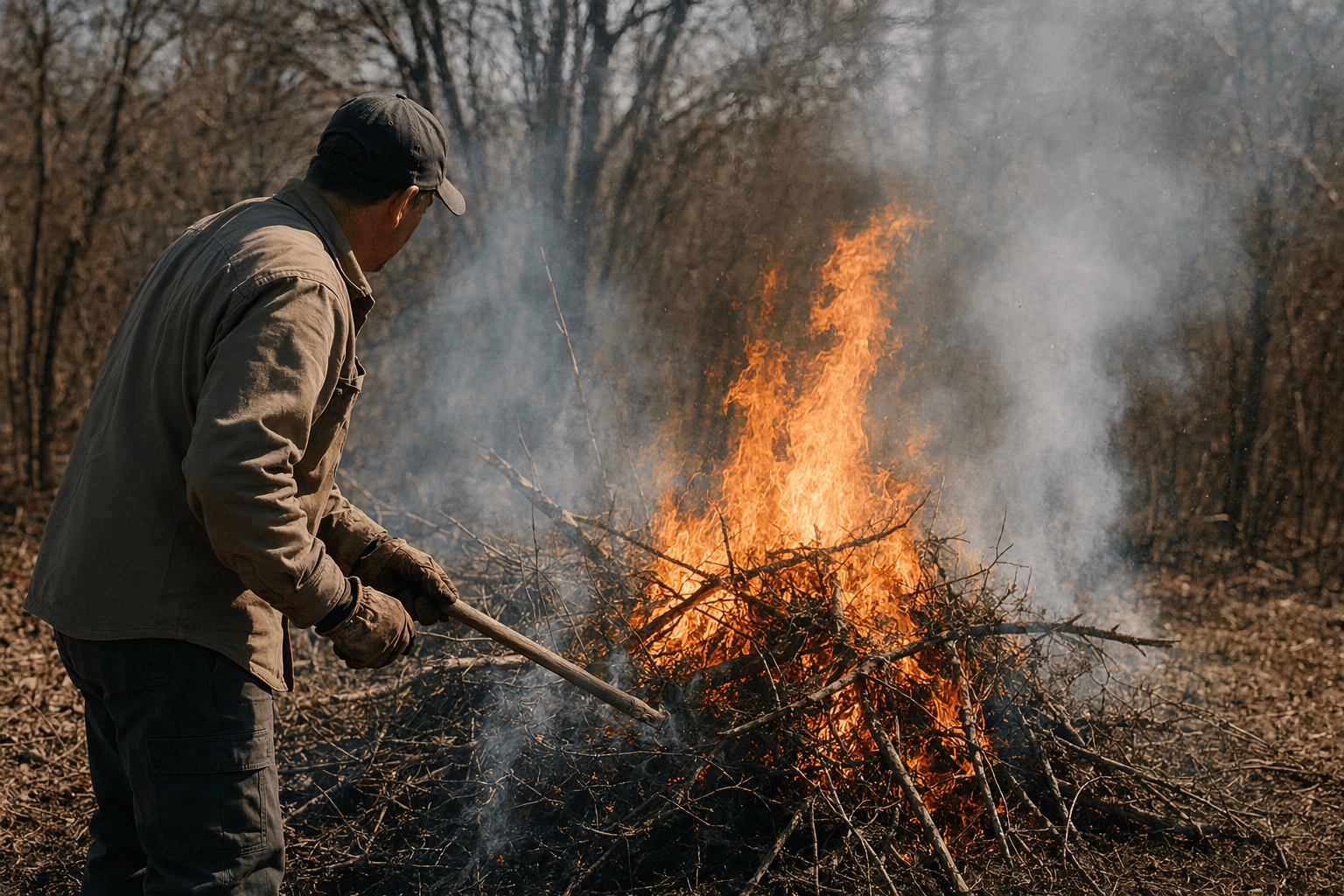
Charlestown’s own guidance is specific, and it is meant to keep residents from guessing. Category I cook fires may not exceed 2 feet in diameter, and they must be contained in a steel or masonry ring. Category II campfires may not exceed 4 feet in diameter, and they must be kindled after 5:00 p.m. and extinguished before 9:00 a.m. unless it is raining.
Category III fires are larger than 4 feet, and Charlestown bars them on Class III, IV, and V days or during Red Flag days. The town also says no fires may be kindled on Class IV and V days or on Red Flag days, which makes the danger classification more than a weather update. It is the line between a legal fire and one that should not be started at all.
The town’s Fire Permits document adds another critical rule: outside fires may only be kindled between 5:00 p.m. and 9:00 a.m. unless it is raining. It also says fire permits are required for all outside fire unless the ground is completely covered with snow, which the state defines narrowly as snow or frozen precipitation within a 100-foot radius that is enough to prevent combustion of woodland fuels until the fire is fully extinguished.
That narrow definition matters. A light dusting that looks harmless from the porch does not necessarily satisfy the rule, and the burden is on you to know whether the burn area truly meets the snow-covered standard. When in doubt, the permit requirement is the safer assumption.
How state permit categories fit with local guidance
The state’s permit system uses three burn categories, and Charlestown’s guidance sits inside that broader structure. New Hampshire says a Category I fire may be up to 32 inches in diameter and may be kindled with a permit at any time or day, whether it is raining or not. Category II fires may be up to 48 inches in diameter and may be kindled only between 5:00 p.m. and 9:00 a.m. unless it is actually raining.
Category III permits may be issued for up to 7 days. That makes them the biggest and most controlled fires in the system, and it is why the state ties them tightly to weather and danger class. Charlestown’s local cook-fire and campfire guidance is more detailed for residents, but the state framework is what gives the whole permit system its legal backbone.
The person at the center of that system is the forest fire warden. The state says the warden is the representative of the State Forester who issues fire permits, enforces forest fire laws, and keeps firefighting tools and equipment ready. Statewide, more than 2,300 Forest Fire Wardens, Deputy Wardens, and Special Deputy Wardens carry out that work, which turns a local phone call into part of a much larger wildfire-prevention network.
Who to call in Charlestown when conditions change
Charlestown lists its emergency services at 1 Main Street, PO Box 304, Charlestown, NH 03603, and gives the town emergency phone number as 603-826-3311. The local forest fire warden is Shawn O’Hearne, reachable at 603-558-1990. Those numbers are the ones to keep handy before you light a burn pile, not after smoke is already moving where it should not.
The page also points residents to 911 and to the town’s notification tools, including CodeRED, which signals that burn safety is part of the town’s broader emergency-alert system. If wind shifts, a pile gets away from you, or conditions change after you have already started, the message is simple: do not rely on guesswork. Use the official contacts that the town has already put in front of you.
That is especially important for contractors, property managers, and landowners doing seasonal cleanup. A burn that seems routine on one side of town can run into restrictions on another day, and the difference between compliance and a problem can come down to the fire-danger class, the hour, and whether a permit is in hand.
What the countywide picture says about burning
Charlestown is not the only Sullivan County community where the rules are tied to state authority. Sullivan, New Hampshire says its fire permit rules come from the State of New Hampshire rather than the town, and it limits what may be burned to brush up to 5 inches in diameter or untreated wood. Sullivan also requires annual forestry training for members who participate in forestry activities, which shows how seriously local departments treat wildfire prevention and readiness.
Taken together, those local pages show that outdoor burning is not just a backyard habit. It is a regulated public-safety issue that depends on permits, timing, weather checks, and a direct line to the people who can say yes or no. In Charlestown, the safest move is to check the danger class, confirm the permit rule, and call the warden before the first spark.
This article was produced by Prism’s automated news system from verified source data, official records, and press releases, then run through automated quality and moderation checks before publishing. The system is built and supervised by the people who set the standards it runs under. Read our full AI policy.
Did this article answer your question?