Sullivan County commissioners meet twice a month to review county business
Twice-monthly commissioner meetings are where Sullivan County residents can track taxes, services, and major choices like the nursing home renovation.
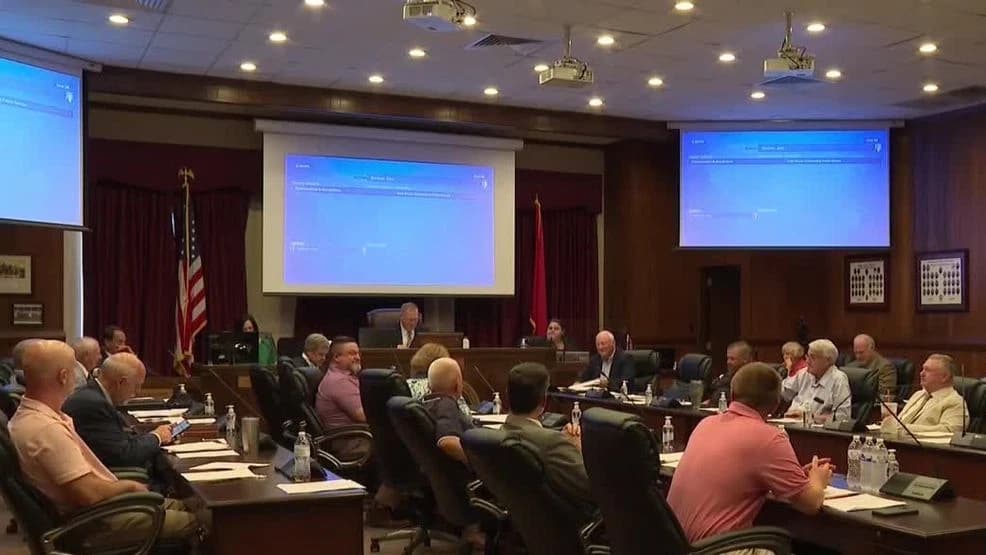
If you want to know where Sullivan County taxes, public services, and facility decisions are headed, start with the commissioners’ twice-monthly business meetings. The board typically meets on the first and third Monday, when the County Manager, department administrators, and other elected officials bring county business into public view. That calendar is the clearest signal for when issues move from internal discussion to decisions that can reach residents’ tax bills and daily services.
Where county business surfaces
The Sullivan County Board of Commissioners is the county’s governing body, so its meeting room is where broad oversight turns into action. The board’s regular business meetings are the place to watch for updates on budgets, facilities, corrections, nursing-home operations, grants, and other county functions that can touch every town in the county.
The county has also made the process easier to follow by publishing agendas, minutes, video meeting links, audits, and reports. Public-meeting notices can include Zoom access, and one county calendar listing said seating was limited but Zoom was available, a practical detail for residents who want to follow along without driving to Unity.
Who runs the office in Unity
The Commissioners Office is at 5 Nursing Home Dr, 1100 County Offices, Unity, NH 03743. The county lists the office phone number as 603-863-2560 and the fax number as 603-690-9178, which makes the office a direct contact point for residents tracking county business or trying to confirm meeting details.
Derek Ferland is the County Manager. In county government, that role is the chief administrative job, responsible for day-to-day operations, managing department heads, directing budget preparations, and drafting policies for the Board of Commissioners. That structure matters because the commissioners do not work in isolation, they review information that comes from administrators and elected officials across the county government system.
Sullivan County uses a district-based commissioner system, with one county commissioner elected in each district. That makes the board the main local body for countywide oversight, even though the county work it handles reaches deeply into specific departments and facilities.
Why the meetings matter in daily life
The practical stakes are easy to see in towns such as Newport, Claremont, Charlestown, Sunapee, and Grantham. County spending decisions can influence the property-tax burden, staffing and operations can affect service levels, and policy discussions can shape how county facilities function. When the board talks about budgets or staffing, the effect is rarely abstract for long, because county decisions flow into the services people use and the bills they pay.
Sullivan County Health Care is owned by the citizens of Sullivan County and operated by the County Commissioners to provide residential nursing care for people who need it. That gives the board direct responsibility for one of the county’s most visible public services, and it explains why nursing-home oversight keeps returning to commissioner agendas.
The county’s health-care facility also appears in federal nursing-home data, which keeps its operations and condition in the public eye. In a county where care, corrections, and other public services are closely tied to county leadership, the commissioners’ meeting schedule becomes a useful marker for when those issues are most likely to surface.
Budget pressure has raised the stakes
County budget work has carried real tax consequences. In 2024, the Sullivan County delegation approved a budget with nearly a 10 percent increase in taxes, and proposed county appropriations were listed at 9.56 percent higher. Those are the kinds of changes that flow into municipal and county tax bills, which is why residents and local officials watch commissioner meetings so closely.
The nursing home renovation is another example of how commissioner business can become a major financial issue. The New Hampshire Governor and Council approved $25,200,000 for renovation of the existing nursing home, and a March 2019 preliminary study had put the project at just under $39 million. Those numbers show how a county facility can move from planning to high-stakes public finance, with commissioners at the center of the conversation.
How to follow the county closely
The county’s public-record tools are the simplest way to stay current. Agendas show what the board plans to discuss, minutes show what was decided, video links let people watch remotely, and audits and reports provide a deeper look at county finances and operations. When a topic starts to generate attention, those records are where residents can see whether the issue is a one-time discussion or part of a larger pattern.
Sullivan County’s history also helps explain the structure that is still in place. The county was established on July 5, 1827, and named after Brigadier General John Sullivan, a Revolutionary War hero. Nearly two centuries later, the commissioners’ meeting calendar remains the most practical public guide to how county government works, where decisions are made, and when residents can see them happen.
This article was produced by Prism’s automated news system from verified source data, official records, and press releases, then run through automated quality and moderation checks before publishing. The system is built and supervised by the people who set the standards it runs under. Read our full AI policy.
Did this article answer your question?