Park City police logs show recurring reports of visible homelessness
A Gold Dust Lane bus stop complaint joined a string of Park City calls about people who appear to be living in public spaces. The logs expose a transit and outreach gap.
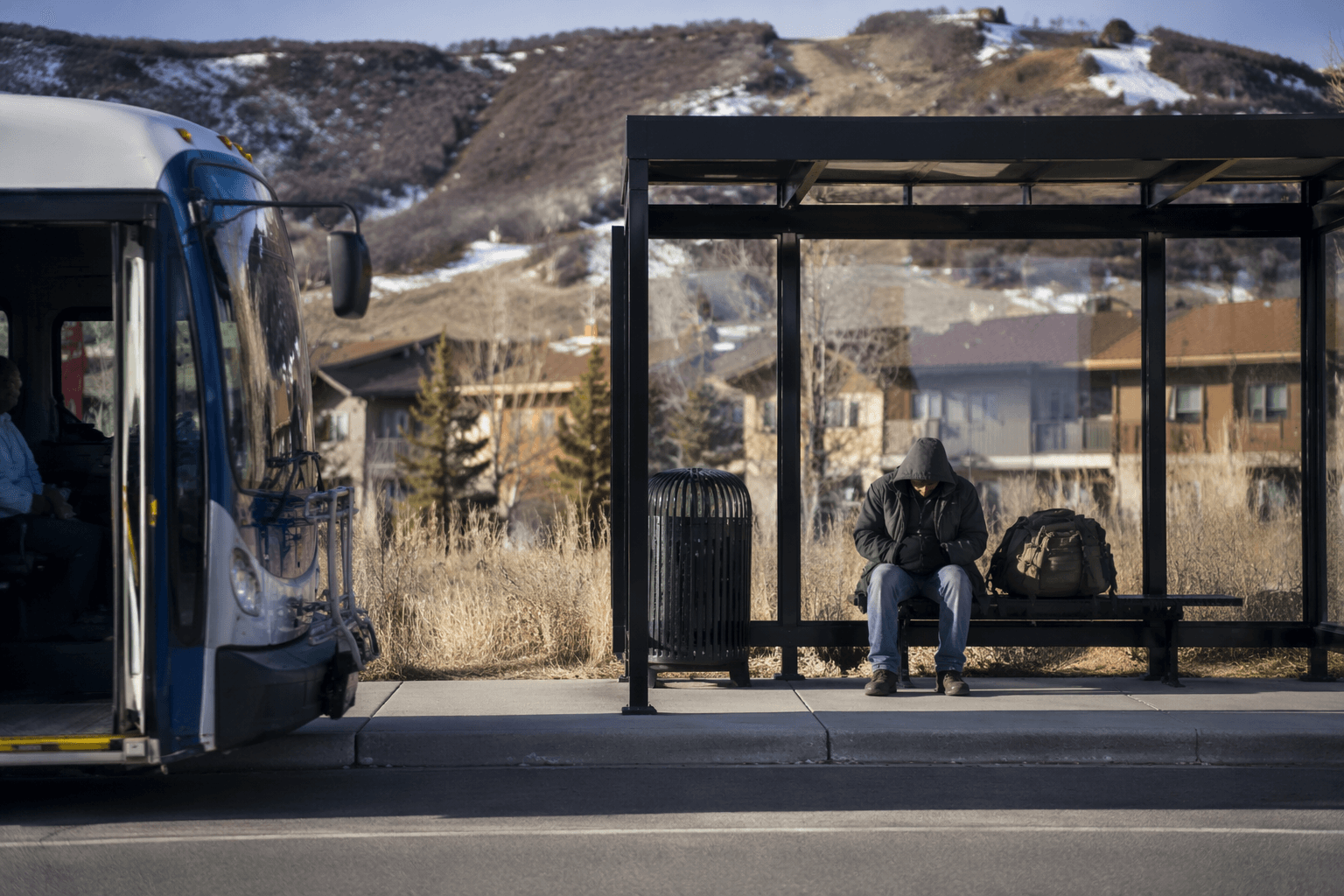
Park City police logged several recent complaints about people who appeared to be living in public spaces, including one at the Gold Dust Lane bus stop where officers noted numerous belongings. The calls pointed to a recurring local problem that sits at the intersection of public health, transit use and a housing shortage: Park City has no homeless shelter, and police are left documenting a situation that cannot be solved by moving people along.
Other log entries have surfaced around Main Street and City Park, along with reports of people sleeping in vehicles or leaving belongings in unexpected places. As spring turned into summer, those cases became more visible in places where people wait for buses, pass through downtown or sit in sheltered corners that offer a little protection from the weather. For riders and nearby workers, the scene can signal a breakdown in order at the curb. For unhoused people, it can reflect how few options exist when there is nowhere stable to go.
The service network around Summit County is spread across agencies rather than centered in one place. Summit County Government’s community-resources page lists emergency rental assistance, eviction protection and renter-rights help, food-bank services, veterans assistance and other housing-related resources. The Summit County Housing Authority says its commissioners direct work on the shortage of housing for purchase or rent for medium- and low-income families. Park City says it adopted its first housing policies in 1993 to incentivize, create and preserve affordable housing, underscoring that the pressure on local housing has been building for decades.
Transit planning adds another layer. Park City has secured federal, state and county grants to improve 84 bus stops by December 2027, with 35 stops scheduled for 2026, including shelters at 18 of them, and another 31 stops planned for 2027, including shelters at 10. The Gold Dust Lane complaint landed as the city works to make Park City bus stops more accessible and more usable, even as visible homelessness shows up there.

The broader numbers show the problem is larger than one stop or one neighborhood. Utah’s 2026 Point-in-Time Count recorded 4,512 homeless Utahns, down from 4,584 in 2025. In Park City, each call about a bus stop, a park or a downtown sidewalk shows how quickly a low-level log entry can become a public-health and service-gap issue when shelter, outreach and affordable housing remain limited.
This article was produced by Prism’s automated news system from verified source data, official records, and press releases, then run through automated quality and moderation checks before publishing. The system is built and supervised by the people who set the standards it runs under. Read our full AI policy.
Did this article answer your question?