Summit County considers nonprofit hub in Altus Park City project
A nonprofit hub proposed for Altus Park City could give Summit County groups shared space, but officials still must decide whether it adds access or duplicates existing services.
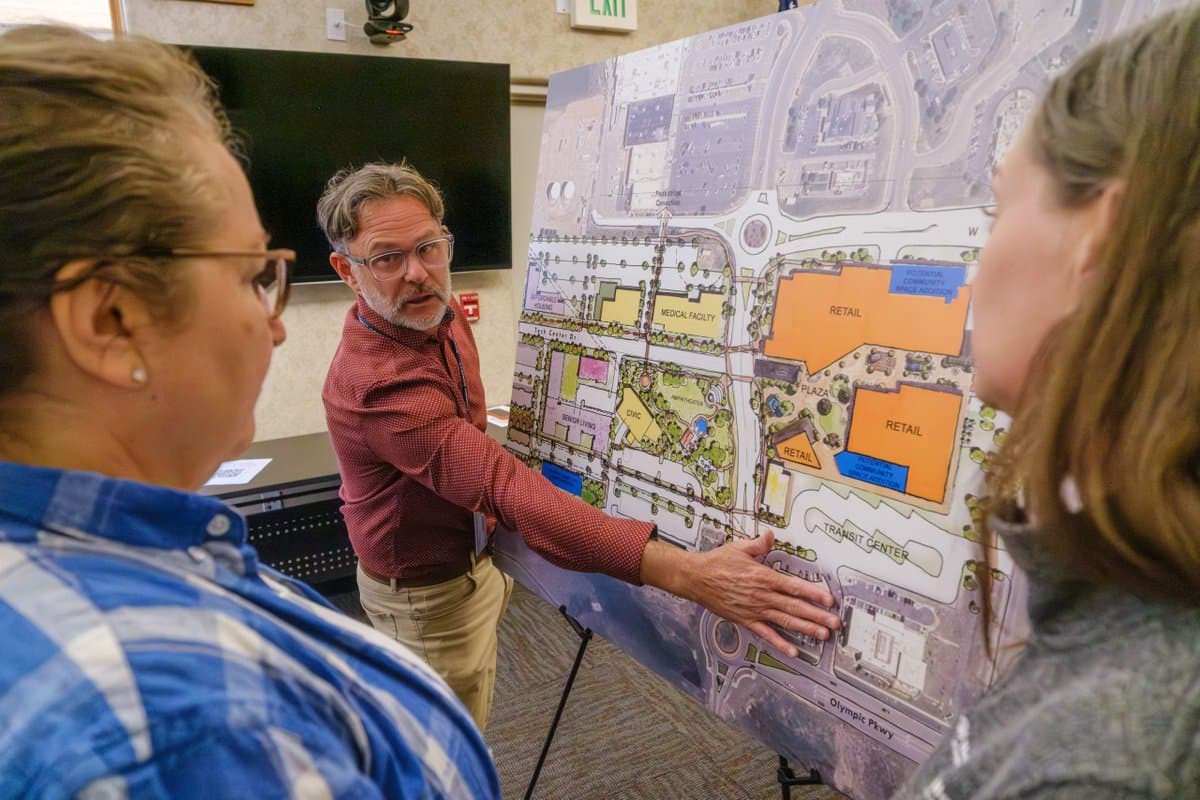
Summit County is weighing a nonprofit hub inside Altus Park City, a private development in Kimball Junction that county leaders say could widen access to services for residents and community groups. The concept was aired at a public open house June 16 at Richins Auditorium in the Summit County Library - Kimball Junction Branch, where officials and nonprofit leaders focused on who would use the space and what problem it would actually solve.
County Manager Shayne Scott is considering whether to amend the development agreement himself, without a county council vote. County notices said the discussion would cover expanded use for community partners and nonprofits so they could offer greater services and programming to the public, a sign that the county wants the project to deliver visible public benefit alongside the private buildout.

The developer, Six Ridge Partners, formerly Dakota Pacific Real Estate, has asked the county to add 50,000 square feet to the project. About 30,000 square feet is being discussed for a new Kimball Art Center headquarters west of the former Skullcandy building, while another 10,000 square feet has been explored for a Park City Chamber of Commerce facility and 10,000 square feet for a nonprofit center. A Park City Visitors Center has also been discussed in the same Kimball Junction area, putting several civic uses in one development corridor.
Supporters of the nonprofit space argued that Summit County has enough organizations to fill it. The Utah Nonprofits Association counted 412 nonprofits registered in the county in 2024, and Kris Campbell, who works with Mountain Mediation Center and Summit Pride, said he had an email list with 58 people interested in the idea. Park City Community Foundation President and CEO Joel Zarrow described his vision as a “Kiln for nonprofits,” a shared workspace where some groups could serve as anchor tenants while others could use the space more flexibly because market-rate rent is out of reach.
The idea also drew on local precedent. In Bonanza Park, a nonprofit coworking space emerged during the 2008 financial crisis after landowner Mark Fischer provided basement space at a nominal rate, giving groups a shared conference room and lower overhead when fundraising was tight. That history has become part of the argument that shared space can strengthen the region’s social-service network, especially in a county where nonprofits often compete for limited rent, staff and donor dollars.
The nonprofit hub sits inside a much larger public-private package. County officials have said Altus Park City will include 885 housing units, with roughly half affordable and half market-rate, and the first affordable phase under review is a 155-unit, 4% LIHTC deal. Scott has estimated the housing and transit reinvestment zone could generate between $8 million and $12 million over 25 years, much of it redirected back into the project rather than local governments and districts.
County officials have also put the broader public-side bill at $55 million. The HTRZ is expected to help fund underground parking, an expanded Kimball Junction Transit Center, a pedestrian bridge over State Route 224, a park and an amphitheater, making the nonprofit question part of a larger debate over how much public value Summit County should trade for a privately driven redevelopment.
This article was produced by Prism’s automated news system from verified source data, official records, and press releases, then run through automated quality and moderation checks before publishing. The system is built and supervised by the people who set the standards it runs under. Read our full AI policy.
Did this article answer your question?