OSU program helps Texas County officials improve county services
OSU’s county-government training reaches the courthouse work Texans rely on, from open meetings and budgets to records and elections in Texas County.

A county budget meeting, a land-record filing or an election deadline can turn on how well local officials know the rules, and Oklahoma State University Extension is betting that better training makes those everyday decisions smoother in Texas County.
OSU Extension highlighted that effort May 22 in a feature on its County Government Extension Program, which offers short-courses, handbooks, tutorials, webinars and technical assistance for county officers and staff. The program says its goal is straightforward: help officials do mandated duties more effectively, efficiently and professionally. Its publications archive includes abstracts, fact sheets and financial reports dating from 1998 to the present, showing the training is built around the practical mechanics of county government rather than broad policy talk.
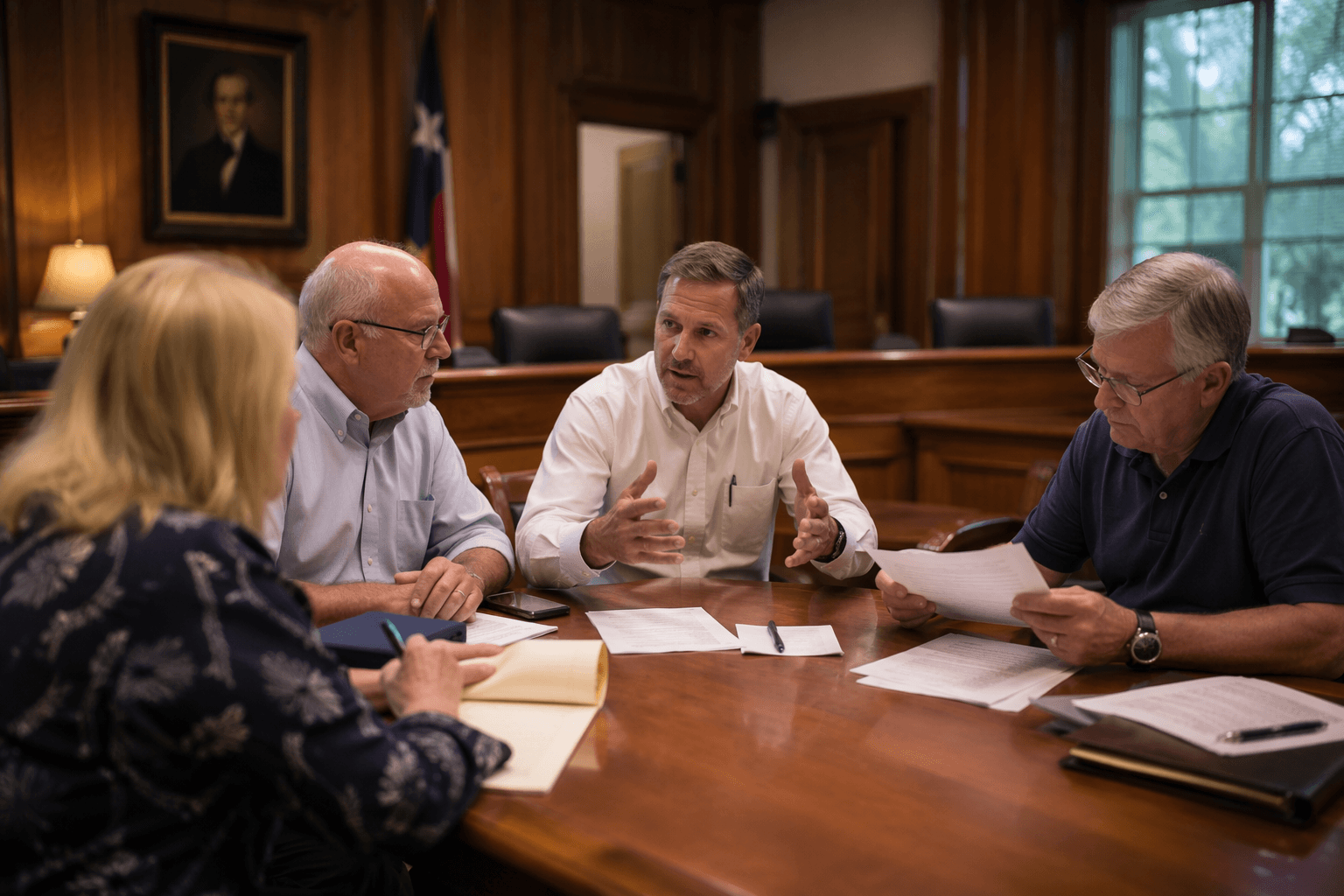
For Texas County, that matters in places like Guymon, Hooker, Goodwell and Texhoma, where county offices handle records, elections, tax roll corrections, public meetings and financial oversight. OSU’s county-commissioners materials say commissioners must conduct open, publicly posted business meetings and comply with the Open Meeting Act. The same materials say commissioners also make orders and authorizations, inspect and approve county programs and facilities, and supervise county finances. In a county where residents depend on those decisions for roads, courthouse operations and emergency coordination, a better-trained commissioner or deputy can mean fewer delays and clearer accountability.
The county clerk’s role is just as central. OSU says the clerk is the principal record keeper and preserves deeds, mortgages, plat maps, oil and gas leases, liens and military discharge papers. The clerk also serves as secretary to the Board of County Commissioners, the County Excise-Equalization Board and the Board of Tax Roll Corrections. That puts one office at the center of property records, tax administration and the paper trail that keeps county government moving.
OSU lists Jean Hinkle as director of the County Training Program and Brad Raven as a local government specialist and instructor for the online course Understanding the Whole of County Government. The course covers the history leading up to Oklahoma statehood, how county government is funded and the roles of elected and non-elected county officials. The training system has also been tied to the state’s 2025 accreditation policies for county commissioners and deputies, approved by the County Commissioner Advisory Board and OSU’s County Training Program. For Texas County, where the Oklahoma State Election Board oversees county election boards and George Buddy Leach III serves as district attorney for Beaver, Cimarron, Harper and Texas counties, that kind of statewide support helps local offices keep up with the responsibilities that residents see every week at the courthouse.
This article was produced by Prism’s automated news system from verified source data, official records, and press releases, then run through automated quality and moderation checks before publishing. The system is built and supervised by the people who set the standards it runs under. Read our full AI policy.
Know something we missed? Have a correction or additional information?
Submit a Tip