Drowsy Driver Crashes Into Guardrail Near Hot Lake, No Injuries Reported
A Union County man told troopers he fell asleep before his Toyota Tacoma punched through a guardrail on Highway 203 near Hot Lake at 5:32 a.m. March 25.
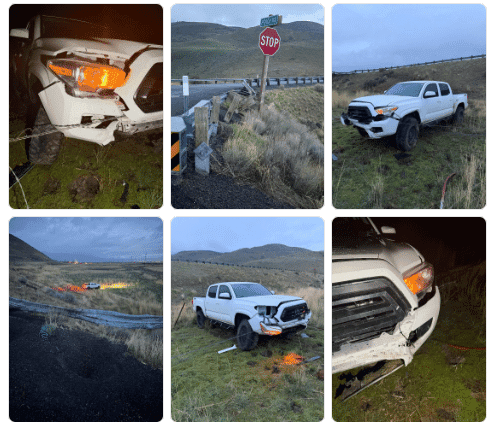
A Toyota Tacoma crashed through a guardrail on Highway 203 near Peach Road in the Hot Lake area just after 5:30 a.m. on March 25, sliding down a slope before coming to rest against a private fence. When Oregon State Police arrived, the driver, a Union County man, told officers he had fallen asleep at the wheel.
OSP logged the crash at 5:32 a.m. at the intersection of Highway 203 and Peach Road, a rural stretch of two-lane road about seven miles southeast of La Grande. The driver failed to negotiate a curve, broke through the guardrail, and the Tacoma traveled down a slope before stopping against privately owned fencing. Rock and Sons Towing responded to remove the vehicle. No injuries were reported and no ambulance transport was required, even as the vehicle sustained substantial damage and the impact tore through the guardrail. OSP issued the driver a warning for failing to drive within a lane.
The 5:32 a.m. time stamp puts this crash in the pre-dawn window when drowsy driving risk is at its peak. The Oregon Department of Transportation has long cautioned that fatigue can produce a crash faster than most drivers anticipate, and specifically warns that reaching for the radio dial or cracking a window are not effective countermeasures once the body is demanding sleep. The Oregon Driver Manual recommends pulling over at the first sign of drowsiness, sharing driving duties on longer trips, and staying hydrated, as dehydration quietly compounds fatigue behind the wheel.
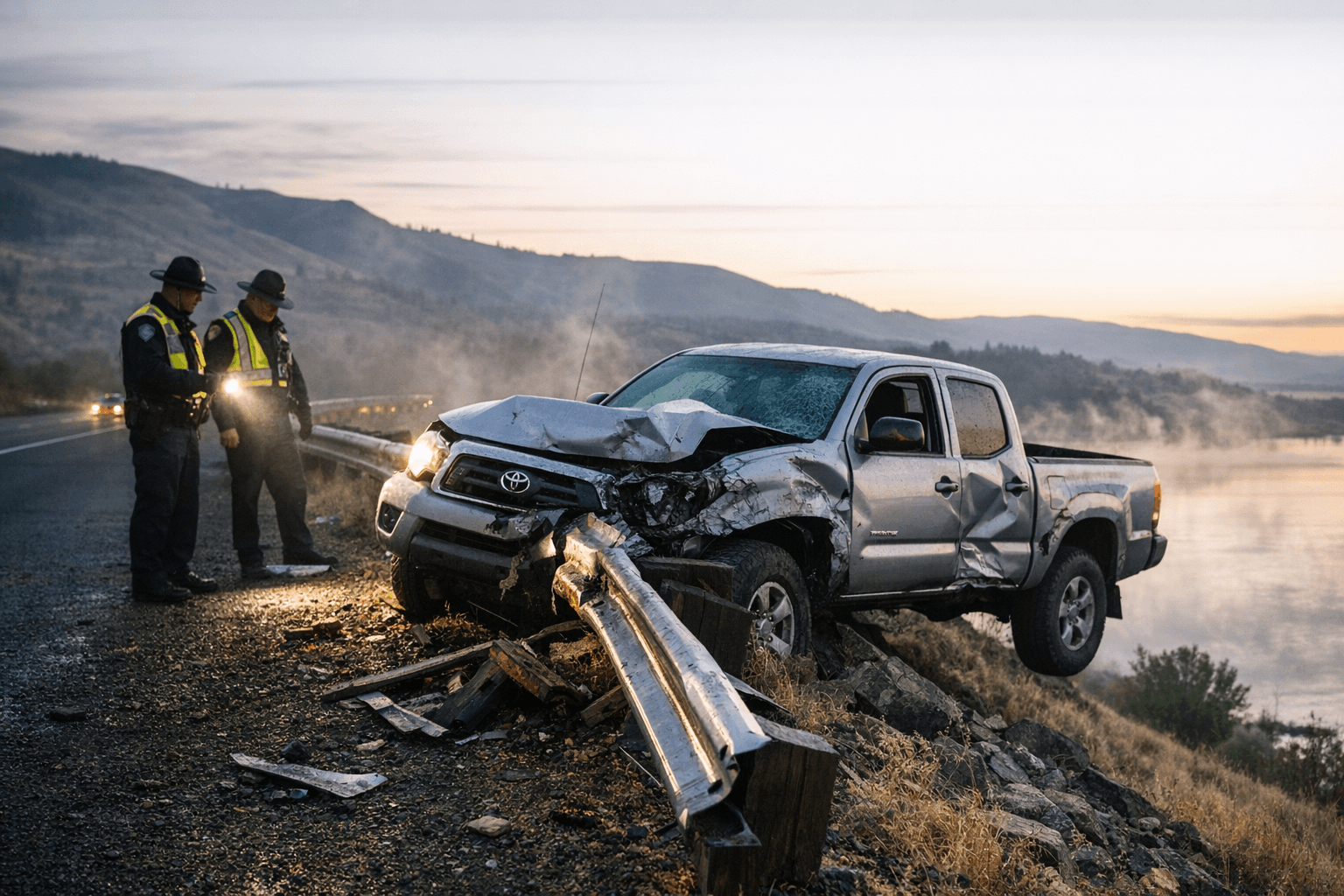
The Hot Lake corridor presents the exact conditions that make a micro-sleep especially dangerous: limited lighting in the pre-dawn hours, curves in the roadway, and the grade change near Peach Road that sent this Tacoma off the pavement entirely. The guardrail was the only structure standing between the truck and the slope below, and in this case it did its job. On a different morning or at a slightly higher speed, the outcome would likely have required more than a warning and a tow.
The private property owner whose fence was struck will need to document the damage and coordinate with responding agencies and the driver's insurance carrier to pursue repairs. OSP's non-injury designation for the crash does not exempt the driver from civil liability for the fence line.
This article was produced by Prism’s automated news system from verified source data, official records, and press releases, then run through automated quality and moderation checks before publishing. The system is built and supervised by the people who set the standards it runs under. Read our full AI policy.
Did this article answer your question?