Oregon's Heritage Tree Program Turns 30, Honoring Three Local Historic Sites
Two La Grande trees already carry Oregon's Heritage designation: a black locust linked to an 1883 settler and WWI memorial maples on North Spruce Street. Here's how to nominate the next one.
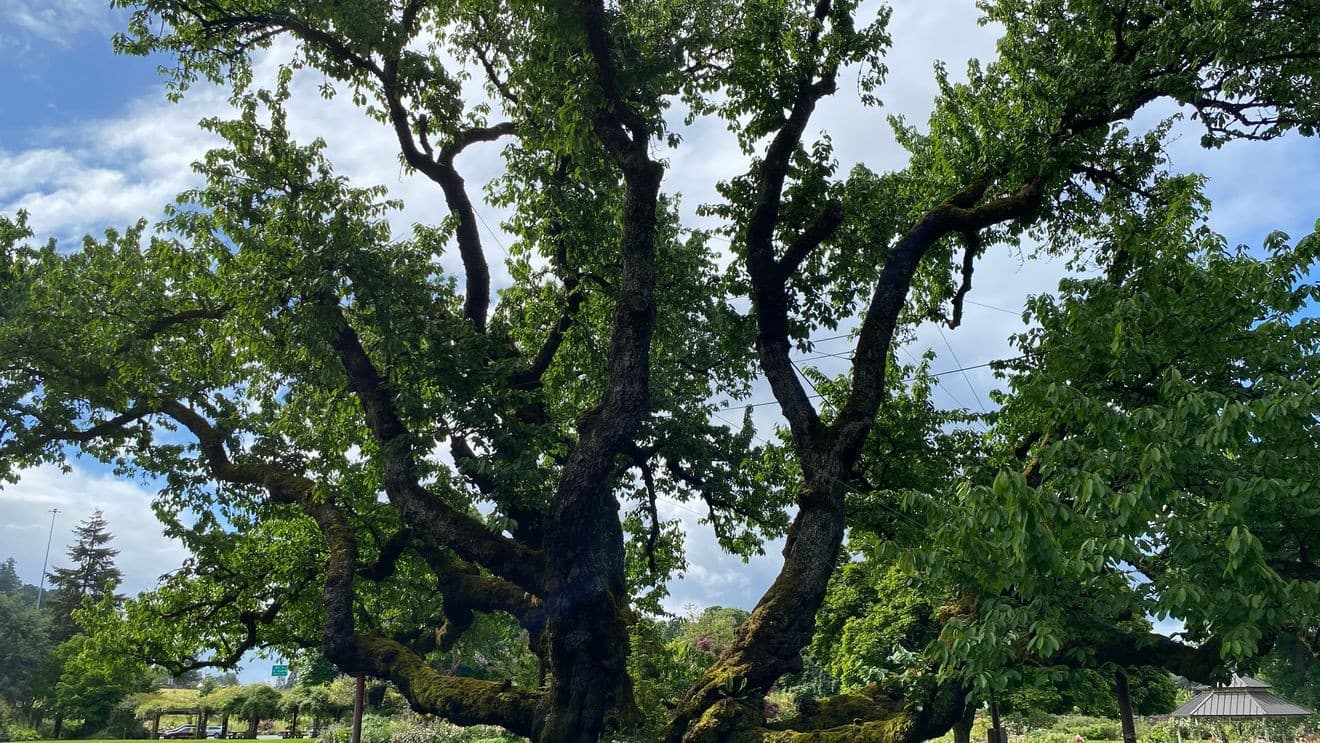
La Grande holds two of Oregon's 85 state-designated Heritage Trees, a fact the Oregon Travel Information Council's volunteer Heritage Tree Committee highlighted this month as the program marks its 30th anniversary. The Baker Black Locust, standing near Inlow parking on Eastern Oregon University's campus and linked to early settler James Baker, has been rooted there since 1883. Less than a mile away, a row of Norway maples called Victory Way lines North Spruce Street, planted in 1923 to commemorate the end of World War I and the Union County lives it claimed.
A third site anchors the regional cluster in northeast Wallowa County, where ponderosa pines in the Indian Village Grove carry trunk scars from Nez Perce spring camps in the late 1800s, one of the program's most direct interpretive windows into Indigenous land use in northeastern Oregon.
Oregon became the first state in the nation to launch a state-sponsored heritage tree program when the Travel Information Council established it in 1996. The committee has since designated 85 trees across 26 of Oregon's 36 counties, with 79 still living today at historic sites, public gardens, and hiking trails.
Nominations are accepted on a rolling basis and reviewed three times a year, in January, July, and October. The first step is completing a paper application, available at oregontic.com/oregon-heritage-trees, and mailing it to the Travel Information Council's Salem office. Heritage trees must tell a compelling story of national, state, or regional history, with accessibility to the public, tree health, and historic significance all factoring into whether a nomination advances. A volunteer committee of arborists and historians from forestry, parks service, geological and environmental studies, and heritage programs reviews each submission.
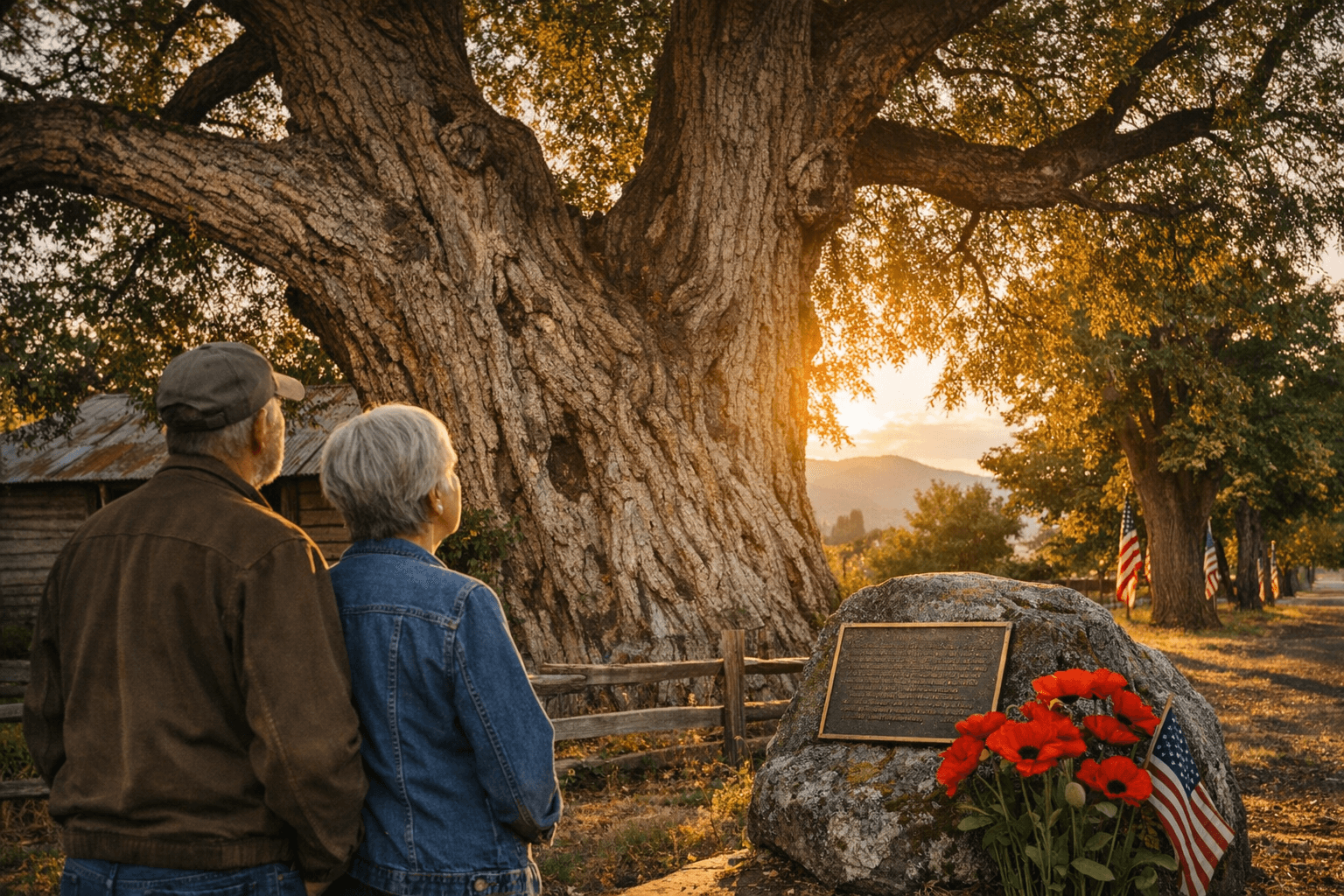
At the state level, designation is a recognition, not a regulation. The Travel Information Council provides a 9-by-12-inch commemorative plaque on a single-leg pedestal placed near the tree; no state maintenance funding follows it. Day-to-day care stays with whoever manages the land, meaning EOU handles the Baker Black Locust as a campus asset and the Victory Way corridor falls under La Grande's parks infrastructure. Landowner consent is required before the committee will evaluate any nomination on private property, and that consent must be in writing.
Heritage Tree Committee Chair Dave Hedberg has said these designations offer a tangible link to the past, and Union County has the raw material to add to its tally. The Oregon Trail corridor through the Grande Ronde Valley, the historic townsite districts in La Grande, and the timbered slopes above Cove and Island City all shelter trees old enough and historically associated enough to meet the program's regional-significance threshold. A tree nominated in time for the committee's July review cycle could carry a plaque by the April 2027 anniversary ceremony.
This article was produced by Prism’s automated news system from verified source data, official records, and press releases, then run through automated quality and moderation checks before publishing. The system is built and supervised by the people who set the standards it runs under. Read our full AI policy.
Did this article answer your question?