Del Rio airport remains key as city pushes air service return
Del Rio’s airport still shapes medical, business and emergency travel, even with no commercial flights. City leaders are lobbying for new service, new funding rules and a route case airlines can believe.
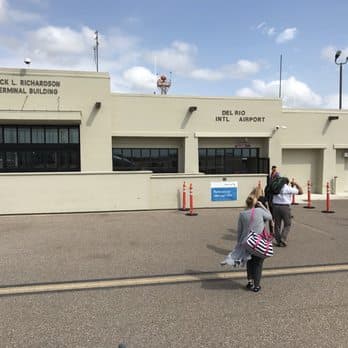
Del Rio International Airport still matters because the people who rely on it do not have an easy substitute. When passenger service disappears, residents face longer drives for commercial flights, higher travel costs, and more friction for medical trips, business meetings and emergency travel across Val Verde County.
Why the airport remains a countywide issue
The airport sits inside a practical reality that has not changed just because the gates are quiet. Del Rio has about 36,000 residents, and when commercial flights were gone in 2023, the nearest options were roughly a two-and-a-half-hour drive in San Antonio or San Angelo. That distance turns a routine trip into a day-long commitment, especially for families coordinating appointments, work schedules or same-day returns.
That is why local leaders keep treating air service as an economic-development issue, not just a transportation one. A community that must drive to another city for air access gives up time, money and convenience before a visitor or investor even lands. For a border city like Del Rio, where access to outside markets matters, the airport is part of the county’s competitive position.
What city hall is doing now
City officials have spent the last several years trying to rebuild the airline business case one piece at a time. The city hired Volaire Aviation Consulting in March 2023 after American Airlines said it would cease service to Del Rio on April 3, 2023, and the firm has since briefed council members on meetings with Contour Airlines and SkyWest Airlines as well as ongoing Essential Air Service bidding.
In 2025, Del Rio took the next step by issuing a request for proposals for professional aviation consulting services. The city said the selected firm would have to build a business case using statistical and route data, which is the kind of document airlines and federal officials use when judging whether a market can sustain service. That matters because airline recruitment is not just a matter of asking carriers to return; it is a test of demand, subsidy structure and route economics.
By February 2026, the city council had added a new layer to that effort, voting 7-0 to join the RESTORE Air Service Coalition. City Manager Shawna Burkhart told council members the coalition would press for changes to Essential Air Service and the Small Community Air Service Development Program, and she said it could eventually support a new program funded by a $5 fee on international flights entering the United States. In plain terms, Del Rio is no longer trying only to persuade a carrier, it is also helping push for federal policy changes that could make small-market service more viable.
How the airport is structured and regulated
The city’s role is unusually direct. The City of Del Rio owns and manages Del Rio International Airport, and the airport page says it has been Part 139 certified since February 2005. The Federal Aviation Administration classifies it as a commercial, primary, non-hub airport, which places it in a category designed for meaningful public use even if it does not handle the traffic volumes of a larger hub.
That certification and classification help explain why the airport remains in local government’s daily orbit. The airport advisory board has seven members, appointed by the mayor and confirmed by the city council, so oversight stays tied to elected officials rather than floating outside city hall. The FAA says Part 139 applies to airports that choose to serve covered air carrier operations, and its certification list is updated every 28 days using data from the Airport Data and Information Portal.
That structure matters because the airport’s future is not a passive waiting game. If Del Rio wants passenger service back, the city must keep its regulatory standing, its local governance and its political coalition aligned long enough to meet the demands of an airline market that is still cautious about small communities.
The numbers behind the case for service
The strongest argument for restoring flights is the airport’s own history. From 2005 to 2013, Continental Airlines and later United Airlines served Del Rio and carried 223,428 passengers total, an average of 2,272 passengers a month. Those numbers do not guarantee a comeback today, but they show that Del Rio has already supported commercial air service for years, which gives the city a factual base when it argues that the market is not theoretical.
American Airlines briefly renewed that case when it launched Del Rio-Dallas service in 2018. When American later exited, the city lost a connection that had become a key link for residents, businesses and visitors. The withdrawal also exposed how dependent a small market can be on a single carrier decision, especially when airline networks shift quickly and regional instability ripples outward.
That is why the city’s current strategy is as much about proof as persuasion. Airlines want route data, passenger forecasts and a clear sense of subsidy support, while federal programs such as Essential Air Service and the Small Community Air Service Development Program shape the economics behind the route. If those programs change, Del Rio’s chance of regaining regular flights could change with them.
What happens next
The next decisions will come from city leaders who are still spending time, money and political capital on the problem. The city council, working with the airport advisory board, Volaire Aviation Consulting and the RESTORE coalition, will have to keep weighing whether the business case is strong enough, whether federal policy support is shifting, and which carrier, if any, is willing to test the market.
For residents, the issue is immediate even without an announcement board full of departures. Every month without service keeps the region tied to long drives, higher travel costs and weaker convenience for work, medical care and outside investment. Del Rio’s airport remains a live infrastructure issue because local officials are still acting as if commercial air service is worth fighting for, and because the county’s economy still feels the gap when it is missing.
This article was produced by Prism’s automated news system from verified source data, official records, and press releases, then run through automated quality and moderation checks before publishing. The system is built and supervised by the people who set the standards it runs under. Read our full AI policy.
Did this article answer your question?