Langtry’s Judge Roy Bean legend lives on in Val Verde County
Langtry’s Judge Roy Bean identity still defines a town of about 12 residents. The former Jersey Lilly Saloon now greets travelers as a Texas travel center and museum.
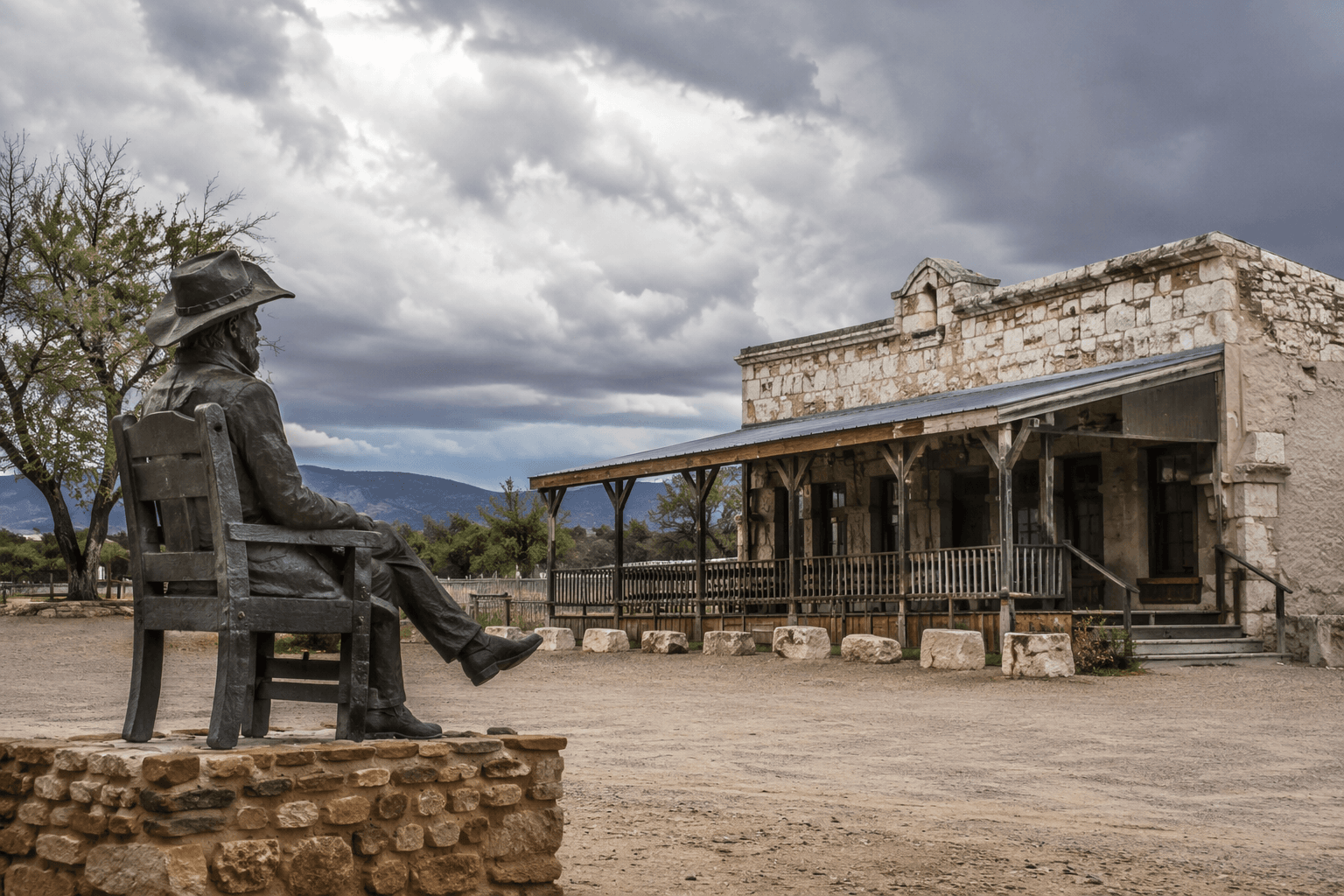
The former Jersey Lilly Saloon at 526 State Loop 25 now serves as the Judge Roy Bean Visitor Center, and in a community of about 12 residents that building helps define how Langtry presents itself to the rest of Texas. The town’s name, its marker-lined landscape and its Judge Roy Bean lore make this western Val Verde County stop less a postcard than a living piece of civic identity.
How Eagle’s Nest became Langtry
Langtry began as Eagle’s Nest Springs, and the name changed only after Judge Roy Bean settled there. The Texas State Historical Association says the community gained a post office and was renamed Langtry in honor of the English actress Lillie Langtry, a detail that still gives the town one of the most memorable place stories in West Texas.
That naming history matters because it ties together a borderlands settlement, a celebrity of the Victorian stage and a self-styled frontier judge in one place. The Texas Almanac’s Eagle’s Nest entry preserves the older name, which helps explain why Langtry still feels like a town with two identities at once: one rooted in geography and one built from legend.
The lawman who made the town famous
Judge Roy Bean’s time in Langtry turned the community into folklore. TSHA records that he was appointed justice of the peace in 1882 and served, with brief interruptions, until 1902. A West of the Pecos Museum page places his courthouse in Langtry around 1882 as well, anchoring the legend in a real building and not just a tall tale.
One of the most vivid episodes tied to Langtry came on February 21, 1896, when Bean staged a heavyweight championship fight on a sandbar just below Langtry, on the Mexican side of the Rio Grande. That date and place matter because they show how closely Bean’s reputation was tied to the river frontier itself, where river crossings, rail lines and sparse settlement gave one local official an outsized stage.
The story spread well beyond Val Verde County. Pecos built a replica of Bean’s courthouse in 1935 for the Texas Centennial, a reminder that Langtry’s lawman became part of a wider Texas memory machine. Bean’s courthouse in Langtry, and the replica in Pecos, show how one small West Texas community ended up exporting a piece of state mythology.
What still stands on State Loop 25
The most visible expression of that history is the Judge Roy Bean Visitor Center, which the Texas Historical Commission and TxDOT identify at 526 State Loop 25 in Langtry. The site is also listed as the Texas Travel Information Center at Langtry, so the same place that interprets Bean’s life also functions as a roadside stop for travelers crossing this part of U.S. Highway 90 and Loop 25.
The Texas Historical Commission Atlas lists the site as Museum/Site Number 4200000248 and gives a Langtry mailing address at PO Box 160, along with the phone number 915-291-3340. Amenities include interpretive displays, restrooms, drinking water and wireless internet access, which tells you something important about the building’s role: it is both a heritage site and a practical stop in a remote stretch of the county.
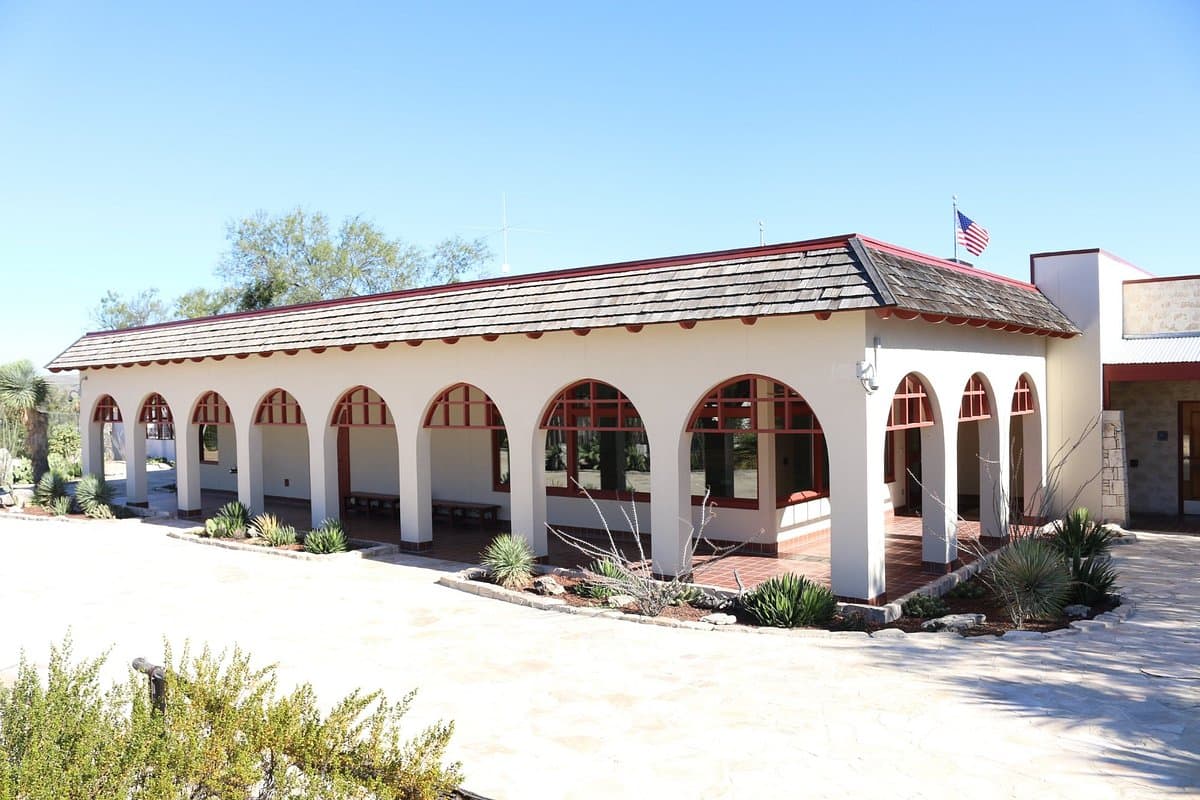
The old Jersey Lilly Saloon remains central to the story, and nearby references to Bean’s courthouse-jail and opera house help frame the site as more than a single exhibit. In effect, Langtry’s public history is concentrated into a few visible places that make the town legible to visitors before they ever leave State Loop 25.
Why Langtry’s history still shapes the town
Langtry’s scale is part of why the legend carries so much weight. A recent travel feature described the community as having about 12 residents, and DataCommons listed the population at 12 in 2016. In a town that small, the historical site is not just an attraction; it is one of the main ways the place is seen and understood by people passing through Val Verde County.
The county’s marker system reinforces that identity. Val Verde County Historical Commission resources note that Langtry has numerous official Texas Historical Commission markers, and a RoadHistorical summary counts 14 official THC markers tied to Langtry in Val Verde County. That density of markers shows how deeply the town’s name is embedded in public history, even as the living community remains tiny.
What makes Langtry distinctive is the tension between myth and reality. The myth says Judge Roy Bean made the town famous; the reality is that a small Val Verde County settlement has continued to preserve the places, signs and stories that keep his name visible. That combination is why Langtry still matters: it is a working roadside stop, a marker-rich community and one of the clearest examples in West Texas of how a tiny town can turn history into civic identity.
This article was produced by Prism’s automated news system from verified source data, official records, and press releases, then run through automated quality and moderation checks before publishing. The system is built and supervised by the people who set the standards it runs under. Read our full AI policy.
Did this article answer your question?