Pecos High Bridge transformed rail travel through Val Verde County canyon
The Pecos High Bridge rerouted the Southern Pacific through Val Verde County’s canyon, cutting 11 miles from the San Antonio-El Paso line and redefining Del Rio’s rail identity.

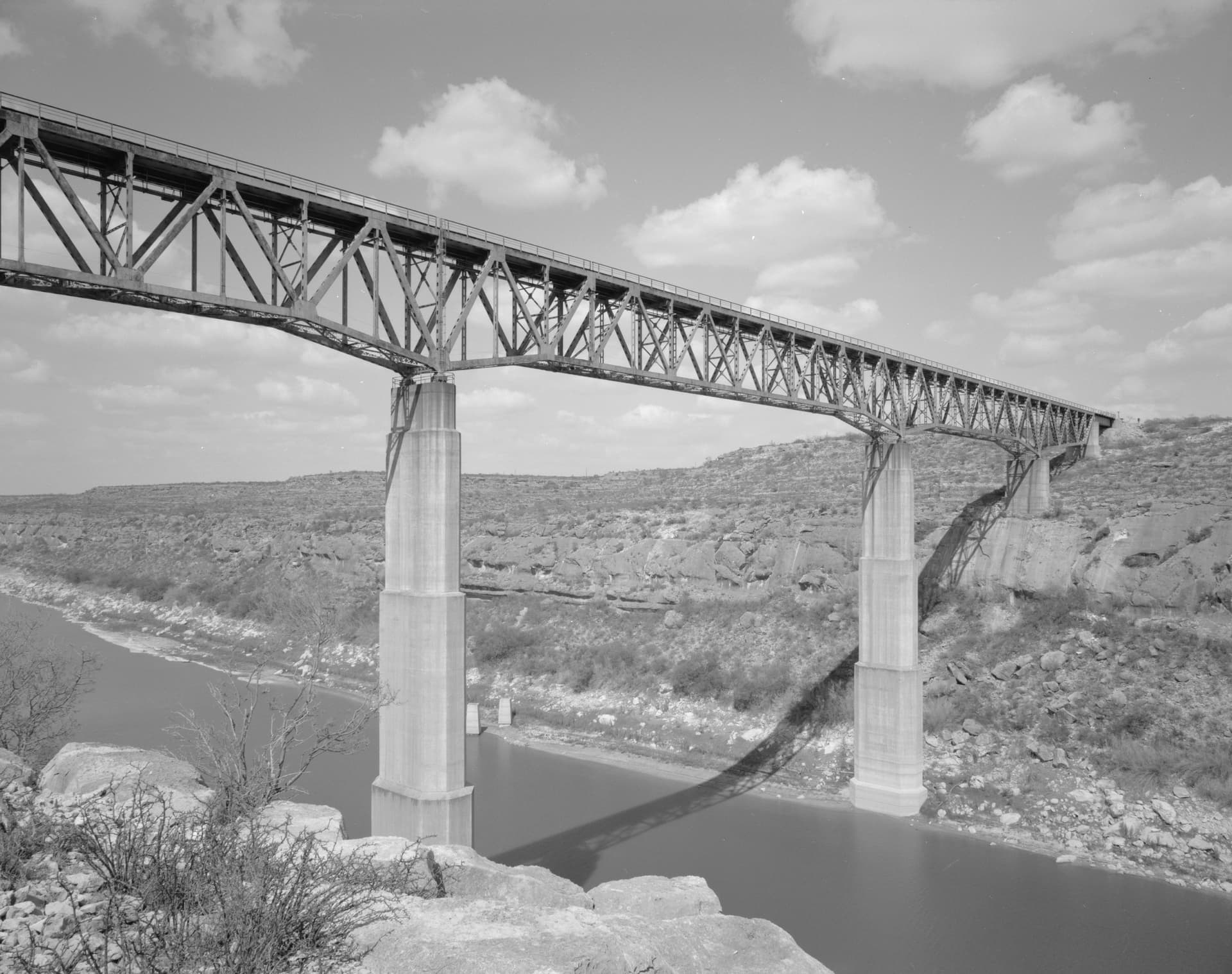
When the Pecos High Bridge opened in 1892, the Southern Pacific moved its line five miles upstream into the Pecos River gorge. The shift pulled one of the West Texas region’s most important rail corridors through Val Verde County and away from a longer, riskier route near the Rio Grande. It cut 11 miles from the San Antonio-to-El Paso run and turned the canyon west of Comstock and Langtry into a landmark of railroad strategy, not just scenery.
Why the crossing mattered
Before the bridge opened, trains crossed the Pecos River on a lower bridge near the Rio Grande mouth and then worked their way along the Loop Line between Comstock and Langtry. The route was a hard one for rail traffic: steep grades, tunnels, deep cuts, and constant rock-slide danger made it slow and hazardous. Moving the crossing upstream solved that problem in one stroke, eliminating the Loop Line and placing the main route where the river cuts through a deep gorge that rail engineers could use to their advantage.
The Southern Pacific’s Sunset Route was the nation’s first southern transcontinental railroad, and the Pecos crossing became part of the line’s logic of speed, grade control, and freight movement across Texas. Val Verde County was no longer just a place the railroad passed through on difficult terrain. It became a key point where geography and infrastructure determined which trains could move, how fast they could run, and how the region connected San Antonio, El Paso, and the border country in between.
How the 1892 bridge went up
The original Pecos High Bridge went up after an unusually fast build. Construction began on November 3, 1891 and ended on February 20, 1892, a span of 87 working days. The Phoenix Bridge Company of Phoenixville, Pennsylvania, built the structure, which stood on 24 towers and stretched 2,180 feet across the canyon.
Texas State Historical Association records place the rails 321 feet above the river, while the National Park Service gives the height as 322 feet 10 3/4 inches, a difference that reflects how the measurements were taken. In 1892 it was the highest bridge in the United States and the third highest in the world.
The first train to cross carried Southern Pacific president C. P. Huntington on March 30, 1892.
A canyon crossing that became part of the ride
The Pecos High Bridge was a working structure, but it also became a place people remembered. Trains often slowed or paused so passengers could take in the view of the canyon and river, turning a utilitarian crossing into one of the most striking scenes on the line. In Val Verde County, the Pecos River gorge, the dry country around Langtry, and the wide sweep of western Val Verde County created a natural stage for rail travel.
The bridge also became tied to local legend. Judge Roy Bean of nearby Langtry served as coroner for workers killed during construction, a grim fact that fed the stories later attached to the crossing. It changed where freight went, how passengers experienced the route, and how the county fit into the larger map of southern rail travel.
Reinforcement, replacement, and wartime demand
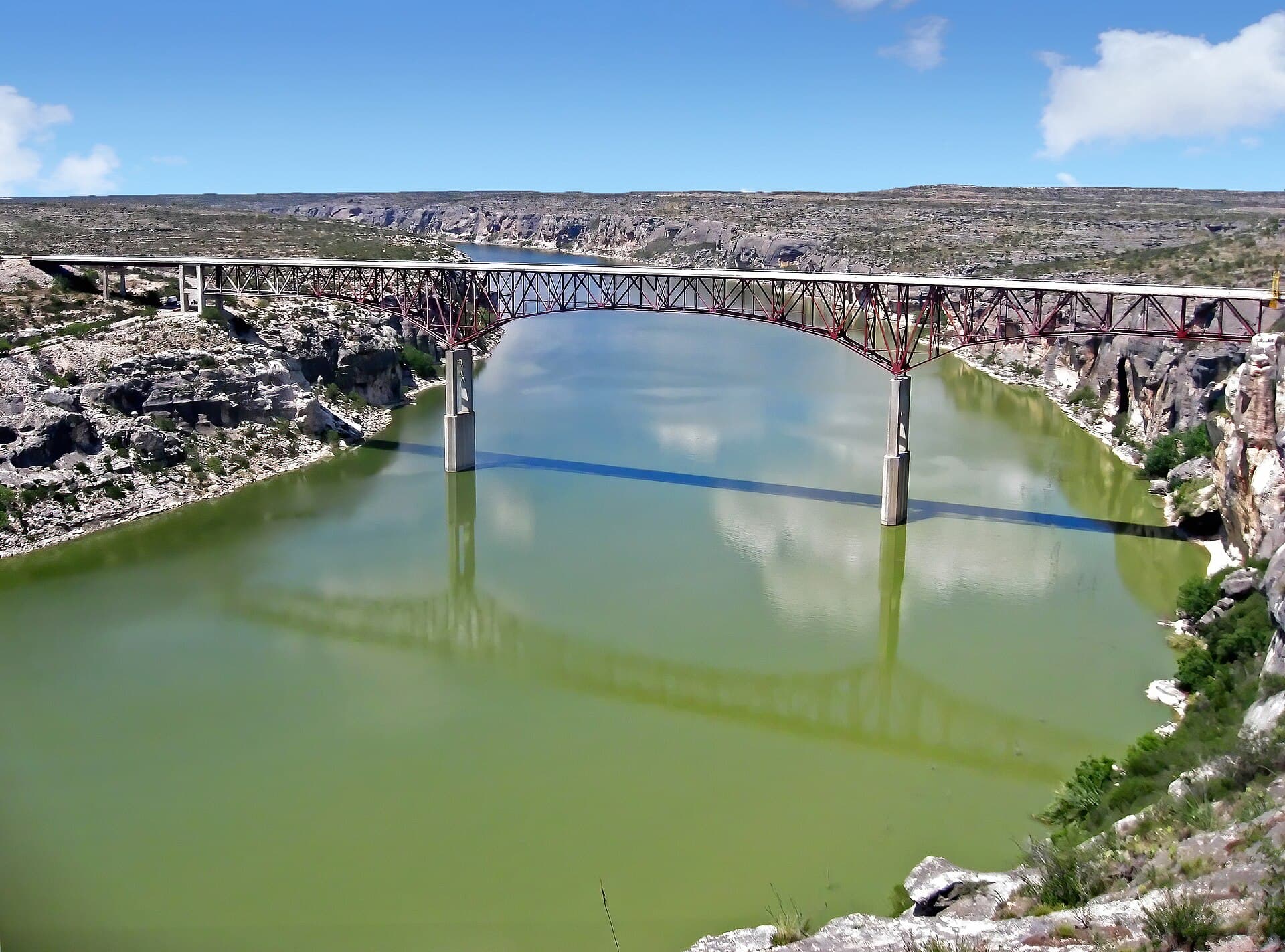
The original span did not stand unchanged. It was strengthened in 1910 and again in 1929, reflecting the pressure that heavier traffic and changing rail demands placed on the crossing. By World War II, the bridge had become essential to the movement of war materials, and a new replacement was built in 1944 to handle heavier trains and wartime traffic.
That replacement bridge rose 440 feet downstream from the 1892 span. Construction began in September 1943 and used six reinforced-concrete piers with more than 15,000 cubic yards of concrete. Its superstructure required about 2,700 tons of structural metalwork, and the project received special permission from the War Production Board to use critical materials during wartime shortages.
This article was produced by Prism’s automated news system from verified source data, official records, and press releases, then run through automated quality and moderation checks before publishing. The system is built and supervised by the people who set the standards it runs under. Read our full AI policy.
Did this article answer your question?