Belen Harvey House Museum tells the story of the city’s railroad rise
Belen’s Harvey House Museum shows how the Belen Cutoff made the city New Mexico’s Hub City and still anchors its railroad identity.
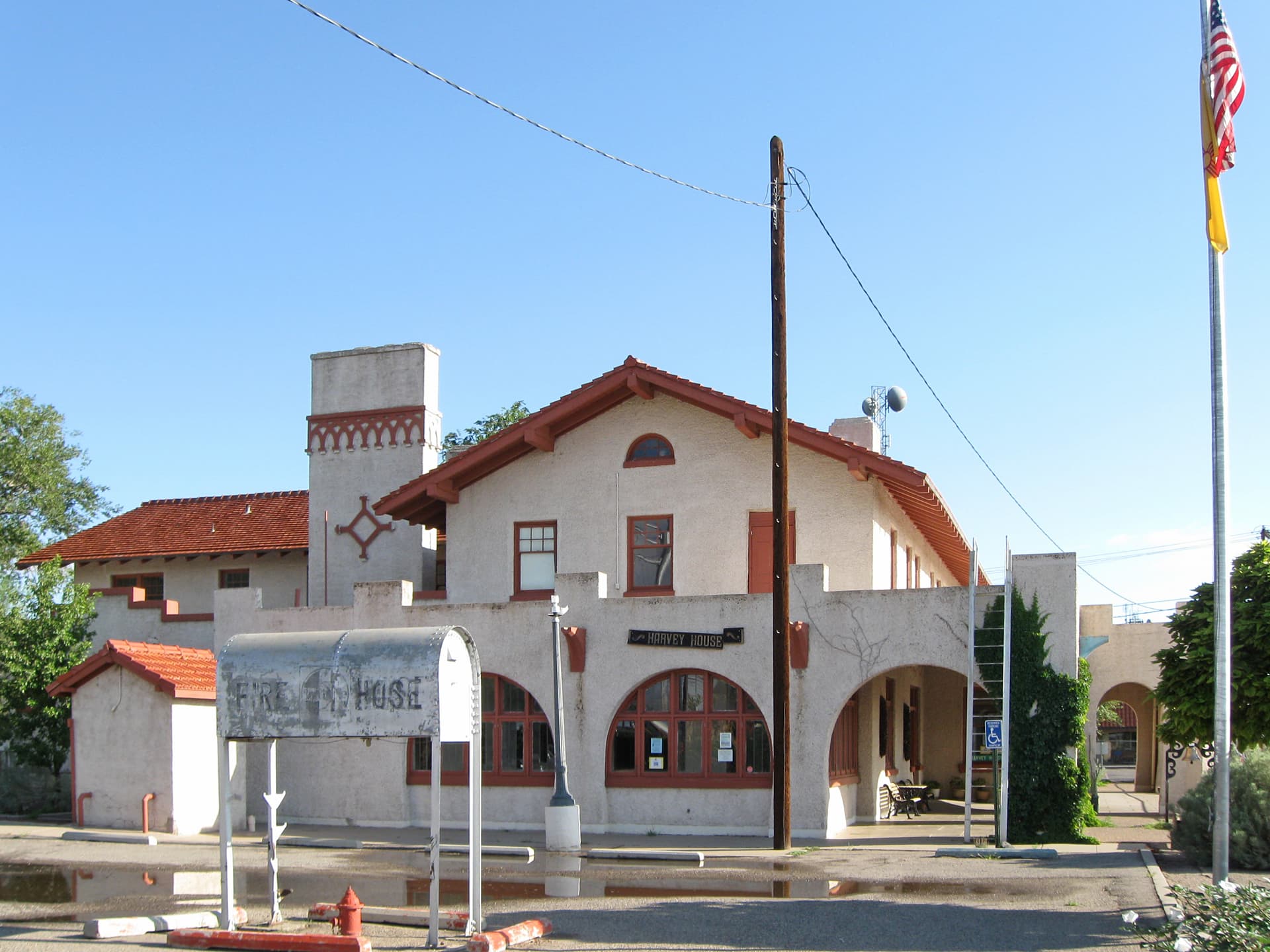
The Belen Harvey House Museum at 104 N 1st St. is one of the clearest places to see how a railroad built a city’s identity. The building is more than a preserved landmark, because its history tracks the moment Belen shifted from a Rio Grande settlement into a rail crossroads that served trains, crews and passengers moving through Valencia County.
How the Belen Cutoff changed Belen
A historical review titled The Belen Harvey House and Its Several Reincarnations places the city’s rise after the Atchison, Topeka and Santa Fe Railway pushed a new line through Abo Canyon and reached Belen by 1909. With completion of the Belen Cutoff, the town became a major intersection for traffic moving both north to south and east to west, and that rail geography is the reason Belen came to be known as New Mexico’s Hub City.
That label was not a slogan pasted on later. It reflected a working railroad town where the movement of freight and passengers shaped local life, from the kinds of buildings that were needed downtown to the businesses that grew around them. The Harvey House stood at the center of that system because the Santa Fe line needed fast, reliable hospitality to match the speed of the railroad itself.
What the Harvey House did for rail travelers
Belen’s Harvey House operated from 1910 to 1939, and the building was designed to serve railroad travel at a high standard. It had a first-class dining room and a lunchroom with a large horseshoe-shaped marble counter, details that show how much the Santa Fe travel experience depended on consistency, efficiency and polish.
The Harvey Girls who worked there lived upstairs with the dorm mother, the office manager and his wife, which made the building a tightly run workplace as well as a passenger stop. That arrangement was part of the wider Harvey House model, which relied on trained young women serving meals quickly and carefully along the Santa Fe route.
Harvey Girls were sent to Vaughn, New Mexico, for a one-month training period before entering the system. New Mexico Digital Collections notes that they were closely chaperoned and that dating was discouraged, a reminder that the Harvey House world was disciplined as well as efficient. The museum’s own official page, which shows a 1920s dining room, helps place that culture in a setting that still feels legible to visitors.
Why the building has so many lives
The Belen Harvey House did not stop mattering when its original dining room era ended. During World War II, it briefly reopened to serve troop trains, and many Harvey Girls came out of retirement to help meet that demand. In the 1950s, the building became the Santa Fe Reading Room for railroad employees, functioning as a breakroom and dormitory space instead of a passenger dining hall.
That long reuse is part of why the National Register nomination identifies the property as the Belen Harvey House, also known as Harvey House Civic Center and SF Railroad Reading Room, at 104 First Street in Valencia County. Each name captures a different stage in the building’s life, but all of them point back to the same underlying fact: rail service kept defining how the property was used, long after the first Harvey House dining room closed.
What to see and when to go
The museum is a branch of the Belen Public Library, and that civic connection matters because it shows the building still serves the community rather than sitting apart from it. The Friends of the Belen Harvey House Museum sponsorship noted on the museum website also signals local stewardship, not just preservation from afar.
The practical visitor details are straightforward:
- Open Wednesday through Saturday from noon to 5 p.m.
- Last entry is at 4 p.m.
- The cafe is open Thursday through Saturday from noon to 3 p.m.
Those hours make the site easy to fit into a downtown stop, and the address on 1st Street puts it in the part of Belen that still carries the city’s railroad-era identity. For newcomers trying to understand why Belen is still called the Hub City, the museum offers the shortest route to the answer.
Why this story still reaches beyond the museum walls
The Harvey House belongs to a much bigger New Mexico story. The New Mexico History Museum traces Fred Harvey’s influence in the state from the Santa Fe Railway’s 1879 arrival to the 1970 demolition of Albuquerque’s Alvarado Hotel, showing that Belen was one stop in a statewide network built around rail travel and carefully managed hospitality. That wider context helps explain why the Belen site matters now: it is one of the few places where that network is still visible in a single building.
The same rail logic still runs through the region today in the BNSF Railway’s Southern Transcon corridor, which keeps Belen tied to freight movement far beyond the old passenger era. The building’s survival, its multiple names and its continuing use as a museum and library branch make it a useful local-history stop for anyone trying to understand how railroads shaped not just Belen’s economy, but its civic memory too.
The result is a landmark that explains the city without needing much translation. At the Harvey House Museum, the story of Belen’s rise is still visible in the dining room, the upstairs living quarters, the railroad reading room and the building’s place at the center of downtown, where the Hub City name still makes sense.
This article was produced by Prism’s automated news system from verified source data, official records, and press releases, then run through automated quality and moderation checks before publishing. The system is built and supervised by the people who set the standards it runs under. Read our full AI policy.
Did this article answer your question?