New Mexico Supreme Court vacates Valencia County murder conviction over delay
New Mexico’s highest court erased Brandon Villalobos’ murder conviction, saying Valencia County kept a juvenile in jail nearly six years while his case stalled.

The New Mexico Supreme Court wiped out Brandon Villalobos’ murder conviction and ordered the indictment dismissed, saying Valencia County’s prosecution moved so slowly that his constitutional right to a speedy trial was violated.
Justice Michael E. Vigil wrote the opinion filed May 18, 2026, in State v. Villalobos, and the court unanimously reversed the Court of Appeals after finding that Villalobos sat in custody for just short of six years before trial. The justices said more than three of those years were consumed by competency questions, and that much of the delay came from defense counsel’s failure to timely schedule and properly arrange the competency evaluation, with prosecutors also failing to diligently monitor the case.

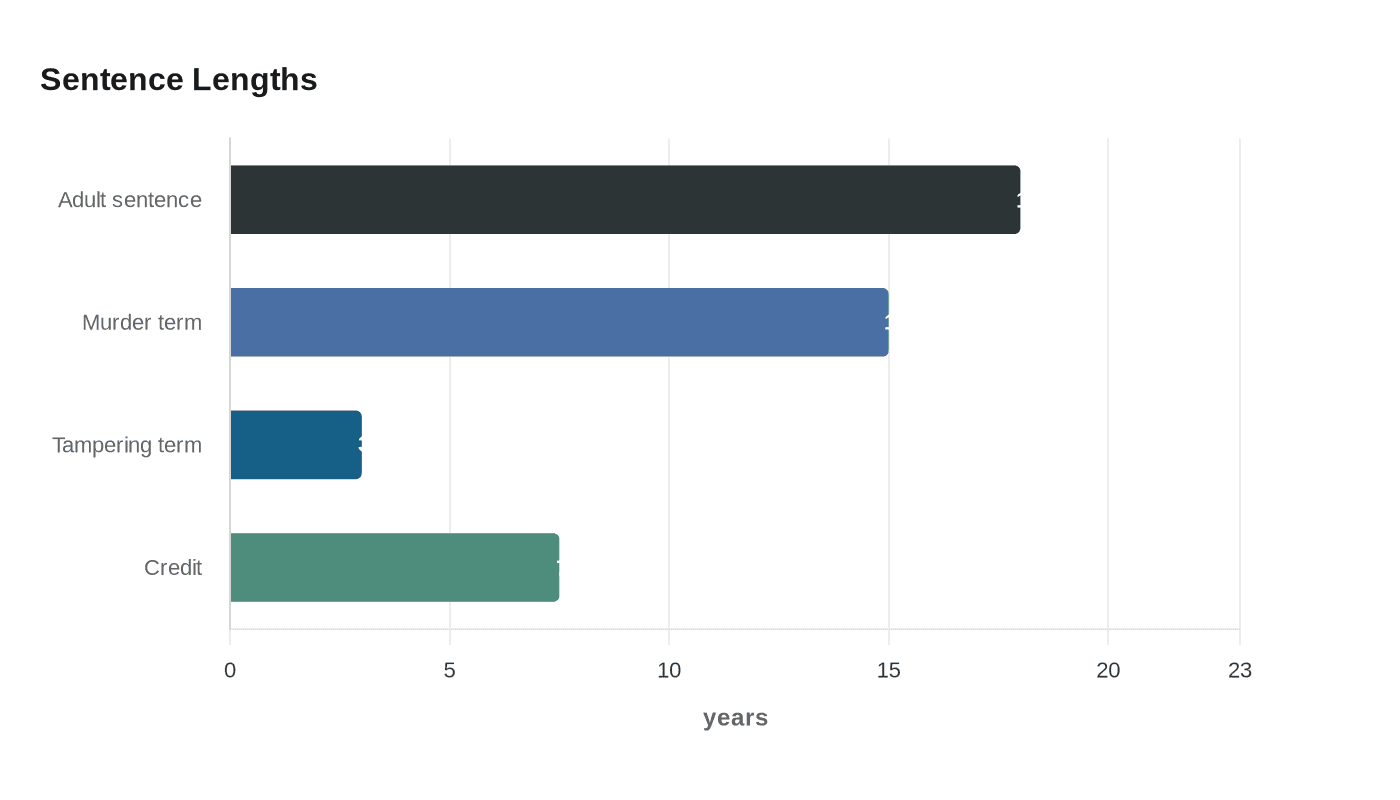
The ruling ends the second-degree murder and evidence tampering convictions that followed Villalobos’ second trial in February 2020. His first trial, in December 2019, ended in a mistrial. The second jury acquitted him of first-degree murder but convicted him on the lesser homicide charge and tampering. In 2021, the district court found he was not amenable to treatment and rehabilitation as a juvenile and imposed an 18-year adult sentence, including consecutive terms of 15 years for second-degree murder and 3 years for tampering, with nearly seven-and-a-half years of presentence confinement credit.
The underlying case reached back to the night of Feb. 16, 2014, when 12-year-old Alex Madrid died after leaving Villalobos’ home at 11 De Colores in Meadow Lake. Madrid’s body was later found hidden beneath a discarded box spring in an empty field less than half a mile south of the home. In a prior sentencing hearing, Madrid’s mother, Roxanne Madrid, asked for the maximum penalty and said through tears, “He will forever be my 12-year-old Alex.”
For Valencia County, the decision is about more than one case. The Supreme Court said the record showed a defendant with an intellectual disability who could not effectively direct his own defense while the system allowed the case to languish. By reversing the Court of Appeals and dismissing the indictment, the court made clear that serious charges can still collapse when constitutional deadlines are ignored, even in a case that has carried the weight of a child’s death for more than a decade.
Know something we missed? Have a correction or additional information?
Submit a Tip